
The Myth of 'Drying': What Really Happens After the Technician Leaves
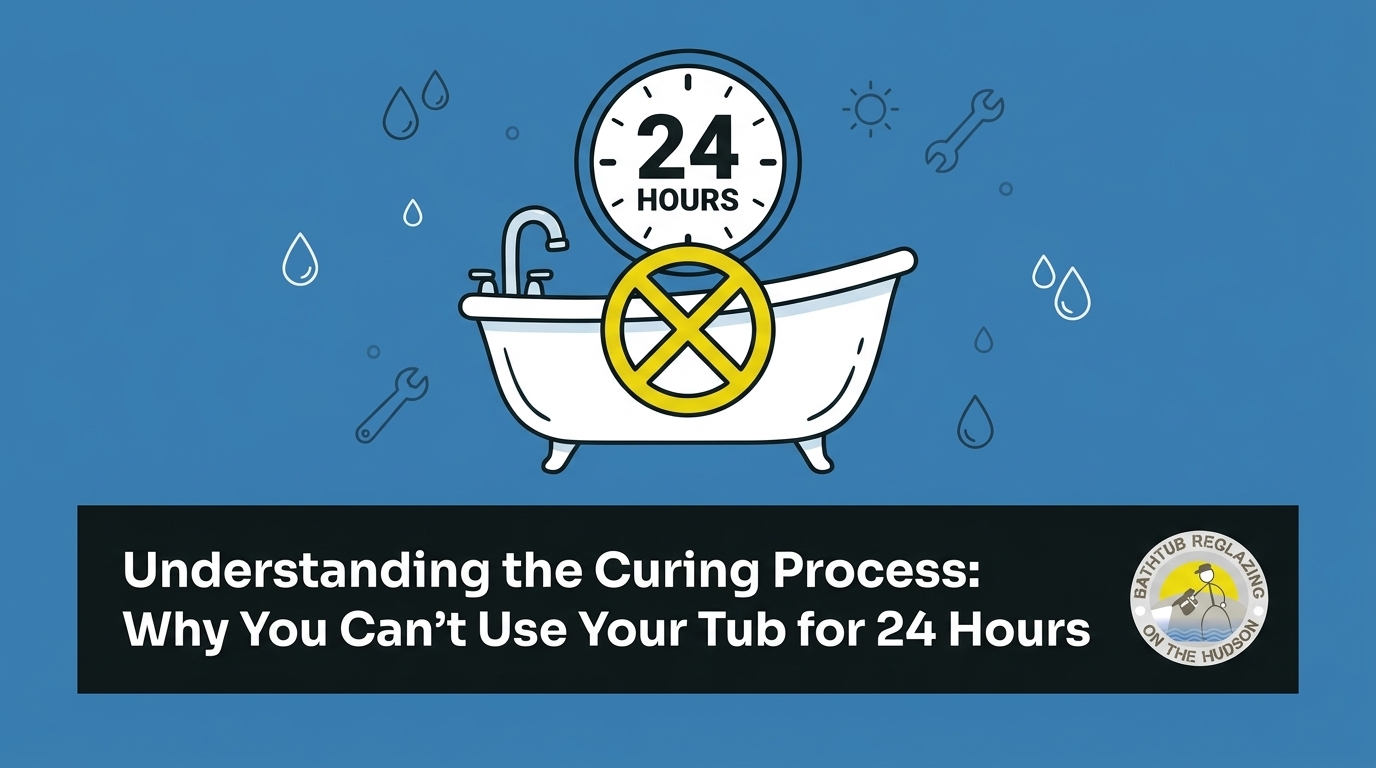
A common misconception is that a newly restored fixture just needs to sit and "dry" like a fresh coat of paint on your living room wall, but understanding the curing process: why you can't use your tub for 24 hours requires looking at the actual chemistry involved. You might assume that once the surface feels dry to the touch—usually within an hour or two—it is perfectly safe to turn on the water and take a shower. This assumption is the single biggest threat to your newly restored bathroom fixture.
When the technician packs up their equipment and leaves, your bathtub will look glossy, flawless, and ready for action. However, the surface is entering a strict 24-hour chemical cross-linking window. This is an active, microscopic process where the molecules of the new coating are aggressively bonding together. It is not merely water or solvents evaporating into the air; it is a structural transformation.
This mandatory waiting period is not an arbitrary contractor rule designed to inconvenience you. It is a strict scientific requirement for achieving a permanent, durable finish. If you are investing in professional reglazing services, patience during this critical window dictates the lifespan of your tub. Failing to respect the clock interrupts the chemical reaction, leaving the finish vulnerable to peeling, staining, and premature failure.
The Science of Chemical Cross-Linking Explained
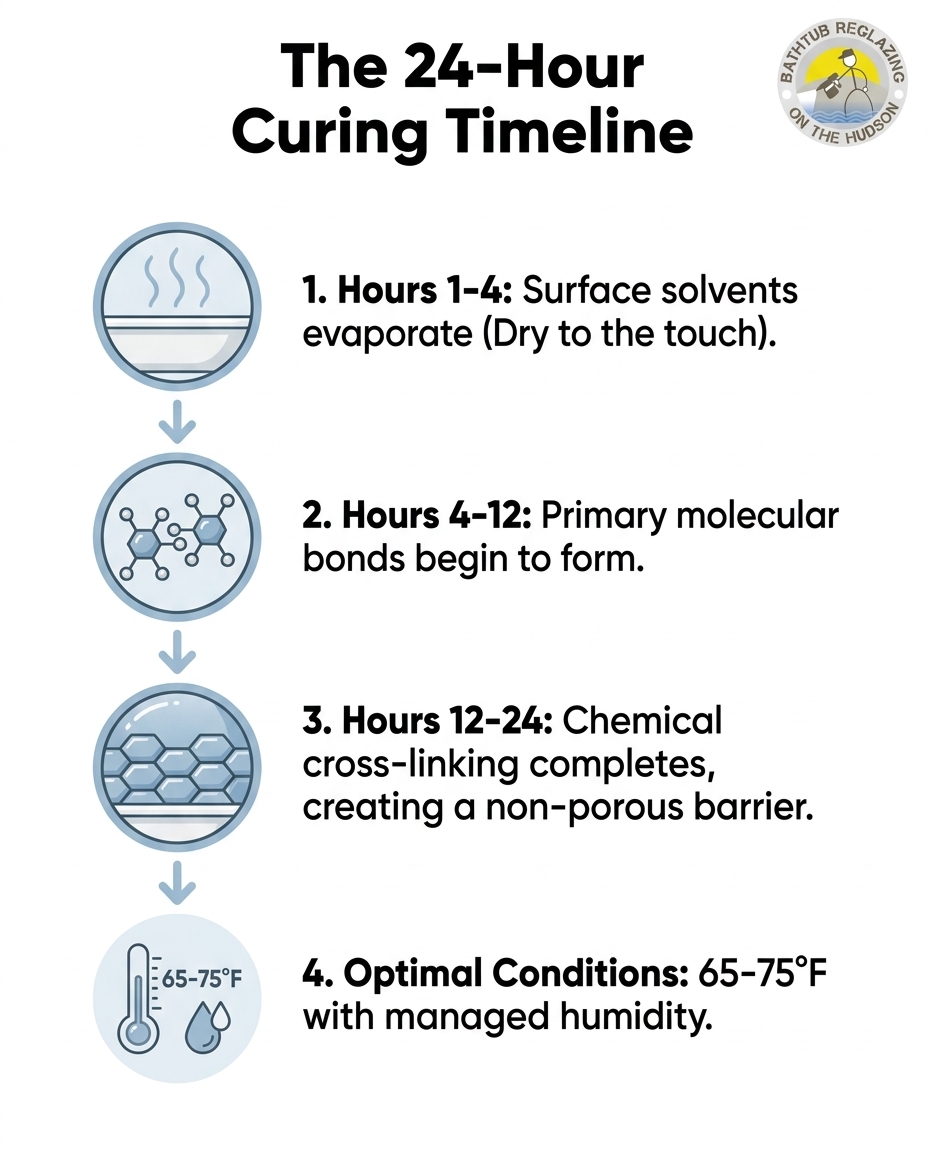
To truly appreciate why you are locked out of your bathtub for a full day, it helps to understand the hidden science occurring on the surface of the porcelain. While basic evaporation plays a small role early on, the heavy lifting is done by a process called polymerization. If you are planning a bathtub reglaze, here is exactly what happens during that 24-hour chemical cross-linking window.
1. Solvent Evaporation (Hours 1 to 4): Immediately after application, the carrier solvents in the coating begin to evaporate into the air. This is what most people think of as "drying." By the end of this short phase, the tub may feel completely dry and tack-free to a light touch. However, the coating beneath the surface is still incredibly soft and vulnerable.
2. Primary Molecular Bonding (Hours 4 to 12): This is where true polymerization begins. The molecules within the polyurethane or acrylic urethane coatings start reaching out and connecting with one another. They form a complex, three-dimensional network. At this stage, the coating is transitioning from a liquid state into a solid plastic-like state, but the bonds are still fragile and easily broken by physical pressure or moisture.
3. Creating the Non-Porous Barrier (Hours 12 to 20): As the cross-linking intensifies, the molecular network pulls tight. This tightening action is what creates the incredibly smooth, non-porous barrier that repels water, soap scum, and hard mineral deposits. The chemical reaction generates microscopic tension that forces the coating to level out into a mirror-like sheen.
4. Reaching Full Structural Integrity (Hours 20 to 24): In the final hours of the window, the last remaining molecular bonds lock into place. The coating achieves its maximum hardness and adhesion to the original tub surface. Only at the 24-hour mark does the chemical reaction naturally conclude, leaving behind a surface that can withstand daily hot showers and routine cleaning.
How Early Fall Weather Impacts the Curing Process
The Problem: The ambient environment in your bathroom plays a massive role in how efficiently the new coating cures. Optimal cross-linking requires very specific temperature ranges, typically between 65 and 75 degrees Fahrenheit. When temperatures drop too low, the chemical reaction slows to a crawl. When humidity spikes, moisture in the air interferes with the bonding process.
The Cause: This environmental sensitivity becomes especially noticeable during September early fall temperature shifts. In Peekskill and the broader Hudson Valley, early fall often brings beautiful 74-degree afternoons followed by sudden drops to 54 degrees at night. That 20-degree swing can severely disrupt the chemical bonding. Furthermore, proximity to the Hudson River often causes sudden humidity spikes, which directly affects how solvents evaporate during the initial phases of the cross-linking phase.
The Solution: This is why professional climate management is absolutely essential. Technicians use targeted ventilation and temperature control strategies to mitigate these regional environmental factors. By controlling the airflow and stabilizing the room temperature, professionals ensure that the 24-hour rule holds true, regardless of what the unpredictable early fall weather is doing outside.
Managing Temperature Swings in the Hudson Valley
Nighttime temperature drops are the biggest enemy of a fast, efficient cure. If your bathroom window is left open on a crisp September evening, the cold air will chill the cast iron or steel body of the tub. Because metal holds cold incredibly well, the surface temperature of the tub drops far below the ambient room temperature. This cold surface effectively puts the chemical cross-linking process to sleep.
To prevent this, maintaining a consistent indoor climate is critical for the entire first 24 hours. Homeowners are often advised to keep bathroom windows closed overnight and maintain normal indoor heating to keep the tub's surface above that crucial 65-degree threshold. Consistency is the key to keeping the molecular bonding on schedule.
Professional-Grade Coatings vs. Unpredictable DIY Kits
Professional-grade chemical coatings are engineered for precision. They are formulated with exact chemical catalysts designed to force a complete, 24-hour cross-linking cycle. When applied correctly, these urethanes harden into an impenetrable shell. This reliable turnaround is a major factor when weighing bathtub reglazing vs replacement, as it guarantees a flawless sheen with zero imperfections once fully cured.
Contrast this with over-the-counter DIY epoxy kits. Store-bought kits rarely utilize true catalyzed cross-linking. Instead, they rely almost entirely on slow, unpredictable drying times. Because they lack professional-grade hardeners, a DIY painted tub might feel sticky for days and remain soft enough to dent with a fingernail for weeks. They simply do not undergo the same rigorous molecular transformation.
The difference is also evident in the preparation. Creating sharp edges and a mirror-smooth finish requires meticulous sanding, etching, and neutralizing before the coating is even applied. In one local scenario, a homeowner had a bathtub that was in incredibly rough, heavily worn shape. Because professional technicians properly prepped the surface and applied high-grade cross-linking urethanes, the tub was transformed to look good as new. That level of restoration in the Peekskill / Hudson Valley area is only possible when professional materials are allowed to undergo their intended chemical reactions without interruption.
The Risks of Rushing: What Happens Before 24 Hours
The Problem: The temptation to use the tub at hour 16 or 18 is strong, especially if the surface looks and feels completely dry. However, introducing water, soap, or physical pressure before the molecular bonds are fully set will instantly compromise the finish.
The Cause: When water hits an uncured coating, it interrupts the polymerization process. The moisture can actually penetrate the still-forming microscopic network. If a leaky showerhead drips onto the surface, or if someone steps into the tub, the pressure and moisture get trapped beneath the top layer. This trapped moisture expands and contracts, eventually leading to severe bubbling and peeling. We see this pattern frequently when underlying conditions aren't managed. In one instance, a difficult job required returning to fix a bubbling issue after previous painters had failed to properly prep the surface. While a dedicated professional will always stand by their work and fix underlying bubbling problems, you never want to artificially cause bubbling yourself by rushing the 24-hour chemical cross-linking window.
The Solution: The only way to prevent these issues is absolute patience. Keep the bathroom door closed, tape off the faucet to prevent accidental drips, and do not place shampoo bottles or mats on the surface. Fixing a disrupted cure is not a simple touch-up; it requires completely stripping the ruined coating and starting the entire process over from scratch.
• Taking a hot shower — Chemical Consequence: Moisture penetrates the unlinked molecular barrier — Visible Result: Trapped condensation, severe bubbling, and peeling
• Using heavy soaps/shampoos — Chemical Consequence: Chemicals react with soft, uncured urethanes — Visible Result: Permanent dull spots, discoloration, and chemical staining
• Stepping into the tub — Chemical Consequence: Physical pressure breaks fragile polymer chains — Visible Result: Dents, footprints, and compromised structural adhesion
• Placing bath mats down — Chemical Consequence: Suction traps outgassing solvents — Visible Result: Imprints left in the finish, tearing of the topcoat
Next Steps: Caring for Your Fully Cured Tub
Once the 24-hour chemical cross-linking window has officially closed, the molecular transformation is complete. Your tub is now protected by a hard, non-porous barrier that is ready for daily use. However, transitioning into proper tub cleaning routines is vital to maximizing the lifespan of the reglaze.
Immediate steps to take: First, remove any protective tape or plastic left around the fixtures carefully. Turn on the water and let it run to ensure everything is draining properly. You may notice a faint lingering scent from the curing process; this is normal and will dissipate quickly now that the cross-linking is finished. Keep the bathroom fan running for an additional day to clear the air.
Long-term care routines: Because the newly cross-linked surface is completely non-porous, dirt and soap scum cannot easily stick to it. This means you no longer need harsh, abrasive powders or stiff scrub brushes. In fact, using abrasive cleaners will scratch the clear coat and dull the finish over time. Stick to mild, liquid dish soaps or specialized non-abrasive bathroom cleaners applied with a soft sponge. By treating the cured surface gently, you empower yourself to enjoy a beautifully restored, durable fixture for years to come.
Protecting Your Investment Through Patience
The strict 24-hour waiting period is a necessary scientific process, not a mere inconvenience. Understanding the curing process: why you can't use your tub for 24 hours comes down to respecting the chemistry of cross-linking. When you allow the molecules the time they need to bond, tighten, and harden, you are guaranteeing a permanent, non-porous finish that will endure daily wear and tear.
A clear understanding of this molecular transformation fully justifies the temporary lockout from your bathroom. If you are considering upgrading your bathroom fixtures and want the reliable durability of professional-grade coatings, prioritizing a proper cure time is the best way to protect your investment. Reach out to local professionals to learn more about how advanced reglazing can safely and effectively transform your space.
Frequently Asked Questions
What happens if you use a reglazed tub before 24 hours?
Using the tub too early introduces moisture and physical pressure before the chemical bonds have fully formed. This trapped moisture interrupts the cross-linking process, leading to severe bubbling, peeling, and permanent dull spots. Fixing this damage usually requires completely stripping the new finish and starting over.
Does humidity affect bathtub reglazing curing times?
Yes, high humidity can significantly impact the curing process. Moisture in the air slows down the evaporation of carrier solvents and can interfere with the molecular bonding of the urethanes. Professionals use specialized ventilation to control the room's climate and mitigate humidity spikes during the initial curing phase.
Is drying the same as curing for bathtubs?
No, drying and curing are entirely different processes. Drying simply refers to the evaporation of surface solvents, which makes the tub feel dry to the touch within a few hours. Curing is an active chemical reaction called cross-linking, where molecules bond together to form a hard, non-porous barrier over a full 24-hour period.
How long does a reglazed tub take to completely cure?
A professionally reglazed tub takes exactly 24 hours to completely cure under optimal temperature conditions. While it may feel dry to the touch much sooner, the underlying chemical bonds require a full day to reach their maximum structural integrity and hardness.
Can I shower 12 hours after bathtub reglazing?
No, showering at the 12-hour mark is highly discouraged. At 12 hours, the primary molecular bonds are still fragile and the coating has not yet formed its non-porous barrier. Hot water and steam will penetrate the soft coating and cause it to fail prematurely.
How can I tell if my tub has fully cross-linked?
You cannot see chemical cross-linking with the naked eye, which is why strictly following the 24-hour rule is required. Once the 24 hours have passed in a temperature-controlled environment (typically 65-75 degrees Fahrenheit), you can trust that the professional-grade coatings have fully polymerized and the tub is safe for normal use.
Schedule Service
Thank you! Your submission has been received!
Oops! Something went wrong while submitting the form.
Other Blogs
Customer Testimonials
Hear what customers are saying about our professional refinishing and outstanding results.

Can’t say enough about Maurice. From start to finish great communication his work is incredible and he stands by it very competitive pricing just all-around good guy the work was done quick and kept very clean and our brand new bathroom
Joey N.
We had a large piece of bathtub glaze chip off. Maurice came in and did a fantastic job. It now looks and works better than before. He went above and beyond the contract by cleaning up the old chipped grout between the tub and the tiles and replacing with brand new.
Bozidar J.
Maurice did a great job on my tub. It looks brand new.
Steven S.