

Why September Weather Complicates the Bathtub Restoration Process
As the summer heat finally breaks, addressing fall humidity fluctuations during the tub curing phase becomes a primary focus for any homeowner planning a bathroom update. The transition from late summer to early autumn is notoriously unpredictable across the Northeast. One afternoon might offer crisp, clear skies, while the next delivers heavy rainstorms that rapidly spike indoor moisture levels. These sudden shifts create a uniquely challenging environment for chemical applications inside the home.
In our years of serving the area, we've found that understanding the intricacies of the bathtub reglazing process is necessary when navigating these September early-fall rain and humidity swings. While standard latex wall paint relies on passive drying—simply waiting for water to evaporate into the air—advanced tub coatings require a highly specific chemical curing phase to achieve their glass-like durability.
This creates a critical decision point for homeowners: managing indoor climate controls to prevent ambient moisture from compromising the new glaze. Relying on open windows or passive airflow is often insufficient during this transitional season. Professional intervention is required to actively engineer the environment, ensuring that unpredictable weather patterns do not interfere with the long-term performance of your bathroom fixtures.
The Science of Curing: How Moisture Disrupts Chemical Cross-Linking
To understand why our professional oversight is so important, you have to look at what actually happens on a molecular level after a coating is applied. Modern tub glazes do not just dry; they undergo a process called chemical cross-linking. This is the reaction where individual polymer molecules bond together to form a dense, impenetrable, and highly durable surface.
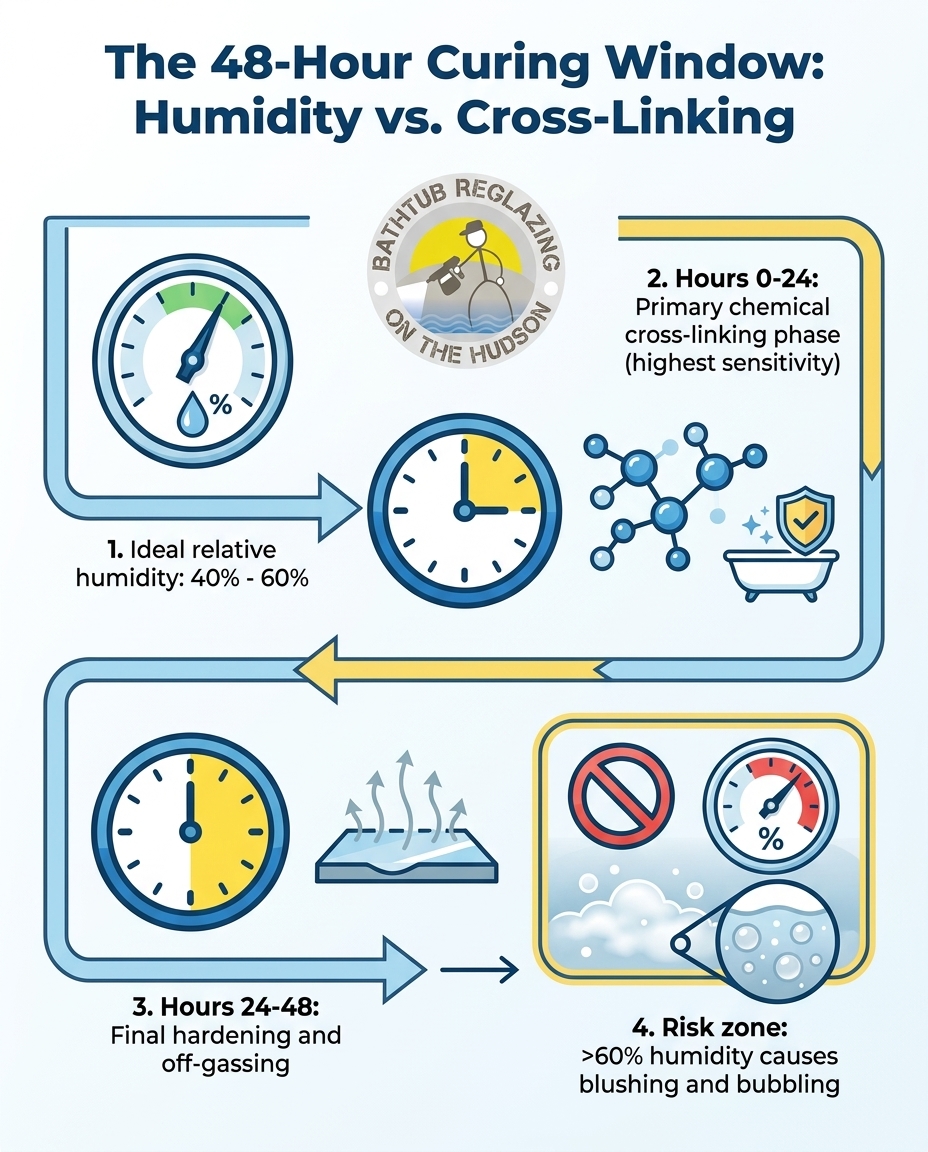
For this reaction to occur flawlessly, the ideal relative humidity in the room must be strictly maintained between 40% and 60%. When excess water vapor is present in the air, it physically interrupts these molecular bonds. The moisture reacts with the curing agents before they have a chance to bond with the resins, weakening the structural integrity of the entire finish. This is why securing professional tub refinishing is the safest route when dealing with the unique climate challenges of Peekskill NY and the Hudson Valley.
The proximity to the Hudson River often exacerbates local indoor humidity levels during early autumn temperature swings. While a passive residential bathroom environment fluctuates wildly with the weather outside, our team actively monitors and adjusts the indoor atmosphere to protect the chemical integrity of the glaze.
Drying vs. Curing: Understanding the Difference
The terms "drying" and "curing" are often used interchangeably, but they describe entirely different physical and chemical processes.
• Drying — Mechanism: Physical evaporation of solvents into the air. — Environmental Sensitivity: Low to moderate. High humidity simply slows the evaporation rate. — Timeline: Typically 1 to 4 hours, leaving the surface dry to the touch.
• Curing — Mechanism: Chemical cross-linking of polymer molecules. — Environmental Sensitivity: Extremely high. Excess moisture permanently damages the chemical structure. — Timeline: 24 to 48 hours for functional use; up to several days for a full, deep cure.
Recognizing Coating Failures: Blushing, Bubbling, and Peeling
Failing to control the environment during the curing phase leads to immediate and tangible consequences. One of the most common issues is known as "blushing." Blushing occurs when high ambient humidity causes microscopic amounts of moisture to become trapped within the top layer of the coating as the solvents evaporate. This results in a finish that appears cloudy, dull, or milky, completely ruining the desired high-gloss aesthetic.
Beyond visual defects, uncontrolled September early-fall rain and humidity swings can lead to catastrophic structural failures in the glaze. If the room reaches its dew point, micro-condensation forms invisibly on the surface of the tub just before or during application. This microscopic layer of water prevents the new coating from bonding to the prepared surface, inevitably leading to bubbling and eventual peeling.
This is a frequent pitfall for DIY applications or subpar contractor work in damp environments. In fact, our team at Bathtub Reglazing On The Hudson recently helped a local homeowner who experienced severe bubbling on their bathtub surface after previous painters had failed to account for the damp fall weather during a difficult job. We were called in to correct the damage, properly managing the bathroom environment and fixing the issue to deliver a professional and lasting resolution. These failures are entirely preventable with rigorous environmental management.
Engineering a Micro-Climate: Professional Climate Control Tactics
The key to a successful restoration in unpredictable weather is isolation. At Bathtub Reglazing On The Hudson, our technicians do not rely on the home's central HVAC system to manage the bathroom's environment. Instead, we engineer a temporary, highly controlled micro-climate within the workspace.
This involves sealing off the bathroom and deploying professional-grade climate controls and ventilation techniques to guarantee a flawless, durable cure. By utilizing high-capacity mechanical dehumidification, our crew can artificially drive the relative humidity well below the dangerous 60% threshold, regardless of what the weather is doing in Peekskill NY and the Hudson Valley.
• Sealing the envelope: Masking off doors and vents to prevent unconditioned, damp air from migrating into the bathroom from other areas of the house.
• Mechanical dehumidification: Running specialized equipment to strip excess moisture from the air continuously during the application and initial curing phases.
• Active vapor extraction: Using high-velocity exhaust systems to safely vent solvent vapors outside without pulling damp exterior air back into the room.
• Temperature stabilization: Utilizing safe, localized heating if necessary to keep the ambient temperature in the optimal range for the chemical catalysts to function.
Active Dehumidification vs. Passive Airflow
Many homeowners mistakenly believe that opening a bathroom window during a fall rainstorm will help the tub dry faster by providing fresh air. In reality, this introduces heavily saturated air directly into the curing environment, instantly spiking the humidity and dramatically increasing the risk of blushing. Targeted mechanical dehumidification protects the chemical bonds by actively removing water vapor from the air, creating the exact dry conditions the urethane or epoxy requires to harden properly.
Navigating the Critical 24-to-48-Hour Curing Window
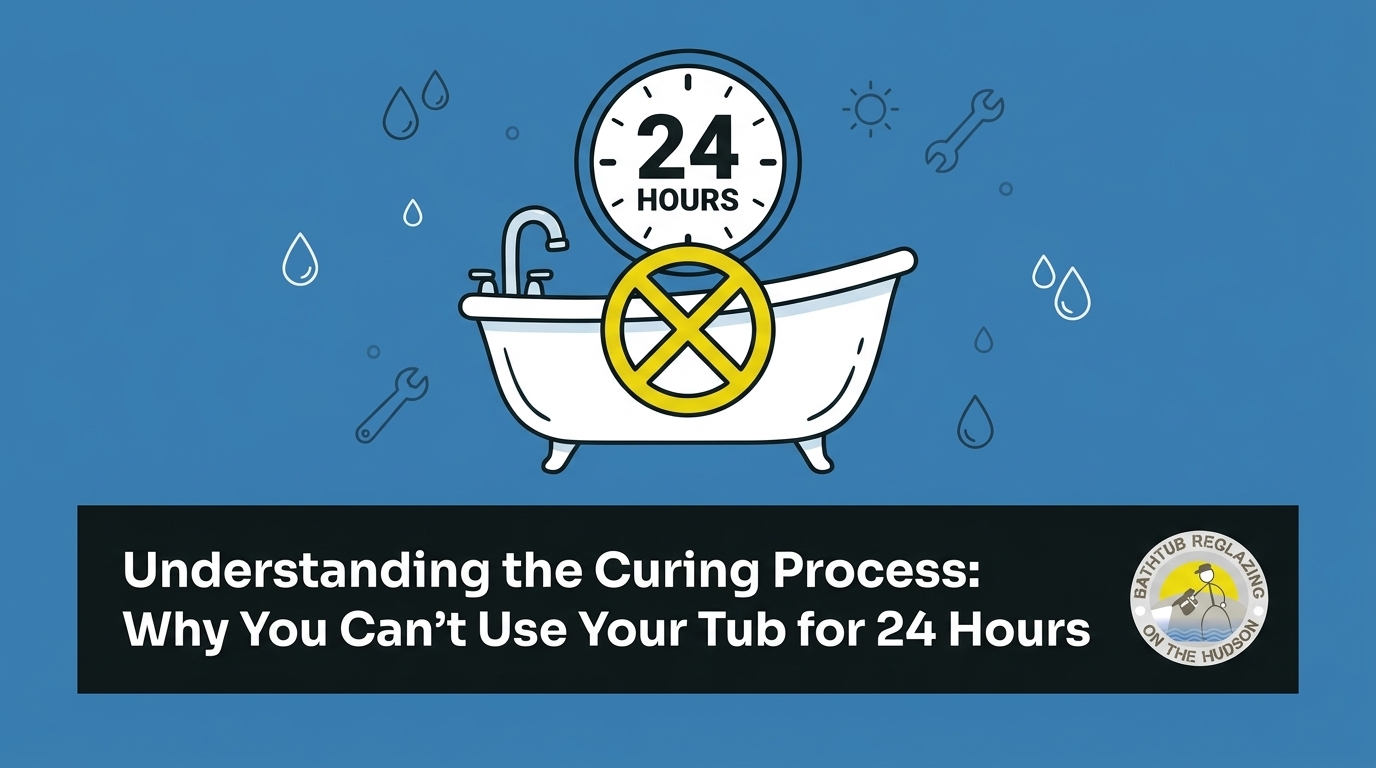
The timeline immediately following the application is the most critical period for the longevity of your newly restored fixture. While the surface may feel dry to the touch within a few hours, the chemical cross-linking is still actively occurring beneath the surface.
The first 24 hours represent the highest sensitivity phase. During this window, the polymer chains are actively linking, and any introduction of moisture—whether from high ambient humidity, a dripping showerhead, or a sudden temperature drop—can permanently stunt the hardening process. It is vital that the engineered micro-climate is maintained throughout this initial period to counteract any September early-fall rain and humidity swings.
As the coating transitions into the 48-hour mark, the surface reaches a state of functional hardness. At this point, the tub is generally ready for light use, though a full, deep cure can take slightly longer depending on the specific product formulation. Understanding the curing process helps clarify why keeping the bathroom door closed, the dehumidifier running, and water strictly away from the tub is mandatory during this window. Disrupting this timeline compromises the entire investment.
Does Fall Humidity Affect Tile and Surround Restoration?
The rules of chemical curing apply to more than just the bathtub itself. If you are updating the entire wet area, adjacent surfaces like ceramic wall tiles are subject to the exact same environmental sensitivities. High moisture levels in the air can be particularly problematic for tiled areas because the grout lines are naturally porous.
Excess humidity can trap microscopic contaminants and moisture deep within the grout lines before the new sealing layers are applied. If this trapped moisture tries to evaporate after the coating is laid down, it will push against the back of the new finish, causing premature failure. This is why addressing bathtub and tile surround reglazing simultaneously under the same controlled micro-climate is highly efficient.
By engineering the environment for the entire bathroom footprint, our professionals ensure that both the horizontal tub surfaces and the vertical tile walls cure at the exact same rate, locking out moisture and providing long-term aesthetic and sanitary benefits for homes across Peekskill NY and the Hudson Valley.
Protecting Vertical Surfaces
Vertical surfaces present an additional challenge during the curing phase: gravity. If high humidity slows down the chemical cross-linking process, the coating remains in a liquid or semi-liquid state for too long. On a vertical tile wall, this extended wet time can lead to sagging, running, or dripping. Consistent, active climate control across the entire bathroom space ensures the coating tacks up and hardens exactly as formulated, keeping vertical lines sharp and smooth.
Guaranteeing a Flawless Finish Despite Unpredictable Autumn Weather
Ultimately, the weather outside should never dictate the quality or durability of your interior bathroom restoration. While September early-fall rain and humidity swings present undeniable challenges, they are entirely manageable with the right expertise and equipment.
The combination of meticulous, multi-step surface preparation and strict environmental control is what separates a temporary cosmetic fix from a permanent restoration. We recently worked with a local resident whose tub was in incredibly rough shape after decades of heavy daily use. By properly engineering the workspace and executing thorough preparation, our team reglazed the fixture so that the tub now looks good as new, boasting a mirror-smooth finish with zero imperfections.
Professional oversight removes the guesswork from seasonal restorations. Whether you are updating a standalone tub or investing in comprehensive bathroom tile reglazing, relying on our specialized climate control ensures that the final product is fully cured, structurally sound, and ready for years of reliable use.
Secure a Durable, Weather-Proof Tub Restoration This Fall
You do not have to wait for a stretch of perfectly dry weather to update your bathroom. With professional climate engineering from Bathtub Reglazing On The Hudson, your tub restoration will cure flawlessly regardless of the unpredictable conditions outside in Peekskill NY and the Hudson Valley.
By actively managing humidity and temperature, our skilled technicians ensure that your new glaze cross-links perfectly, providing a brilliant, durable finish that resists peeling and blushing. Take action now and schedule your professional reglazing before the deep winter months arrive, securing a beautiful, fully restored bathroom that you can rely on for years to come.
Frequently Asked Questions
How does humidity affect bathtub reglazing?
High humidity disrupts the chemical cross-linking process required for tub coatings to cure properly. When there is too much water vapor in the air, moisture reacts with the curing agents, preventing them from bonding tightly with the resins. This can lead to a weakened finish that is highly susceptible to peeling, chipping, and premature failure.
Why is climate control important during tub refinishing?
Climate control ensures the room stays within the ideal 40% to 60% relative humidity range needed for a flawless cure. By using mechanical dehumidification and active ventilation, professionals create a stable micro-climate that protects the wet glaze from ambient moisture. This active management guarantees the coating hardens correctly, regardless of the weather outside.
Can fall weather ruin a new tub glaze?
Yes, unpredictable fall weather can ruin a new glaze if the indoor environment is not actively managed. Sudden rainstorms and temperature drops cause rapid spikes in indoor humidity, which can lead to blushing (a cloudy appearance) or micro-condensation that causes bubbling on the tub's surface.
Can you reglaze a bathtub when it is raining?
Yes, a bathtub can be successfully reglazed while it is raining, provided that professional climate controls are used. Technicians will seal off the bathroom and run commercial-grade dehumidifiers to extract excess moisture from the air, creating a perfectly dry indoor environment despite the rain outdoors.
What happens if a reglazed tub gets wet too soon?
If a newly reglazed tub is exposed to water during the sensitive 24-to-48-hour curing window, the chemical bonds will be permanently disrupted. Water introduction causes the finish to bubble, blister, or fail to adhere to the original surface, often requiring the entire tub to be stripped and refinished again.
How long does it take for tub glaze to fully cure in high humidity?
In uncontrolled high humidity, a tub glaze may never achieve a proper, deep cure, remaining soft or structurally compromised indefinitely. However, in a professionally controlled environment where humidity is artificially lowered, the tub will reach functional hardness and be ready for light use within the standard 24 to 48 hours.
Schedule Service
Thank you! Your submission has been received!
Oops! Something went wrong while submitting the form.
Other Blogs
Customer Testimonials
Hear what customers are saying about our professional refinishing and outstanding results.

Can’t say enough about Maurice. From start to finish great communication his work is incredible and he stands by it very competitive pricing just all-around good guy the work was done quick and kept very clean and our brand new bathroom
Joey N.
We had a large piece of bathtub glaze chip off. Maurice came in and did a fantastic job. It now looks and works better than before. He went above and beyond the contract by cleaning up the old chipped grout between the tub and the tiles and replacing with brand new.
Bozidar J.
Maurice did a great job on my tub. It looks brand new.
Steven S.