

The October Deadline for Tub Restorations
October is here, and when it comes to home maintenance, that means the window for Pre-Winter Plumbing Checks: Inspecting the Tub Drain Before We Glaze is rapidly closing. As mid-fall weather settles in, many homeowners look to update their bathrooms before holiday guests arrive. However, moving forward with a cosmetic update while ignoring underlying slow drains or minor leaks is a recipe for a mid-winter disaster. Your bathtub's drainage system must be fully functional before a new, permanent shell is applied over the surface.
In our years restoring bathrooms throughout the Hudson Valley, the core problem our team sees repeatedly is the temptation to glaze over a poorly draining tub. A slow drain might seem like a minor annoyance right now, but once the temperatures drop, it becomes a structural liability. Making the decision to have a professional evaluate your plumbing before applying a fresh finish ensures that your restoration project stands the test of time. If you are planning to schedule bathtub reglazing services with us, the smartest move you can make is to verify that the pipes behind the walls and under the floor are completely sound while they are still easy to access.
The urgency of the season: Plumbing interventions require manipulating pipes, turning off water supplies, and sometimes opening up access panels. Performing this work in October is straightforward. Trying to perform the same work in January, when materials are cold and brittle, adds unnecessary complication to what should be a simple repair.
How Freezing Temperatures Complicate Plumbing Repairs
To understand why fall drain inspections are so critical, you have to look at the physics of winter weather. Serving the Peekskill NY area, our crew has seen firsthand how unforgiving the cold can be on older plumbing systems. Historical weather patterns show that the first hard freezes often occur by early November. This creates a strict, unforgiving deadline for vulnerable plumbing repairs. When water freezes, it expands by approximately 9%. That expansion places immense, unyielding pressure on aging pipes, fittings, and drain traps.
If you have a slow drain, water sits in the pipes longer than it should. If you have a minor, hidden leak behind the tub's overflow plate, moisture is slowly accumulating inside your wall cavity. When the Peekskill winter cold snaps hit, those minor issues can rapidly escalate into major pipe ruptures. Addressing these vulnerabilities is an absolute necessity before you invest in professional tub restorations.
1. The initial freeze: Standing water in a slow-draining trap turns to ice, blocking the line completely and pushing against the pipe walls.
2. The pressure buildup: As the ice expands, it stresses the threaded connections connecting your tub's drain to the main sewer line.
3. The access challenge: Once the ground and exterior walls reach freezing temperatures, performing in-wall or under-floor plumbing work becomes incredibly difficult. Materials become stiff, and the risk of collateral damage to surrounding pipes increases.
The Hidden Pressure of Winter Drafts
You might think your indoor plumbing is perfectly safe from the outside cold, but we frequently find bathtubs installed against exterior walls. The temperature inside the wall cavity where your overflow pipe and drain trap live is often much colder than the ambient temperature in your bathroom. Winter drafts can easily penetrate older siding or poorly insulated wall sections, dropping the temperature around your tub's plumbing below freezing overnight. Ignoring a slow drip in October means leaving a vulnerability exposed to these hidden winter drafts, risking a frozen pipe right behind your newly finished tub.
The Danger of Post-Glazing Plumbing Interventions
The sequence of your bathroom restoration project matters immensely to our technicians. Standard polyurethane and epoxy glazes are designed to form a hard, durable, permanent shell over your existing bathtub. This shell is what gives the tub its glossy, like-new appearance and protects the underlying material from moisture. However, the very permanence that makes a glaze so effective is exactly what makes post-glazing plumbing repairs so dangerous to the finish.
The Problem: Discovering a severe leak or a completely blocked drain weeks after your tub has been refinished.
The Cause: Failing to perform a pre-winter drain inspection, allowing an existing plumbing issue to worsen during the cold months.
The Solution: Resolving all plumbing and drainage issues before the new glaze is applied, ensuring heavy tools never have to touch the freshly cured surface.
Why Glazes and Wrenches Don't Mix
Replacing a tub drain flange or an overflow plate requires heavy metal tools. Plumbers must use drain wrenches, large pliers, and sometimes significant physical force to unthread old, corroded brass or PVC fittings. If your tub has just been reglazed by our team, subjecting the drain area to that kind of mechanical stress is highly risky.
A fresh seal is incredibly durable against water and normal daily use, but it is physically vulnerable to localized mechanical stress from a slipping wrench. If a heavy tool drops, or if the pressure of unthreading a stubborn drain twists the surrounding material, you risk chipping, scratching, or cracking the newly cured glaze. Just as you would ensure the walls are perfectly prepped before bathroom tile reglazing, you must ensure the plumbing is perfectly prepped before sealing the tub. Having to touch up or completely redo a brand-new surface because a wrench slipped during a delayed plumbing repair is a frustrating and entirely avoidable situation.
Identifying Key Drain Warning Signs Before Refinishing
Before our restoration team arrives, you should actively observe how your bathtub behaves during normal use. Identifying the symptoms of a failing drain early gives you time to bring in a licensed plumber before the glazing appointment. At Bathtub Reglazing On The Hudson, we strongly advise against attempting any DIY plumbing repairs, especially those requiring you to open walls or unthread old pipes. Your role is simply observation and reporting.
Whether you are updating the primary bath or considering sink reglazing for a matching vanity, look for these specific warning signs:
• Pooling water: If water routinely covers your feet during a shower and takes more than a few minutes to drain after you turn off the tap, you have a partial blockage.
• Gurgling sounds: A drain that gurgles audibly after the water has emptied often indicates a venting issue or a deep clog forming in the main line.
• Foul odors: Persistent musty or sewage-like smells emanating from the tub drain suggest that the P-trap is either drying out or filled with decaying debris.
• Spongy flooring: Pay close attention to the floor directly outside the tub. If the tiles feel loose or the subfloor feels soft, you likely have a hidden leak where the drain meets the pipe.
• Ceiling stains below: For second-story bathrooms, always check the ceiling on the floor directly beneath the tub for fresh water stains or bubbling paint.
Visual and Auditory Plumbing Clues
Beyond the drain itself, we always recommend inspecting the condition of the metal drain flange (the part you see sitting in the bottom of the tub) and the overflow cover. Heavy green or white corrosion on these metal parts often indicates deeper issues with the gaskets behind them. Failing gaskets around the overflow plate are a common source of hidden wall leaks. Furthermore, standing water from a slow drain does more than just annoy you; it leaves behind heavy mineral deposits and soap scum that can interfere with the chemical adhesion of a new glaze if not aggressively stripped away during our preparation phase.
The Critical Sequence: Plumbing Corrections Then Surface Curing
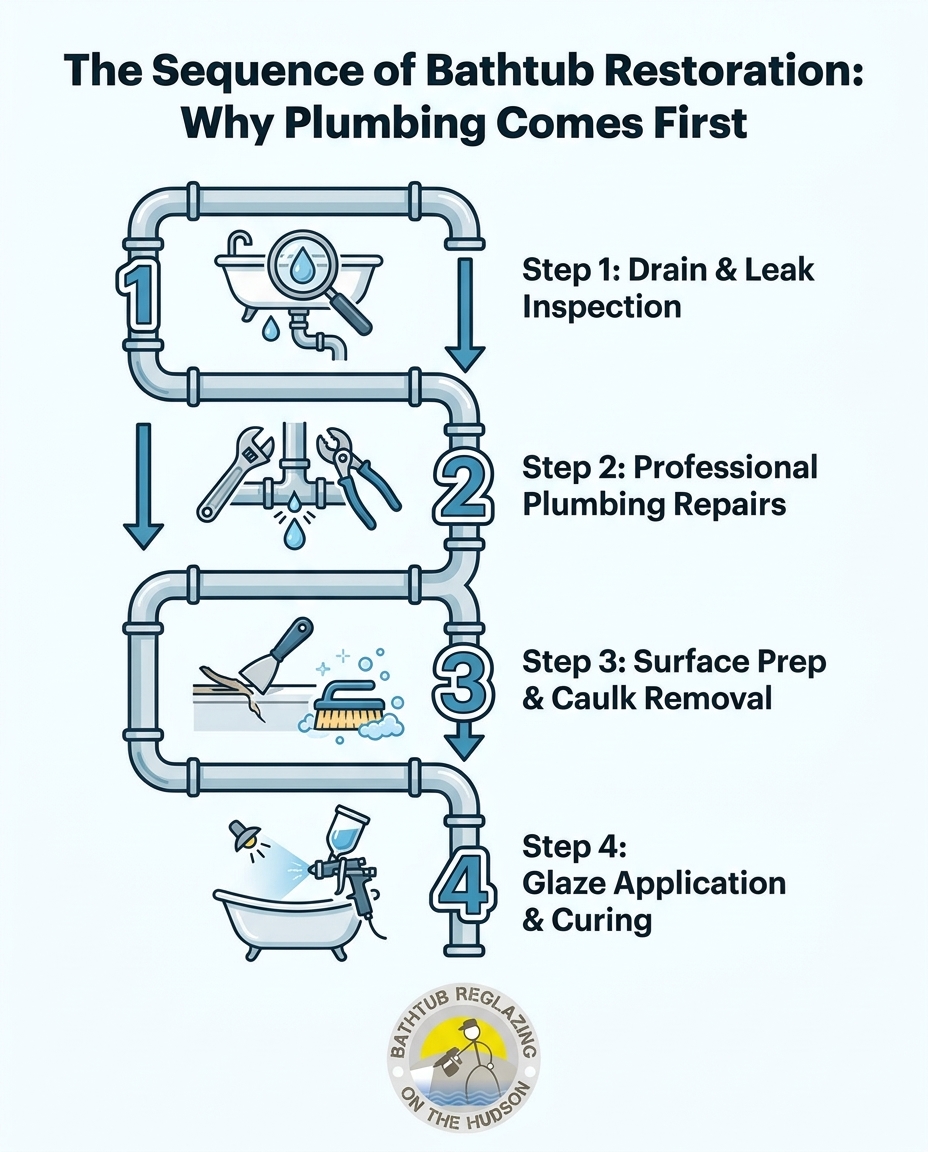
To guarantee a flawless, long-lasting result, bathtub restoration must follow a strict timeline. The preparation, plumbing, and glazing phases interlock carefully. Skipping a step or reversing the order compromises the integrity of the entire project.
• Step 1: Assessment — What Happens: Visual check of the tub's surface, overflow plate, and underlying drainage speed. — Why It Matters Now: Catches hidden issues before any permanent chemical seals are applied.
• Step 2: Plumbing — What Happens: A licensed professional replaces old traps, clears deep clogs, or installs a new drain flange. — Why It Matters Now: Ensures the infrastructure is sound before winter freezes make access difficult.
• Step 3: Preparation — What Happens: Stripping old caulk, deep-cleaning mineral deposits, and etching the tub surface. — Why It Matters Now: Creates the necessary mechanical bond for the new coating to adhere permanently.
• Step 4: Glazing — What Happens: The application of the polyurethane/epoxy shell and the subsequent curing period. — Why It Matters Now: Locks the pristine surface in place, transforming the bathroom's appearance.
This sequence highlights exactly why you cannot reverse the process. Once Step 4 is underway, returning to Step 2 is no longer a viable option without risking damage. Following this timeline is crucial for understanding the tub curing process and ensuring that your bathroom is fully operational before the holiday season begins.
The Value of a Proactive Pre-Glazing Assessment
One of the most important steps in any successful bathroom update is the initial evaluation. For us, a comprehensive pre-glazing inspection is a standard quality assurance step to protect your investment, catching hidden leaks before the tub is permanently sealed. When our restoration experts perform a visual check, we can spot subtle issues that a homeowner might easily miss, such as hairline cracks near the drain flange or failing overflow gaskets.
Coordinating between plumbing readiness and the glazing schedule ensures a seamless project. When you take a proactive approach in October, you prevent the nightmare scenario of emergency plumbing calls during the middle of winter. A healthy, free-flowing plumbing system is the absolute foundation of a long-lasting tub restoration. By insisting on this level of quality assurance, you guarantee that your newly finished bathtub will not only look stunning but will perform flawlessly through the coldest months of the year.
Frequently Asked Questions About Pre-Glazing Plumbing
Why should plumbing be fixed before bathtub reglazing?
Plumbing must be fixed first because the reglazing process applies a hard, permanent shell over the tub's surface. If a plumber needs to use heavy wrenches or pliers to remove a drain or fix a leak after this shell is applied, they risk chipping, scratching, or cracking the fresh finish. Securing the plumbing beforehand protects your investment in the new glaze.
What happens if you need plumbing work after a tub is reglazed?
If plumbing work is unavoidable after reglazing, the technician must work with extreme caution to avoid damaging the cured surface. Even with care, tools can slip, often requiring localized touch-ups or a complete redo of the glaze around the drain area. This adds unnecessary frustration and complicates what should be a simple repair.
How do you inspect a tub drain before refinishing?
You can perform a basic inspection by filling the tub with a few inches of water and timing how fast it empties, watching for pooling or listening for gurgling sounds. Additionally, check the ceiling below the bathroom and the floor around the tub for signs of hidden moisture. If you notice any of these symptoms, call a licensed plumber to evaluate the lines.
Do I need to remove the drain before reglazing a tub?
While it is possible to mask off an existing drain during the reglazing process, removing the old drain flange and installing a new one yields the most professional, seamless result. Removing the hardware allows the new glaze to extend slightly down into the drain opening, preventing water from seeping under the edge of the new finish over time.
Can a plumber fix a drain after reglazing without damaging the finish?
It is possible for a highly skilled plumber to work on a reglazed tub without causing damage, but it carries a significant risk. The heavy metal tools required to unthread drain flanges are unforgiving if they slip against the polyurethane or epoxy shell. It is always safer to complete the mechanical wrench work before the chemical seal is applied.
How does cold winter weather affect slow drains and minor tub leaks?
Cold winter weather turns minor plumbing issues into major emergencies because water expands by roughly 9% when it freezes. If a slow drain leaves water sitting in the P-trap, or a minor leak allows moisture to accumulate in an exterior wall cavity, a sudden drop in temperature can cause those pipes to freeze, expand, and rupture.
Securing Your Bathroom's Winter Readiness
As the mid-fall temperatures drop, addressing your tub's drainage system is the most critical step you can take to secure your bathroom's winter readiness. By identifying and resolving slow drains, gurgling pipes, and hidden leaks in October, you avoid the severe complications of frozen winter plumbing. Remember that a logically sequenced project—where plumbing corrections always precede surface curing—is the only way to truly protect your new finish from mechanical damage. Take the time to evaluate your tub's performance today, and ensure your plumbing infrastructure is completely sound before moving forward with professional tub restorations.
Schedule Service
Thank you! Your submission has been received!
Oops! Something went wrong while submitting the form.
Other Blogs
Customer Testimonials
Hear what customers are saying about our professional refinishing and outstanding results.

Can’t say enough about Maurice. From start to finish great communication his work is incredible and he stands by it very competitive pricing just all-around good guy the work was done quick and kept very clean and our brand new bathroom
Joey N.
We had a large piece of bathtub glaze chip off. Maurice came in and did a fantastic job. It now looks and works better than before. He went above and beyond the contract by cleaning up the old chipped grout between the tub and the tiles and replacing with brand new.
Bozidar J.
Maurice did a great job on my tub. It looks brand new.
Steven S.