
The Hidden Danger of Sanding Dust in Tightly Sealed Homes
You are finally ready to update that worn-out bathroom, but one specific anxiety keeps holding you back: the fear of microscopic debris ruining your home's indoor air quality. Getting the facts right about HEPA filtration and dust control during the tub sanding process is the only way to ensure your renovation remains clean, safe, and entirely contained. The reality is that professional reglazing requires aggressive surface preparation to ensure the new coating bonds permanently to the old surface. This necessary friction inherently generates microscopic particulate matter that standard cleaning methods simply cannot handle.
We see this challenge frequently in Peekskill historic homes, where older architectural layouts often feature smaller bathroom footprints and lack modern, high-CFM (cubic feet per minute) mechanical exhaust fans. In these classic properties, the natural ventilation is often insufficient to clear the air during a heavy remodeling project. Acknowledging this primary fear—that toxic dust will coat your bedroom furniture, settle into your carpets, and compromise your family's breathing air—is the first step in planning a successful bathroom update.
The decision point for any homeowner comes down to understanding the vast difference between amateur prep work and commercial-grade containment. Without the right equipment, the fine dust created by sanding away old porcelain glaze, mineral deposits, and previous paint jobs will inevitably migrate. It rides on natural air currents, slips under doorways, and finds its way into adjacent living spaces. To protect your property, you need a system designed specifically to capture airborne contaminants at the source before they ever have the chance to settle.
Common architectural challenges that trap dust:
• Lack of active ventilation: Many older bathrooms rely on a single small window rather than a dedicated exhaust fan.
• Tight transitional spaces: Narrow hallways and adjacent bedrooms mean dust has a very short travel distance to contaminate living areas.
• Porous surrounding materials: Unsealed grout, fabric shower curtains, and nearby textiles easily trap wandering particulate matter.
• Shared airflow: Without proper sealing, the air in a small bathroom naturally exchanges with the rest of the house every few minutes.
Why Standard Shop Vacuums and Open Windows Fail
A typical pattern we see is homeowners or budget contractors attempting to manage resurfacing dust using basic garage equipment and natural breezes. This approach almost always fails, leaving a lingering mess that takes weeks to fully clean. The problem begins with standard wet/dry shop vacuums. While these machines are excellent for picking up sawdust or dropped screws, their standard paper filters are not dense enough to trap microscopic ceramic or enamel dust.
When a standard vacuum sucks up fine sanding debris, the heaviest particles fall into the canister, but the microscopic dust passes right through the filter and is violently exhausted out the back of the machine. Instead of removing the dust, the vacuum acts as a powerful distribution fan, blasting fine particulate matter directly into the room's air column where it remains suspended for hours.
Relying on open windows for ventilation is equally problematic because it is highly weather-dependent. For example, during mid-fall / October in the Hudson Valley, dropping temperatures force homeowners to seal their houses and turn on central heating systems. Opening a bathroom window is not only uncomfortable, but it can actually create a backdraft. If the wind blows against that side of the house, it pushes the contaminated bathroom air deeper into your interior hallways rather than extracting it outdoors.
The solution requires completely abandoning the idea of passive ventilation. Without mechanical intervention, airborne particles are at the mercy of unpredictable drafts and temperature gradients. When the weather forces your windows closed, mechanical negative air pressure becomes absolutely mandatory to ensure the safety of your indoor environment.
• Standard Shop Vacuum — Filtration Capability: Captures large debris; exhausts fine dust — Airflow Direction: Blows uncontained air back into the room — Risk to Indoor Air Quality: High (distributes microscopic particles)
• Open Window — Filtration Capability: Zero filtration — Airflow Direction: Unpredictable (subject to wind and backdrafts) — Risk to Indoor Air Quality: Moderate to High (weather dependent)
• Commercial Negative Air — Filtration Capability: Captures 99.97% of particles at 0.3 microns — Airflow Direction: Pulls clean air in; exhausts scrubbed air out — Risk to Indoor Air Quality: Zero (completely isolates the workspace)
If you are planning bathtub reglazing in Westchester County during the cooler months, understanding the limitations of open-window ventilation will save you from a disastrous cleanup effort later.
The Mechanics of a True HEPA Negative Air Machine
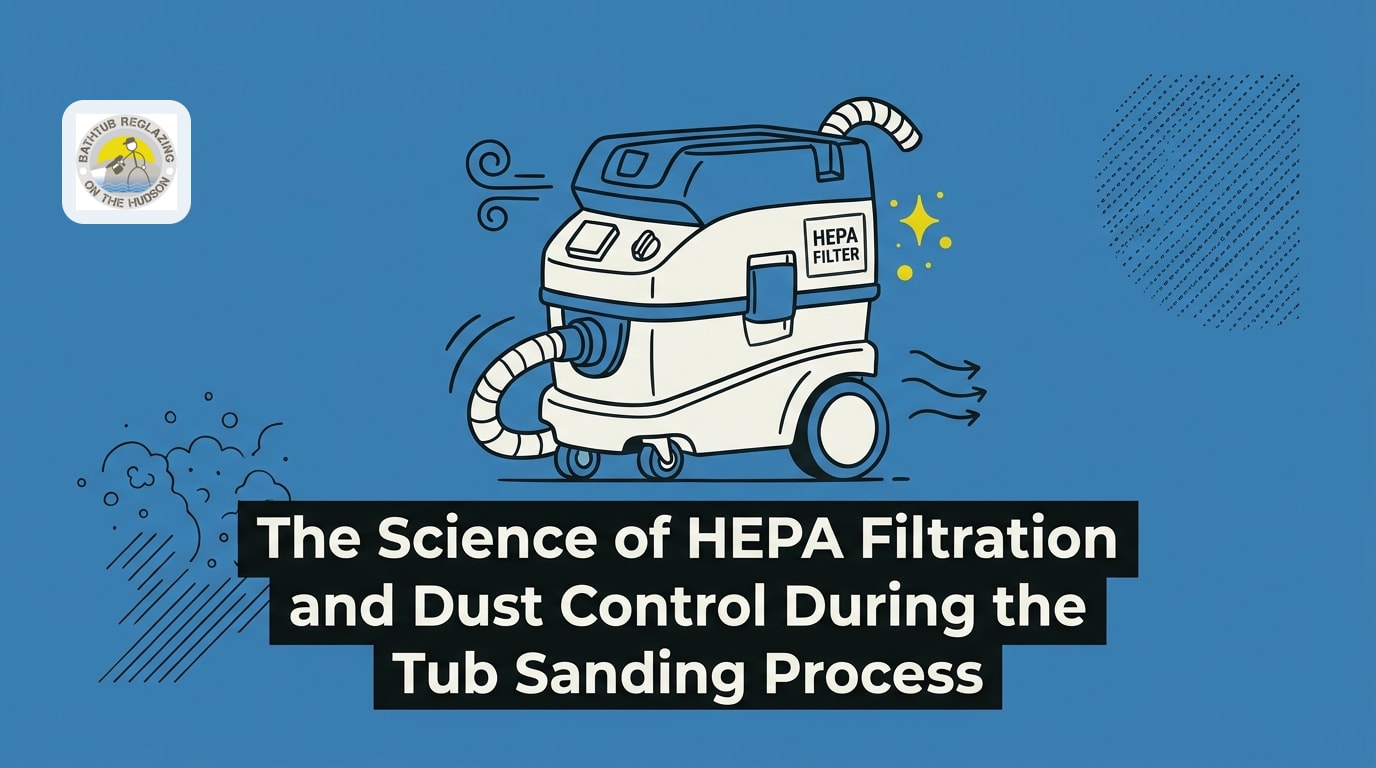
To truly isolate a workspace, professionals rely on a specific piece of commercial equipment: the HEPA negative air machine. This is not just a heavy-duty vacuum; it is a high-volume air scrubber designed to manipulate the atmospheric pressure inside your bathroom.
Negative air pressure is a simple concept with powerful results. By using a machine that pulls air out of the bathroom faster than it can naturally leak in, the system creates a slight vacuum effect. Because the pressure inside the bathroom is lower than the pressure in the hallway, air will only flow into the bathroom through the cracks around the door. It is physically impossible for dust to float out against this inward current of air. The contaminated air is then forced through a series of dense filters before being safely exhausted.
The mandatory use of commercial HEPA filtration and negative air machines is a strict professional standard that protects the homeowner's property and indoor air quality. The HEPA (High-Efficiency Particulate Air) standard is a rigorous certification. To qualify, a filter must capture at least 99.97% of airborne particles as small as 0.3 microns.
To put this in perspective, a standard household air purifier might move 50 to 100 cubic feet of air per minute (CFM). A commercial negative air machine moves anywhere from 500 to 1,000 CFM, meaning it completely replaces and scrubs the air in a standard bathroom dozens of times per hour. The machine continuously cleans the environment while the technician works, preventing dust from ever settling outside the immediate containment zone.
Understanding PM2.5 and Microscopic Particulates
When discussing indoor air quality, environmental scientists frequently refer to PM2.5. This stands for particulate matter that is 2.5 micrometers in diameter or smaller. For scale, a single human hair is about 70 micrometers across, making PM2.5 particles completely invisible to the naked eye.
Because these specific particles are so incredibly small and light, they bypass standard filters and can remain suspended in the air for days if undisturbed. When inhaled, PM2.5 can travel deeply into the respiratory tract. This is exactly why specialized HEPA technology is required during aggressive sanding. The dense, randomly arranged fibers of a HEPA filter use interception, impaction, and diffusion to trap these microscopic hazards permanently, ensuring they never reach your lungs or settle on your living room furniture.

Physical Containment and Property Protection Protocols
While the air machine handles the invisible threats, physical containment protocols manage the heavier debris and protect your property from accidental damage. Air filtration and physical masking must work in tandem to create a truly safe workspace. Meticulous physical preparation is the foundation of a clean, respectful service that leaves your home exactly as it was found.
During a recent summer project, a homeowner needed a safe, durable high-gloss finish applied to their aging fixture. The technician meticulously protected the surrounding area and transit paths, ultimately delivering a spotless workspace alongside the beautiful finish and explaining detailed care instructions. This level of care does not happen by accident; it requires a strict, step-by-step methodology.
The step-by-step physical containment process:
1. Securing Transit Areas: Before any tools enter the bathroom, heavy canvas drop cloths are laid down over stairs, hallways, and entryways to protect your flooring from foot traffic and equipment transport.
2. Masking the Immediate Zone: Inside the bathroom, all adjacent fixtures, mirrors, vanities, and flooring are covered with heavy-duty masking paper and plastic sheeting. This prevents accidental drips and catches heavy sanding debris.
3. Sealing the Doorway: The bathroom door is closed, and the gaps are often managed with specialized zip-wall plastic barriers. This ensures the negative air machine functions efficiently without drawing excessive, unnecessary air from the rest of the house.
4. Taping the Tub Perimeter: Precision painter's tape is applied exactly where the tub meets the tile or wall surround, ensuring the aggressive sanding pads never scuff your existing wall treatments.
When you schedule a bathtub reglaze, this level of physical masking is what separates a stressful, messy construction zone from a smooth, professional upgrade.
Protecting Your Home's HVAC System from Contamination
One of the most frequently overlooked aspects of bathroom remodeling is the home's central heating and cooling system. Your HVAC system acts as the respiratory system for your entire house, constantly pulling air in through return vents, conditioning it, and pushing it back out through supply registers. If sanding dust enters this system, a localized bathroom project instantly becomes a whole-home contamination event.
The problem occurs when a bathroom features an active return vent. If the negative air machine is not running, or if the vent is left open, the HVAC system will actively suck the microscopic PM2.5 dust out of the bathroom and distribute it into bedrooms, kitchens, and living rooms. Even a supply vent can be problematic, as blowing air can stir up settled dust and disrupt the careful balance of the negative air pressure zone.
The solution is strict isolation. Before any sanding or chemical preparation begins, technicians must completely seal off all bathroom HVAC return and supply vents using heavy plastic and specialized tape. By capping these vents, the bathroom is temporarily disconnected from the home's central airflow.
This protocol aligns with strict EPA and OSHA guidelines regarding nuisance dust control in residential environments. The combination of sealed HVAC vents, a taped doorway, and a high-CFM negative air machine ensures absolute zero cross-contamination. The air inside the bathroom is scrubbed independently, and the rest of your home remains completely untouched by the renovation process.
How Flawless Dust Control Ensures a Mirror-Smooth Finish
Dust control is undeniably about health, safety, and keeping your home clean, but it serves another highly technical purpose: it is absolutely critical for achieving a flawless, high-gloss surface. The aesthetic quality of the final product relies entirely on a pristine environment.
When the new liquid glaze is applied to the prepared tub, it remains wet and tacky for several hours. If the air in the room is filled with microscopic sanding dust, those particles will slowly settle onto the wet surface like a fine snow. Even a few stray particles can cause permanent imperfections, creating rough spots, dull patches, or tiny bumps in what should be a glass-like finish.
One summer project involving a heavily mineral-stained porcelain tub required aggressive restoration safely. By acting very protective of floors and surrounding workspaces with proper dust control, the technician transformed the stained tub into a spotless, shiny white bathtub without a single dust speck marring the surface.
The final steps to a dust-free application:
• Continuous Scrubbing: The negative air machine runs continuously after the sanding phase, clearing the air column of any lingering suspended particles before the spraying begins.
• Surface Vacuuming: The tub itself is thoroughly vacuumed with a HEPA-attached hose to remove heavy debris from the drain and corners.
• Chemical Wipe-Down: The surface is cleaned with specialized solvents to remove unseen oils and microscopic residues.
• Tack Cloth Application: Immediately before spraying, the technician wipes the entire tub with a specialized, slightly sticky tack cloth. This removes the very last traces of static dust that might be clinging to the porcelain.
This rigorous preparation ensures that the new coating lays down perfectly flat. It also means that when the masking is finally removed, the surrounding bathroom is spotless, requiring absolutely zero tub cleaning or dusting from the homeowner.
Frequently Asked Questions About Bathroom Refinishing Ventilation
How do professionals control dust when resurfacing a tub?
Professionals control dust by using a combination of heavy-duty physical masking, sealed HVAC vents, and commercial HEPA negative air machines. This multi-layered approach ensures that dust is captured at the source and the air is continuously scrubbed. By isolating the bathroom from the rest of the house, technicians prevent microscopic particles from migrating into living spaces.
Why is negative air pressure important during bathtub sanding?
Negative air pressure is important because it creates a one-way airflow that pulls clean air into the bathroom and prevents contaminated air from escaping under the door. It acts as an invisible barrier, ensuring that even the lightest, most microscopic dust particles cannot float out into your hallways. This physics-based approach is far more reliable than simply opening a window.
Can I use a regular shop vac for drywall or tub sanding?
No, a regular shop vac should never be used for fine tub sanding or drywall dust because standard paper filters cannot trap microscopic PM2.5 particles. Instead of containing the mess, a standard vacuum will exhaust the finest, most hazardous dust back into the air, effectively blowing it all over the room. Only a vacuum equipped with a true HEPA filter is rated to handle this type of debris.
Is bathtub reglazing dust dangerous to my indoor air quality?
Yes, uncontained bathtub reglazing dust can be hazardous to indoor air quality because it contains microscopic particles of old enamel, ceramic, and mineral deposits. If inhaled, these fine particulates can irritate the respiratory system and cause lingering dust problems throughout the home. That is why professional containment protocols are non-negotiable for a safe project.
How do you ventilate a bathroom without windows for reglazing?
A windowless bathroom is ventilated by setting up a commercial negative air machine that exhausts the scrubbed, filtered air through a specialized hose directed to another safe exhaust point or by heavily filtering the air before returning it to the space. Because the HEPA filter captures 99.97% of contaminants, the machine can safely manage the air quality even when natural outdoor ventilation is impossible.
Breathe Easy With Professional Grade Dust Containment
Updating your bathroom should be an exciting transformation, not a source of stress about indoor air quality and lingering messes. By utilizing commercial HEPA filtration and establishing true negative air pressure, the sanding and preparation phases are completely isolated from the rest of your home. This professional-grade approach ensures that microscopic dust is captured at the source, protecting your family's health, your HVAC system, and your living spaces.
You can breathe easy knowing that the right equipment eliminates the stress and mess typically associated with heavy bathroom renovations. Once the rigorous, dust-free preparation is complete, the application of the new finish can proceed flawlessly, resulting in a stunning, mirror-smooth surface. As you plan your project, we encourage you to look ahead and learn more about understanding the curing process so you know exactly what to expect in the hours immediately following your beautiful bathroom upgrade.
Schedule Service
Thank you! Your submission has been received!
Oops! Something went wrong while submitting the form.
Other Blogs
Customer Testimonials
Hear what customers are saying about our professional refinishing and outstanding results.

Can’t say enough about Maurice. From start to finish great communication his work is incredible and he stands by it very competitive pricing just all-around good guy the work was done quick and kept very clean and our brand new bathroom
Joey N.
We had a large piece of bathtub glaze chip off. Maurice came in and did a fantastic job. It now looks and works better than before. He went above and beyond the contract by cleaning up the old chipped grout between the tub and the tiles and replacing with brand new.
Bozidar J.
Maurice did a great job on my tub. It looks brand new.
Steven S.