
Navigating Commercial Bath Safety and Liability Before Winter
For facility managers dealing with aging, slippery tubs, applying non-slip glaze additives for commercial restroom safety is an urgent priority as we head into the busy indoor season. The transition into colder, wetter months brings a significant increase in indoor foot traffic and tracked-in moisture, magnifying the everyday hazards of worn porcelain and fiberglass fixtures. When commercial bathtubs lose their original textured grip, they transform from standard amenities into significant liability risks that demand immediate attention.
Property managers and owners often find themselves facing a difficult decision point: undertake costly, time-consuming full tub replacements that force rooms offline for weeks, or find a reliable way to upgrade existing fixtures to current safety standards. A typical pattern we see during September/early fall prep is facilities scrambling to find solutions that balance capital preservation with strict regulatory compliance.
Fortunately, tearing out structurally sound bathtubs is rarely the only path forward. Professional commercial reglazing services offer a streamlined, permanent solution. By integrating specialized non-slip textures directly into the finishing process, facilities can restore both the aesthetic appeal and the structural safety of their bathrooms without shutting down operations. This approach provides a clear, efficient path to compliance, ensuring your property is secure well before winter weather peaks.
The ADA Mandate: Understanding Slip-and-Fall Risks in Facilities
The Americans with Disabilities Act (ADA) sets rigorous standards for commercial facilities to ensure safe, accessible environments for all guests and residents. When it comes to bathing facilities, compliance is not merely a recommendation—it is a strict legal requirement. A primary focus of these regulations is the slip resistance of wet surfaces, which directly impacts the safety of high-turnover environments like hotels, fitness centers, and assisted living communities.
Slip-and-fall incidents remain one of the leading causes of commercial liability claims and workers' compensation costs across the country. In a commercial bathroom, the combination of soap, water, and smooth porcelain creates a highly hazardous environment. If a facility's tubs fail to meet safety thresholds, the resulting legal and financial repercussions from a single incident can be devastating. This is why securing a professional bathtub reglaze that incorporates certified non-slip technology is a critical component of risk management for Peekskill and Hudson Valley commercial properties.
Meeting these stringent standards requires structural, reliable solutions rather than temporary fixes. Facility managers must ensure that the surfaces their guests interact with provide consistent, measurable traction under fully wet conditions, day in and day out.
Measuring the Coefficient of Friction (COF)
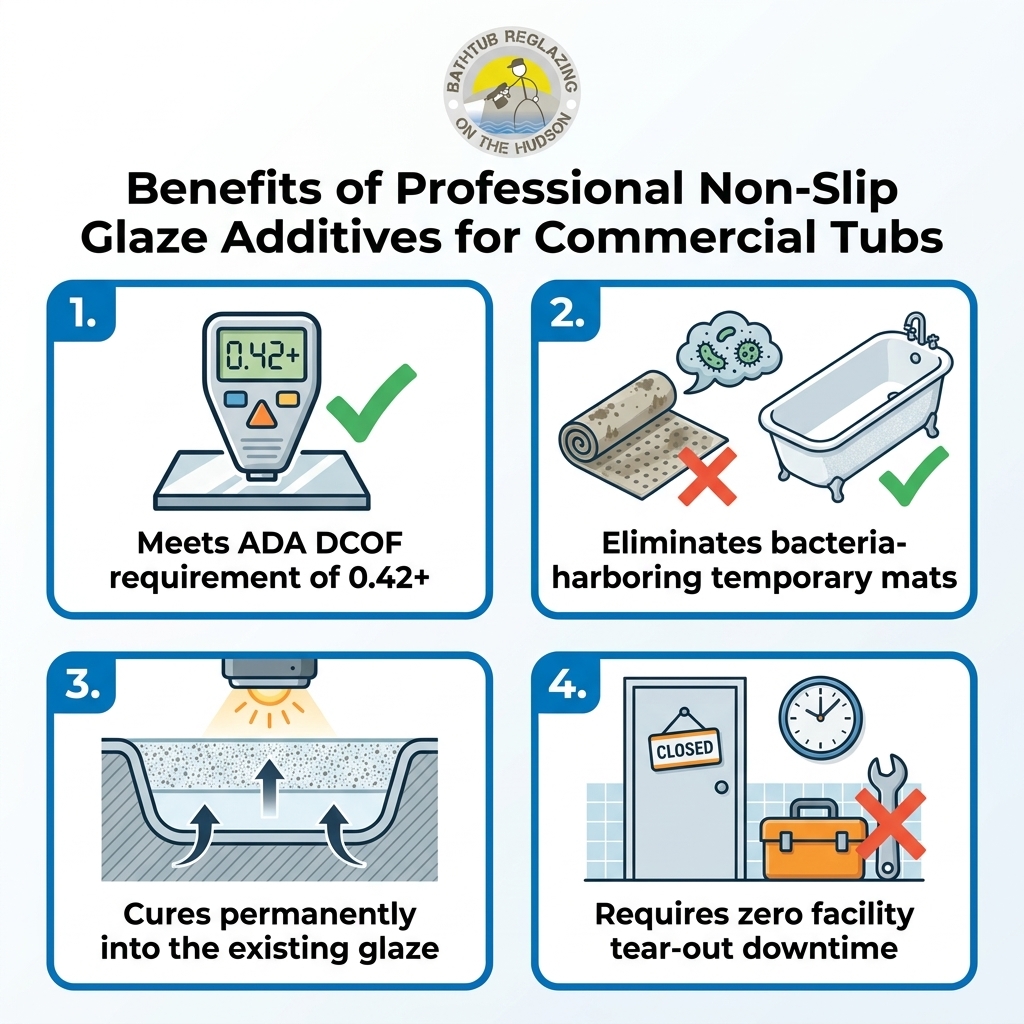
To quantify slip resistance, safety engineers use a metric known as the Coefficient of Friction (COF). Specifically, the ADA references the Dynamic Coefficient of Friction (DCOF), which measures the amount of friction present when a surface is wet and a person is actively moving across it. For commercial shower and tub floors, the accepted safety standard requires a DCOF rating of 0.42 or higher.
Professional glaze treatments are engineered and measured to ensure they meet or exceed these critical safety thresholds. Unlike aftermarket sprays that wear down unevenly, commercial-grade additives are formulated to provide a consistent DCOF rating across the entire floor of the tub, ensuring reliable traction that satisfies rigorous safety audits and protects the facility from negligence claims.
Why Temporary Commercial Bath Mats Fall Short
Faced with slippery bathtubs, many facility managers default to the quickest available fix: rubber bath mats or adhesive non-slip stickers. While these inexpensive options might seem like an easy way to address immediate complaints, they introduce a host of new hygiene and liability problems that make them entirely unsuitable for professional environments.
The primary issue with temporary bath mats in commercial settings is severe hygiene degradation. In high-traffic hotels or assisted living facilities, tubs are used daily. Water inevitably becomes trapped beneath the suction cups of rubber mats, creating a dark, damp breeding ground for bacteria, mold, and mildew. Housekeeping staff are forced to spend excessive time removing, scrubbing, and drying these mats to prevent foul odors and unsanitary conditions—a labor-intensive process that is rarely sustainable at scale.
Beyond the sanitary concerns, temporary mats present a massive liability risk. Suction cups degrade over time, especially when exposed to commercial cleaning chemicals. When a mat shifts, peels, or completely detaches while a guest is shifting their weight, the resulting fall is often more severe than if there had been no mat at all. Adhesive stickers suffer from similar failures, curling at the edges and creating tripping hazards while trapping grime underneath.
The superior alternative is the use of commercial-grade, ADA-compliant non-slip additives that permanently integrate into the glaze. This approach offers superior hygiene and liability protection compared to temporary mats, providing a seamless, easy-to-clean surface that cannot shift or peel. For Peekskill and Hudson Valley commercial properties, moving away from temporary mats is a necessary step toward modernizing facility safety and reducing housekeeping overhead.
The Mechanics of Built-In Non-Slip Glaze Integration
Understanding how professionals achieve a permanent, slip-resistant surface helps clarify why this process cannot be replicated with off-the-shelf DIY kits. The integration of non-slip additives is a highly specialized mechanical procedure that alters the physical composition of the tub's floor, ensuring the texture remains bonded for years under heavy commercial use.
During a recent fall maintenance push, a commercial property manager addressed a severely worn bathtub surface that was failing safety checks. A specialized team performed meticulous preparation, ensuring sharp edges were addressed and a smooth overall finish was achieved alongside the textured floor, followed by spotless cleanup. The resulting bathtub looked brand new with a flawless sheen and zero imperfections, demonstrating the precision required for commercial applications.
The professional process for integrating these additives during September/early fall prep involves several critical, highly controlled stages:
1. Chemical Stripping and Neutralization: Technicians completely remove any old coatings, soap scum, and mineral deposits. The surface is then neutralized to create a sterile baseline.
2. Mechanical Etching: The existing porcelain or fiberglass is etched to open the microscopic pores of the material. This ensures the new glaze will form a permanent mechanical bond rather than just sitting on the surface.
3. Additive Suspension: Commercial-grade polymer or mineral additives are suspended within the specialized base coat. These particles are distributed evenly to ensure consistent traction across the entire standing area.
4. Thermal Curing: The glaze is applied and chemically cured into the tub. The non-slip particles are essentially baked into the matrix of the finish, locking them in place permanently.
5. Sealing and Curing: A topcoat seals the edges of the textured area. This creates a surface that provides aggressive grip for wet feet but remains non-porous, meaning it will not trap dirt or harbor bacteria like traditional porous textures.
Because the additive is encapsulated within the glaze structure itself, it cannot peel off or wear away unevenly. This engineered durability is exactly what makes the professional application process the standard for achieving lasting ADA compliance.
Minimizing Facility Downtime and Protecting Assets
For any commercial operation, time is revenue. When a hotel room, gym locker room, or assisted living suite is offline for bathroom renovations, the facility actively loses money. This operational reality makes traditional tub replacement an incredibly disruptive prospect.
Replacing a commercial bathtub is rarely a simple swap. It typically involves weeks of downtime per unit. The process requires demolishing the surrounding tile, cutting into drywall, hiring plumbers to disconnect and reconnect fixtures, and managing the disposal of heavy debris. In contrast, durable surface refinishing offers a rapid turnaround that minimizes disruption. A professional team can often complete the reglazing and non-slip integration process in a single day, allowing the room to be returned to service almost immediately after the curing period.
Over the summer, another facility was evaluating whether an old, worn-out bathtub needed total replacement or if it could be salvaged. By choosing to reglaze the bathtub instead, the technicians ensured complete protection of the surrounding fixtures and performed a spotless cleanup afterwards. The tub was restored to look brand new—smooth, glossy, and perfectly textured for safety—without any of the demolition mess associated with a tear-out.
This approach is fundamentally about preserving the facility's capital while upgrading safety standards. By restoring structurally sound existing tubs for Peekskill and Hudson Valley commercial properties, owners can allocate their maintenance budgets much more effectively, achieving modern safety compliance without the staggering costs of a full bathroom remodel.
Preparing Commercial Restrooms for Increased Winter Moisture
The urgency of addressing slippery bathtubs is deeply tied to seasonal weather patterns. With summer temperatures fading, the reality of Peekskill NY's wet, snowy winters and humid summers comes into sharp focus. The upcoming months bring a unique set of challenges that drastically increase the risk of slip-and-fall incidents inside commercial facilities.
As guests and staff navigate through slush, snow, and freezing rain, they inevitably track significant amounts of moisture into the building. This water is transferred from heavy winter boots directly onto bathroom floors and, eventually, into the tubs and showers. When a tub surface is already worn smooth from years of use, the addition of this tracked-in winter moisture multiplies the slip hazard exponentially.
This is why strategic timing is essential. Performing maintenance and safety upgrades before the peak indoor season begins allows facilities to get ahead of the weather curve. Waiting until the first major snowstorm hits means you are already operating in a high-risk environment. Framing the proactive application of non-slip additives as essential seasonal risk management ensures that Peekskill and Hudson Valley commercial properties are fully prepared to handle the increased moisture safely.
Weighing the Options: Upgrading vs. Replacing
When assessing a large inventory of aging commercial bathtubs, facility managers must carefully weigh the long-term implications of their maintenance strategy. Synthesizing the costs, labor requirements, and ultimate safety outcomes makes the choice between upgrading and replacing much clearer.
Total replacement involves high material costs, extensive manual labor, plumbing modifications, and the inevitable loss of revenue while rooms sit empty. Conversely, upgrading via professional non-slip glaze additives utilizes the existing, structurally sound tub shell. The end result of professional reglazing meets the exact same ADA compliance standards as a brand-new textured tub, but achieves that standard with a fraction of the friction and waste.
Facility managers should actively evaluate their current tub inventory to determine suitability for upgrading. If the underlying fiberglass or porcelain is intact and only the surface finish and traction have degraded, refinishing is almost always the superior operational choice. For a deeper dive into the specific financial and logistical differences, reviewing a detailed comparison of bathtub reglazing vs. replacement can provide the necessary data to make an informed capital decision during September/early fall prep.
• Facility Downtime — Full Tub Replacement: 1 to 2 weeks per unit (demolition, plumbing, tile repair) — Integrated Non-Slip Reglazing: 24 to 48 hours (including curing time)
• ADA Compliance — Full Tub Replacement: Meets DCOF standards (if specific textured models are purchased) — Integrated Non-Slip Reglazing: Meets or exceeds DCOF 0.42 standards reliably
• Hygiene Profile — Full Tub Replacement: Excellent (new surface) — Integrated Non-Slip Reglazing: Excellent (non-porous, sealed texture)
• Environmental Impact — Full Tub Replacement: High waste (old tub and tile sent to landfill) — Integrated Non-Slip Reglazing: Eco-friendly (preserves existing materials)
Frequently Asked Questions About Commercial Tub Safety
How do professionals make a commercial tub slip-resistant?
Professionals make a commercial tub slip-resistant by mechanically etching the existing surface and baking specialized polymer or mineral additives directly into a new glaze coating. This process permanently locks the textured particles into the finish, ensuring they cannot peel or wash away. The result is a highly durable, non-porous floor that provides excellent traction while remaining easy for housekeeping staff to clean.
What are the ADA compliance standards for commercial showers?
The ADA compliance standards for commercial showers dictate that wet walking surfaces must be slip-resistant to prevent accidents. Specifically, the industry standard relies on a Dynamic Coefficient of Friction (DCOF) rating of 0.42 or higher for surfaces that will be walked on when wet. Professional reglazing with non-slip additives is explicitly designed to meet or exceed these exact metric requirements to protect Peekskill and Hudson Valley commercial properties from liability.
Why are non-slip glazes better than commercial bath mats?
Non-slip glazes are vastly superior to commercial bath mats because they eliminate the severe hygiene and liability risks associated with temporary solutions. Bath mats trap water beneath their suction cups, creating ideal breeding grounds for bacteria, mold, and foul odors. Furthermore, mats can easily shift, curl, or detach during use, actively causing the slip-and-fall accidents they are meant to prevent, whereas integrated glazes remain permanently fixed.
Are anti-slip bathtub coatings permanent?
Yes, when applied by a professional using commercial-grade thermal curing methods, anti-slip bathtub coatings are considered a permanent integration into the tub's surface. Because the texture is suspended within the glaze and chemically bonded to the etched tub shell, it will not peel, flake, or degrade like aftermarket adhesive stickers or DIY spray-on treatments. It becomes a structural part of the fixture itself.
How long does professional non-slip tub coating last in a hotel?
In a high-turnover environment like a hotel, a professional non-slip tub coating typically lasts for many years, mirroring the lifespan of the reglazed surface itself. The exact longevity depends on the facility's adherence to proper cleaning protocols—specifically avoiding harsh abrasive scouring pads that can prematurely wear down the topcoat. With standard, non-abrasive commercial cleaning, the slip-resistant properties remain highly effective and compliant over the long term.
Secure Your Facility's Restrooms for the Season Ahead
Understanding how professional non-slip glaze additives work empowers facility managers to make smart, cost-effective decisions about their property's maintenance. Proactive upgrades during your September/early fall prep window prevent long downtimes and mitigate severe liability risks before the harsh winter weather arrives. By choosing to restore and enhance your existing fixtures, you preserve capital while ensuring the highest safety standards for your guests. We encourage you to explore professional assessment options today to ensure your restrooms achieve full ADA compliance without the disruption of a remodel.
Schedule Service
Thank you! Your submission has been received!
Oops! Something went wrong while submitting the form.
Other Blogs
Customer Testimonials
Hear what customers are saying about our professional refinishing and outstanding results.

Can’t say enough about Maurice. From start to finish great communication his work is incredible and he stands by it very competitive pricing just all-around good guy the work was done quick and kept very clean and our brand new bathroom
Joey N.
We had a large piece of bathtub glaze chip off. Maurice came in and did a fantastic job. It now looks and works better than before. He went above and beyond the contract by cleaning up the old chipped grout between the tub and the tiles and replacing with brand new.
Bozidar J.
Maurice did a great job on my tub. It looks brand new.
Steven S.