

The Hidden Danger of a Deteriorating Overflow Drain
You step into the shower and notice a brittle, orange ring flaking away from the metal plate near the top of the tub. It looks like a minor cosmetic annoyance, but that flaking metal is actually a warning sign of a much deeper structural failure. Understanding exactly how we rebuild rusted overflow drain holes on pressed steel tubs is the key to preventing catastrophic water damage inside your walls. The overflow drain is not just a decorative hole; it relies on a perfectly flat, structurally sound steel surface to maintain a watertight mechanical seal with the rubber gasket hidden behind your bathroom wall.
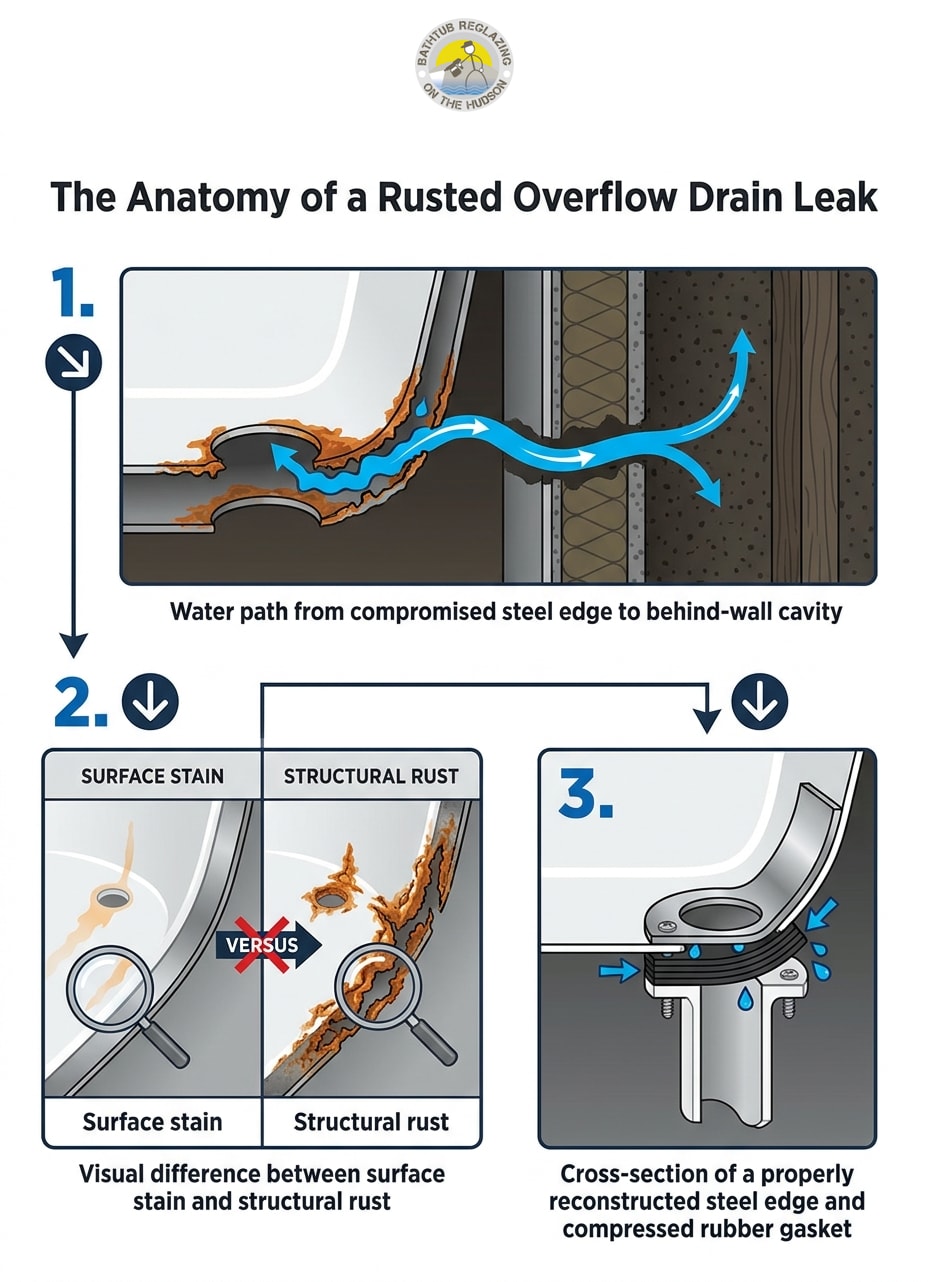
When oxidation compromises this critical edge on pressed steel bathtubs, that tight seal is broken. Every time water sloshes against the overflow plate, moisture escapes behind the tub, silently saturating your drywall, framing, and lower-level ceilings. Simply painting over this structural rust is a temporary illusion that completely fails to restore the necessary mechanical seal required to keep water in the tub where it belongs. Professional reconstruction is the only way to permanently resolve the issue before applying a final glaze. If you are considering a bathtub reglaze, addressing this structural damage first is non-negotiable. Proper bathtub restorations demand that the underlying foundation is completely sound before any cosmetic work begins.
Why Pressed Steel Tubs Are Uniquely Vulnerable to Rust
To understand why this specific type of damage occurs, we have to look at the material science behind your bathroom fixtures. Pressed steel bathtubs are manufactured by stamping a sheet of steel into the shape of a tub and then coating it with a protective layer of factory enamel. This enamel is incredibly durable, but it is also a glass-like substance. Unlike cast iron, which is massive and oxidizes relatively slowly, the thin profile of pressed steel is highly susceptible to rapid oxidation the moment that protective enamel barrier is breached.
Once a tiny chip, micro-crack, or installation scratch occurs near the drain plate, moisture finds its way to the raw steel underneath. This initiates a relentless rusting process. The environment in the bathroom only accelerates this decay. With moisture condensation during harsh winters and humid summers in older Hudson Valley homes, the steel around compromised fixtures is constantly subjected to wet-to-dry cycles. As the steel rusts, it expands and flakes away, causing more enamel to pop off in a widening circle.
This is a particularly common issue we see in Peekskill and Hudson Valley older homes, where original pressed steel tubs are still in heavy use. As the steel edge begins to flake and crumble away, the rubber gasket located behind the tub loses its compression surface. A gasket cannot seal against jagged, missing metal.
The Anatomy of a Behind-the-Wall Leak
Understanding the physical layout of your tub's plumbing highlights exactly why this rust is so dangerous. The overflow system consists of several components working together under pressure:
• The Faceplate: The visible metal disc inside the tub that you see every day.
• The Tub Wall: The pressed steel barrier that separates the inside of the tub from the wall cavity.
• The Rubber Gasket: A thick, beveled rubber ring that sits behind the tub wall.
• The Overflow Pipe: The plumbing pipe that connects to the gasket and carries water down to the main drain.
When you tighten the screws on the faceplate, it sandwiches the tub wall and the rubber gasket together. If the tub wall is missing chunks of steel due to rust, the gasket has nothing to press against. Water bypassing this rusted edge travels directly down the exterior of the tub, completely unseen, leading to severe secondary damage to your home's framing and drywall.
Identifying Structural Damage vs. Surface Staining
Not every orange mark around your drain plate requires a full reconstruction. Helping homeowners understand the severity of their specific issue and knowing when professional intervention is required is a major part of our evaluation process. Hard water stains can sometimes mimic the appearance of rust, but the physical characteristics are very different.
• Texture — Surface Hard Water Staining: Smooth or slightly chalky to the touch. — Structural Steel Rust: Rough, jagged, flaking, or actively crumbling.
• Location — Surface Hard Water Staining: Drips downward from the plate in a straight line. — Structural Steel Rust: Eats into the metal directly under the edge of the plate.
• Metal Integrity — Surface Hard Water Staining: The steel underneath remains completely solid. — Structural Steel Rust: The steel yields, bends, or breaks away when pressed.
• Enamel Condition — Surface Hard Water Staining: The enamel is intact beneath the discoloration. — Structural Steel Rust: The enamel is bubbling, cracking, or missing entirely.
The professional diagnostic process for assessing whether the steel is structurally compromised involves safely exposing the damage. By removing the overflow drain plate, we can evaluate the true integrity of the surrounding tub wall. We check the thickness of the remaining metal and look for signs of moisture behind the tub.
Uncovering hidden rust damage early often saves an otherwise good tub from full replacement. One homeowner reached out to us during winter when severe rust damage on an otherwise good tub threatened to require a full replacement. By identifying the exact boundaries of the structural decay, we fixed the rust efficiently to save the customer from replacing the tub, successfully restoring the fixture quickly and cleanly. This level of diagnosis ensures we only rebuild what is truly broken on pressed steel bathtubs.
Methodology Phase 1: Precision Removal of Compromised Steel
When dealing with structural rust, there are no shortcuts. Any remaining rust left behind will continue to spread beneath the surface like a slow-moving infection, making the total removal of oxidized metal absolutely non-negotiable. This is where professional methodology diverges sharply from amateur repairs.
Cheap contractor methods often involve merely applying chemical rust converters, spreading automotive body filler over the flaking metal, and painting over the damage. This approach guarantees a failure within months because the underlying metal continues to decay, eventually pushing the filler right off the tub. Our professional approach mandates physical rust removal.
The cutting process: We use specialized, high-speed rotary tooling equipped with metal-cutting discs and grinding stones to physically cut away the deteriorating edges. We meticulously grind back the metal until we reach bright, shiny, healthy steel. This ensures that the oxidation process is completely halted.
Stabilizing the structure: Once the diseased metal is removed, we must stabilize the remaining tub structure. We treat the freshly cut edges with professional-grade rust inhibitors that penetrate the microscopic pores of the steel, sealing it against future moisture. This preparation readies the tub for the reconstruction phase.
This level of material removal requires careful calibration. Removing too much metal or cutting unevenly can destroy the tub's natural curvature, making it impossible to seat the faceplate correctly later. We often perform this intensive work during fall pre-winter maintenance (preventing leaks before holiday guest season), ensuring the bathroom is fully operational and leak-free before the house sees an influx of visitors.
Methodology Phase 2: Reconstructing a Flat, Watertight Edge
With the compromised steel completely removed, we are often left with an irregular, jagged hole that is significantly larger than the original drain opening. The technical process of rebuilding this missing steel is the most demanding phase of the restoration. The goal is to ensure the overflow gasket can seal properly against a perfectly flat surface.
We begin by applying advanced structural fillers and woven fiberglass meshes. These industrial-grade materials are specifically designed to bridge the gap where the rusted steel was removed. The fiberglass mesh provides the necessary tensile strength, acting like rebar in concrete, while the structural filler provides the rigid mass.
As these materials undergo their chemical curing process, they bond molecularly with the existing pressed steel bathtubs. This isn't just a patch sitting on top of the metal; it becomes a seamless extension of the tub wall itself. Once fully cured, the new material is harder than the original steel.
The next step is meticulous sanding and shaping. Using specialized contour sanders, we shape the new edge so it is perfectly flat and flush with the tub's original geometry. This reconstructed edge provides the exact compression resistance required for a new rubber gasket to form a watertight barrier. If you are investing in professional reglazing, this structural integrity and technical precision guarantee a permanent fix rather than a temporary cover-up.
Testing the Gasket Compression Surface
Before we ever move on to the cosmetic finishing stages, we must verify that the newly built edge is structurally sound.
• Pressure Testing: We physically press against the reconstructed area to ensure it exhibits zero flex or give.
• Flatness Verification: Professional technicians use a straight edge to measure for uniform flatness across the entire diameter of the drain hole.
• Thickness Calibration: We verify that the new edge matches the exact thickness of the original steel, ensuring the faceplate screws will thread properly without binding.
Methodology Phase 3: Surface Preparation and Final Integration
Once the structural repair is verified, we transition into the cosmetic surface preparation. The goal here is to blend the reconstructed area seamlessly into the rest of the tub so that the repair is completely undetectable to the naked eye.
This phase begins with the application of specialized bonding agents. These chemical adhesion promoters are formulated to ensure the final coating adheres equally well to both the original factory enamel, the bare steel, and the new structural fillers. Without these advanced bonding agents, the different materials would expand and contract at different rates, leading to premature peeling.
After the bonding agents cure, we apply the final comprehensive coating process. Multiple layers of high-performance acrylic urethanes are sprayed over the entire fixture. This meticulous preparation prevents moisture from ever reaching the structural repair again. The entire tub is encapsulated in a waterproof, glossy shell.
The result is a surface that looks and feels exactly like a brand-new tub. The repaired area becomes completely invisible once the comprehensive tub refinishing process is complete. For homeowners in Peekskill and Hudson Valley older homes, this means retaining the classic look and solid feel of their original fixtures without the fear of hidden leaks destroying their walls.
The Importance of Proactive Bathroom Plumbing Maintenance
Ignoring the early signs of rust around your bathroom fixtures carries compounding risks. What begins as a minor cosmetic blemish rapidly escalates into a severe plumbing emergency. A small rust spot is almost always an indicator of a much larger, hidden oxidation issue behind the drain plate.
The timeline of water damage is unforgiving. Slow, hidden drips behind the wall rarely dry out. Over the course of a few weeks, that trapped moisture begins to break down the paper backing of your drywall. Over several months, the constant dampness leads to extensive mold growth and begins to rot the wooden framing studs that support your bathroom floor.
Addressing these repairs proactively before the bathroom sees increased usage is the smartest financial decision a homeowner can make. Scheduling this type of repair during fall pre-winter maintenance (preventing leaks before holiday guest season) ensures your home is protected when plumbing systems are under the highest stress.
Structural tub repairs are not just about making the bathroom look nice; they are a direct investment in the overall longevity of your home's plumbing infrastructure. Stopping a leak at the source by rebuilding a failing overflow drain saves thousands of dollars in secondary drywall and carpentry repairs down the road.
Common Questions About Overflow Drain Rust and Restoration
Can a rusted bathtub overflow drain be permanently fixed?
Yes, it can be permanently fixed if the rust is completely removed. Professional technicians physically cut away the oxidized metal and rebuild the edge using structural fiberglass and specialized fillers. This ensures the rust cannot spread and provides a solid surface for the gasket to seal against.
Why is my bathtub rusting around the overflow drain?
Rust occurs when the protective factory enamel on pressed steel bathtubs is chipped, scratched, or worn away, exposing the raw steel underneath to constant moisture. The humid environment of a bathroom accelerates this oxidation, causing the steel to flake and expand around the drain opening.
Does a rusted pressed steel tub need to be fully replaced?
In most cases, no. As long as the rust has not compromised the structural integrity of the entire tub basin, the localized damage around the overflow drain can be cut out and rebuilt. This restoration process is significantly more cost-effective than tearing out walls and plumbing to install a new tub.
How do professionals fix a rusted hole in a bathtub?
Professionals use high-speed rotary tools to grind away all the diseased, flaking metal until they reach solid steel. They then apply rust inhibitors, bridge the missing gap with structural fiberglass mesh and fillers, sand it perfectly flat, and encapsulate the repair in a waterproof glaze.
Will a DIY epoxy kit stop my bathtub from rusting?
No, DIY epoxy kits merely cover up the problem temporarily. Because these kits do not physically remove the underlying oxidized metal, the rust will continue to grow beneath the epoxy patch, eventually causing it to bubble, crack, and fail completely.
How long does a reconstructed bathtub edge last?
When properly reconstructed and encapsulated by a professional reglazing process, the repaired edge will last just as long as the new finish on the tub itself—typically 10 to 15 years or more with proper care and non-abrasive cleaning routines.
Securing Your Bathtub's Structural Integrity for the Long Haul
True restoration requires cutting out the rust and physically rebuilding the edge, not just hiding the damage beneath a layer of paint. By prioritizing structural integrity over cosmetic cover-ups, we ensure that your tub's overflow gasket is sealed against a perfectly flat, solid surface, preventing hidden leaks from destroying the walls of your home.
The peace of mind that comes from knowing your fixture is structurally sound is invaluable, especially for those maintaining Peekskill and Hudson Valley older homes. If you notice brittle, flaking steel around your fixtures, do not wait for a leak to develop. Reach out for a professional evaluation to discuss how proper bathtub restorations can permanently solve the problem and give your original tub decades of renewed life.
Schedule Service
Thank you! Your submission has been received!
Oops! Something went wrong while submitting the form.
Other Blogs
Customer Testimonials
Hear what customers are saying about our professional refinishing and outstanding results.

Can’t say enough about Maurice. From start to finish great communication his work is incredible and he stands by it very competitive pricing just all-around good guy the work was done quick and kept very clean and our brand new bathroom
Joey N.
We had a large piece of bathtub glaze chip off. Maurice came in and did a fantastic job. It now looks and works better than before. He went above and beyond the contract by cleaning up the old chipped grout between the tub and the tiles and replacing with brand new.
Bozidar J.
Maurice did a great job on my tub. It looks brand new.
Steven S.