
Can You Reglaze a Jetted Jacuzzi Tub? Understanding the Risks and Technical Realities
Can you reglaze a jetted jacuzzi tub when the surface begins to look worn, or will the chemicals permanently ruin the internal plumbing? In our years serving Peekskill and the wider Hudson Valley, this is the most critical question we hear from homeowners looking at aging, discolored fixtures—especially those popular 1990s and early 2000s drop-in models. The short answer is yes, you absolutely can refinish these complex systems. However, the process is vastly more complex than painting a standard flat bathtub. Determining if molded acrylic jetted tubs can be safely reglazed requires understanding the unique risks involved and why our specialized professional techniques are mandatory.
The primary risk when working with any jetted system is the introduction of liquid coatings into the mechanical components. If liquid urethane glaze enters the plumbing lines or clogs the delicate jet housings, it can permanently seize the motor and ruin the entire tub. Because of this severe risk, standard painting methods are completely inadequate. You need professional bathtub reglazing that focuses heavily on mechanical isolation.
When you decide to restore a jetted tub, you are making a decision between a simple surface coating and a highly technical restoration. Molded acrylic jetted tubs feature intricate curves, recessed nozzles, and hidden water lines that a traditional cast iron tub simply does not have.
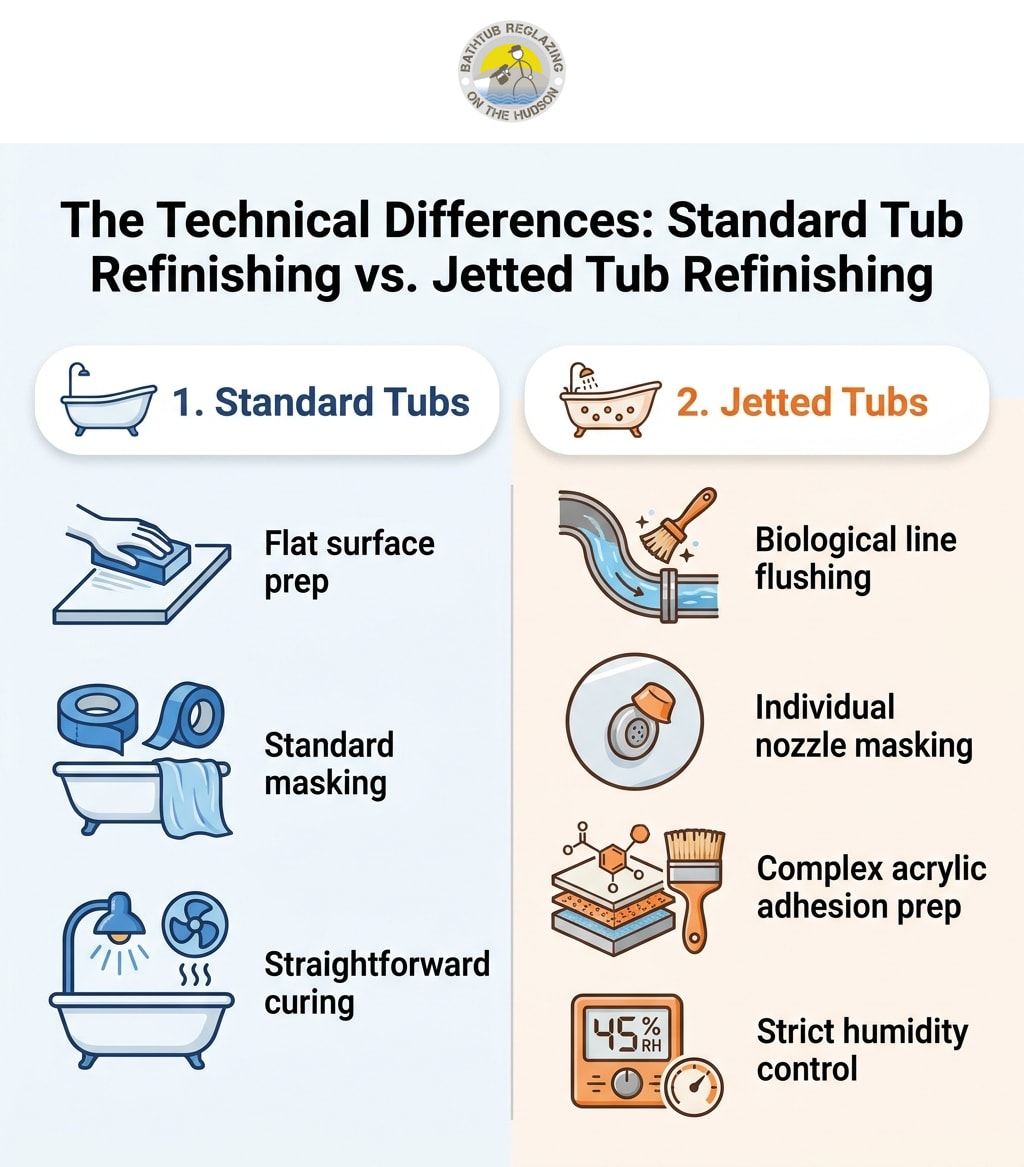
• Surface Material — Standard Cast Iron Tub: Rigid, inflexible metal and porcelain — Molded Acrylic Jetted Tub: Flexible, lightweight acrylic that shifts slightly under weight
• Plumbing Complexity — Standard Cast Iron Tub: Single drain and overflow valve — Molded Acrylic Jetted Tub: Multiple recessed water jets, air intakes, and internal lines
• Preparation Needs — Standard Cast Iron Tub: Basic acid etching and cleaning — Molded Acrylic Jetted Tub: Deep biological line flushing and advanced chemical bonding
• Masking Requirements — Standard Cast Iron Tub: Minimal tape around the drain and spout — Molded Acrylic Jetted Tub: Individual, watertight masking for every single jet nozzle
Understanding these technical realities is the first step in ensuring your bathroom update goes smoothly. A successful project requires meticulous preparation, strict chemical controls, and a deep understanding of how molded acrylic behaves under stress.
Why Molded Acrylic Presents Unique Adhesion Challenges
The material composition of your tub dictates exactly how it must be treated. Molded acrylic presents unique chemical and physical challenges that standard porcelain or cast iron tubs do not. The main problem stems from flexibility. When you step into a cast iron tub, the floor remains completely rigid. When you step into molded acrylic jetted tubs, the material naturally flexes and shifts under your body weight. If a rigid coating is applied over a flexible surface, the new finish will immediately crack, spiderweb, and peel.
Because of this constant flexing, standard over-the-counter epoxies and hardware store paints routinely fail on acrylic surfaces. The cause of this failure is a lack of proper chemical adherence. Achieving a uniform bond is incredibly difficult on the intricate curves, steep slopes, and deep recesses surrounding jacuzzi jet nozzles. If the surface is not prepared correctly, you will quickly see severe consequences like peeling, flaking, and bubbling directly around the water line.
We see this pattern frequently at Bathtub Reglazing On The Hudson. Last October, a Peekskill homeowner reached out with severe bubbling issues on their standard 60x32 inch acrylic drop-in tub from previous failed painters who used standard materials. Because the wrong bonding agents were applied, the finish lifted away from the acrylic. Our professional team had to come back to fix the bubbling issue, stripping the failed paint and applying the correct chemical bonding agents to resolve the difficult job with a professional finish. If you want a lasting result, relying on dedicated tub refinishing services is the only way to ensure the coating flexes with the tub.
The Chemistry of Bonding Urethane to Acrylic
To overcome the flexibility of acrylic, our professionals rely on advanced etching compounds and specialized urethane coatings. The chemistry of bonding requires opening the microscopic pores of the acrylic surface without melting or distorting the plastic.
• Advanced etching: Professional-grade chemical etchers dull the glossy finish of the acrylic, creating a microscopic texture that gives the new primer something to grip.
• Molecular bonding agents: Instead of just sitting on top of the surface like standard paint, specialized silane bonding agents create a chemical bridge between the acrylic and the new urethane topcoat.
• Flexible urethane: High-performance aliphatic acrylic urethanes are used because they retain a slight degree of elasticity after curing, allowing them to flex with the tub rather than snapping under pressure.
The Hidden Threat: Bio-Film and the Necessity of Deep Line Flushing
While surface preparation gets most of the attention, the biggest threat to a successful jetted tub restoration is actually hiding where you cannot see it. Deep inside the internal plumbing lines of your jacuzzi tub lies a biological hazard known as bio-film. Bio-film is a sticky, protective matrix created by bacteria that thrive in dark, damp environments. Every time you run your jets, skin cells, soap scum, and oils circulate through the plumbing, feeding this bacteria and creating a thick, stubborn sludge inside the pipes.
If these lines are not biologically purged prior to surface preparation, disaster is nearly guaranteed. During the reglazing process, any trapped moisture or biological contamination from uncleaned lines can easily seep out of the jet nozzles. Even a single drop of contaminated water hitting uncured urethane will instantly ruin the chemical bond, creating a weak spot that will peel within weeks. This is why standard tub cleaning and maintenance must be escalated to a professional chemical flush before any masking begins.
The professional line-flushing process our team follows uses strict protocols to ensure the internal plumbing is completely neutralized:
1. High-alkaline circulation: Specialized bio-film strippers are circulated through the active jets for an extended period to break down the sticky biological matrix inside the pipes.
2. Freshwater purging: The system is drained and flushed multiple times with clean water to push out all dislodged debris and chemical residue.
3. Forced air drying: High-powered vacuums and blowers (often exceeding 120 CFM) are used to force every remaining drop of moisture out of the lines, ensuring the internal system is bone dry.
4. Sanitization lockdown: A final sanitizing agent is applied to prevent any new bacterial growth while the tub is out of commission for the reglazing process.
Preventing Moisture Contamination During Curing
Residual water is the enemy of curing urethane. If water sits in the jet lines, changes in atmospheric pressure or ambient room temperature can cause that moisture to sweat out of the nozzles. Our professionals use heavy-duty desiccant dehumidifiers and specialized air compressors to guarantee completely dry lines before the first drop of primer is ever mixed. This is especially important during fall (pre-holiday bathroom updates) when homeowners are rushing to get guest bathrooms ready and cannot afford unexpected delays or curing failures.
Advanced Masking Protocols to Protect Jacuzzi Jets and Motors
Once the lines are biologically clean and completely dry, the physical preparation of the tub begins. For molded acrylic jetted tubs, this requires meticulous physical isolation to protect the mechanical components from reglazing chemicals. You might wonder why the jets are not simply unscrewed and removed before the coating is applied. The reality is that removing hardware is often impossible or far too risky for older jetted tubs, particularly those vintage 1990s models.
The water seals and rubber gaskets located directly behind the jet nozzles become brittle over years of exposure to hot water and chemicals. If a technician attempts to unscrew an old jet, those brittle seals often shatter. Because access behind a built-in tub is usually non-existent without tearing out drywall, a broken seal means a massive water leak the next time the tub is filled. To avoid this, advanced masking protocols in place are the professional standard.
This meticulous attention to detail is a hallmark of high-quality restoration. During a recent mid-fall project, a customer needed bathtub resurfacing and new caulking done cleanly around complex fixtures. Our technicians laid down canvas on the stairs and bathroom floors to protect the home, carefully applying new caulking and chemical-resistant 3M masking tape to ensure the bathtub looked new with a neat and clean finish. This highlights our specialized expertise in meticulously masking complex jacuzzi jets and properly prepping acrylic shapes to ensure a flawless finish without compromising plumbing lines. If you are scheduling bathtub reglazing in Westchester County, this level of protective care is essential.
The Danger of Overspray in Intake Valves
The critical threat: Even microscopic amounts of urethane overspray can spell disaster for a jacuzzi system. The intake valves, which suck water from the tub back into the pump, contain delicate impellers. If urethane dust is pulled into these valves, it acts like a powerful glue, permanently seizing the jacuzzi motor the moment it dries.
The isolation solution: Our technicians use specialized, chemical-resistant tapes and physical foam barriers to seal off every individual jet nozzle, intake valve, and air switch. These barriers are custom-cut to fit the exact diameter of each fixture, guaranteeing zero chemical intrusion while still allowing the urethane to coat the acrylic flawlessly right up to the edge of the hardware.
Controlling the Environment for Optimal Urethane Curing
Applying the urethane is only half the battle; ensuring it cures properly is equally important. The ambient conditions in your bathroom directly affect the cross-linking and curing process of the glaze, specifically on complex acrylic shapes. High-performance aliphatic urethanes have strict manufacturer specifications for temperature and humidity ranges. If the air is too cold, the chemical cross-linking slows down, resulting in a soft, easily scratched finish. If the air is too humid, moisture gets trapped in the coating, causing a cloudy appearance known as "blushing."
This environmental control is critical depending on the time of year. With the ambient humidity and seasonal temperature shifts in the Hudson Valley during mid-fall, careful indoor environmental control is required to ensure the urethane cures properly around masked jet housings. As the weather cools down this October, transitioning your home's HVAC system to heating can actually be leveraged to your advantage. Running the furnace lowers the indoor relative humidity, creating a drier environment that is ideal for urethane curing.
Our professionals do not leave this to chance. We utilize heavy-duty ventilation systems to exhaust chemical fumes outside while simultaneously using climate-control equipment to maintain the ideal curing window between 68°F and 72°F. By keeping the bathroom at a consistent, warm temperature with low humidity, the urethane forms a rock-hard, durable shell over the molded acrylic, ensuring your fall (pre-holiday bathroom updates) are ready for heavy use by visiting family and friends.
Frequently Asked Questions About Refinishing Jetted Tubs
When researching how to restore an aging fixture, homeowners often have highly specific concerns about the safety and feasibility of the process. Before diving into the answers below, it is helpful to understand the underlying material of your fixture, as diagnosing spiderweb cracks in acrylic bathtubs often points to the need for immediate professional restoration. Here are the most common questions our team fields regarding the restoration of molded acrylic jetted tubs.
Can you paint over jacuzzi jets?
No, you absolutely cannot paint over jacuzzi jets. Painting over the jets will permanently seal them shut, freezing the directional nozzles in place and ruining the tub's functionality. Furthermore, standard paint will quickly peel off the plastic or metal jet covers when exposed to hot, churning water. Our professionals will always meticulously mask off every individual jet housing to protect the mechanics while ensuring the surrounding acrylic is flawlessly coated.
Can a fiberglass or acrylic jacuzzi tub be refinished?
Yes, a fiberglass or acrylic jacuzzi tub can be successfully refinished, provided the correct chemical bonding agents and etching processes are used. Because these materials flex under weight, standard rigid coatings will crack. Professionals use specialized aliphatic urethanes that retain a slight elasticity, allowing the new finish to flex naturally with the tub without peeling or spiderwebbing.
How do you update an old jetted tub without replacing it?
Professional reglazing combined with deep biological line-flushing offers a complete aesthetic update while preserving the existing plumbing. Instead of spending weeks tearing out tile, drywall, and plumbing to remove the heavy unit, a professional technician can chemically clean the internal lines, repair surface damage, and apply a brand-new, durable urethane finish in a fraction of the time, making the tub look factory-new.
Can you remove jets from a jacuzzi tub to paint it?
While it is technically possible to remove jets in some modern, freestanding models, removing older jets often breaks the brittle, aged water seals located behind the tub shell. Because accessing these broken seals requires tearing open the surrounding walls, in-place masking is the safer, preferred professional standard we employ. Custom-cut chemical tape allows the tub to be coated perfectly right up to the edge of the hardware without risking a catastrophic water leak.
What happens to the plumbing lines during tub refinishing?
The internal plumbing lines are completely protected during the refinishing process. First, they are chemically flushed to remove bio-film, then completely dried using forced air, and finally meticulously sealed off with physical barriers. This strict isolation protocol ensures that absolutely zero reglazing chemicals, dust, or urethane overspray can enter the system and damage the motor.
How long does urethane take to cure on a jetted tub?
High-performance urethane typically requires 24 to 48 hours at optimal temperatures (around 70°F) to cure fully before the tub can be safely exposed to water. The exact timeline depends heavily on the ambient temperature and humidity in the bathroom. Professionals use ventilation and climate-control equipment to maintain the ideal environment, ensuring the chemical cross-linking process finishes completely, leaving a hard, durable surface.
Schedule an Expert Evaluation for Your Jetted Tub
Restoring a complex fixture is not a weekend project; it requires precision, chemical expertise, and specialized equipment. A clear, technical confirmation of whether your specific tub can be reglazed depends entirely on an expert assessing the current condition of the acrylic, the style of the jet layout, and the state of the internal plumbing. Molded acrylic jetted tubs require a customized approach to ensure the new finish bonds permanently without endangering the motor.
If you are planning your October 2026 pre-holiday bathroom updates in Peekskill and want your guest bathroom looking flawless before visitors arrive, now is the time to address that aging tub. Do not risk ruining your plumbing with over-the-counter paints or inexperienced contractors. Reach out to the professional restoration team at Bathtub Reglazing On The Hudson today to schedule an expert evaluation and discover how safely and efficiently your jetted tub can be transformed.
Schedule Service
Thank you! Your submission has been received!
Oops! Something went wrong while submitting the form.
Other Blogs
Customer Testimonials
Hear what customers are saying about our professional refinishing and outstanding results.

Can’t say enough about Maurice. From start to finish great communication his work is incredible and he stands by it very competitive pricing just all-around good guy the work was done quick and kept very clean and our brand new bathroom
Joey N.
We had a large piece of bathtub glaze chip off. Maurice came in and did a fantastic job. It now looks and works better than before. He went above and beyond the contract by cleaning up the old chipped grout between the tub and the tiles and replacing with brand new.
Bozidar J.
Maurice did a great job on my tub. It looks brand new.
Steven S.