
Uncovering the Hidden Hazards in Your Antique Bathtub
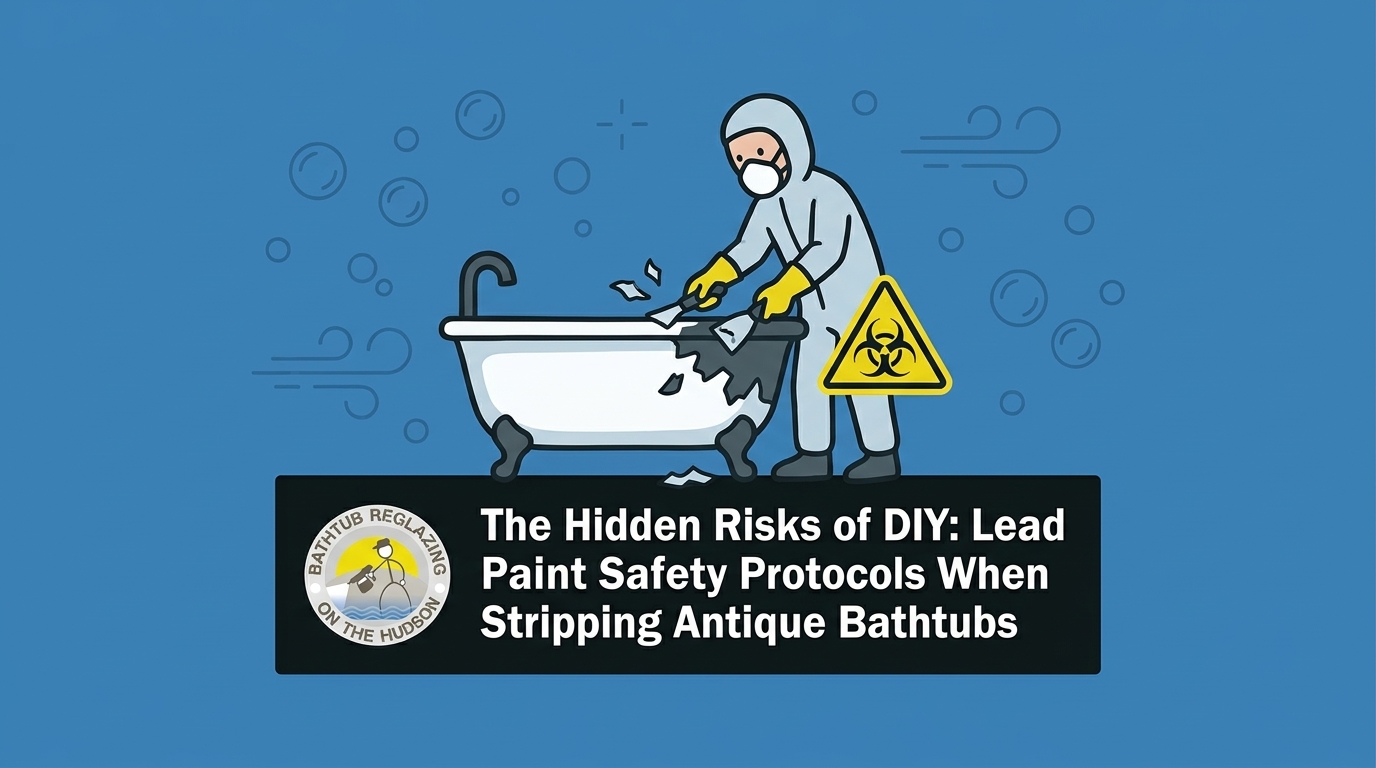
You notice the surface of your vintage cast-iron tub is flaking, leaving a rough, unsightly texture in an otherwise charming bathroom. If you are tempted to grab a scraper or a power sander to smooth it out, you must first understand the strict lead paint safety protocols when stripping antique bathtubs. The reality is that restoring a historic plumbing fixture is a hazardous material containment process first, and a cosmetic upgrade second. Beneath those layers of old, discolored glaze often lies highly toxic lead-based paint, which becomes incredibly dangerous the moment it is disturbed.
This risk becomes especially urgent during the early fall (closing windows for heating season). As the weather cools and you seal up your house to trap warm air inside, you also eliminate the natural ventilation that helps dilute indoor air pollutants. Attempting a DIY strip job in a closed-up home guarantees that microscopic lead dust will remain trapped indoors, settling onto countertops, floors, and eventually making its way into your ductwork. The primary decision you face is not which grit of sandpaper to use, but whether to risk severe household contamination with a DIY approach or utilize professional containment and encapsulation methods.
For homeowners facing this exact situation, exploring professional reglazing services with our experienced team at Bathtub Reglazing On The Hudson is the safest path forward to protect both your family and your property.
Why Pre-1978 Fixtures Require Specialized Care
Homes built before the nationwide ban on consumer lead paint have a remarkably high probability of containing hazardous materials on original architectural features. If your house was constructed pre-1978, you should assume that any original cast-iron bathtub, sink, or tile surround contains lead. Decades ago, lead was prized for its durability and moisture resistance, making it the default ingredient for bathroom glazes and paints.
The Environmental Protection Agency (EPA) recognized the severe health impacts of disturbing these old materials and established the Renovation, Repair and Painting (RRP) Rule. This federal mandate requires specific lead-safe practices to prevent dust contamination during home improvements. Standard bathroom remodeling techniques—like dry sanding, scraping, or using chemical strippers without proper ventilation—are entirely insufficient and actually illegal for professionals to use without RRP compliance when lead is present.
When approaching an antique bathtub restoration, our Peekskill-based experts look for specific risk factors that dictate their approach. A professional assessment by our technicians typically involves:
1. Evaluating the era of the fixture: Confirming the tub's manufacturing date to establish the likelihood of lead presence.
2. Inspecting the surface layers: Identifying how many times the tub has been painted or reglazed over the decades, as newer acrylic layers often hide toxic original coats.
3. Assessing the degradation level: Noting areas of severe chalking or flaking where the heavy metals are already actively deteriorating.
The Science of Lead Paint Degradation
Understanding why old tubs are so hazardous requires looking at how these materials break down over time. Daily use, constant moisture, and harsh cleaning chemicals cause old lead layers to chalk, flake, and lose their structural integrity. When these weakened layers are subjected to mechanical friction—like a homeowner scrubbing aggressively or using a sander—the material shatters into microscopic dust particles. Because this dust is invisible to the naked eye and tastes slightly sweet rather than bitter, it is easily ingested or inhaled without anyone in the household realizing they have been exposed.
The Dangers of Airborne Lead Dust in Historic Homes
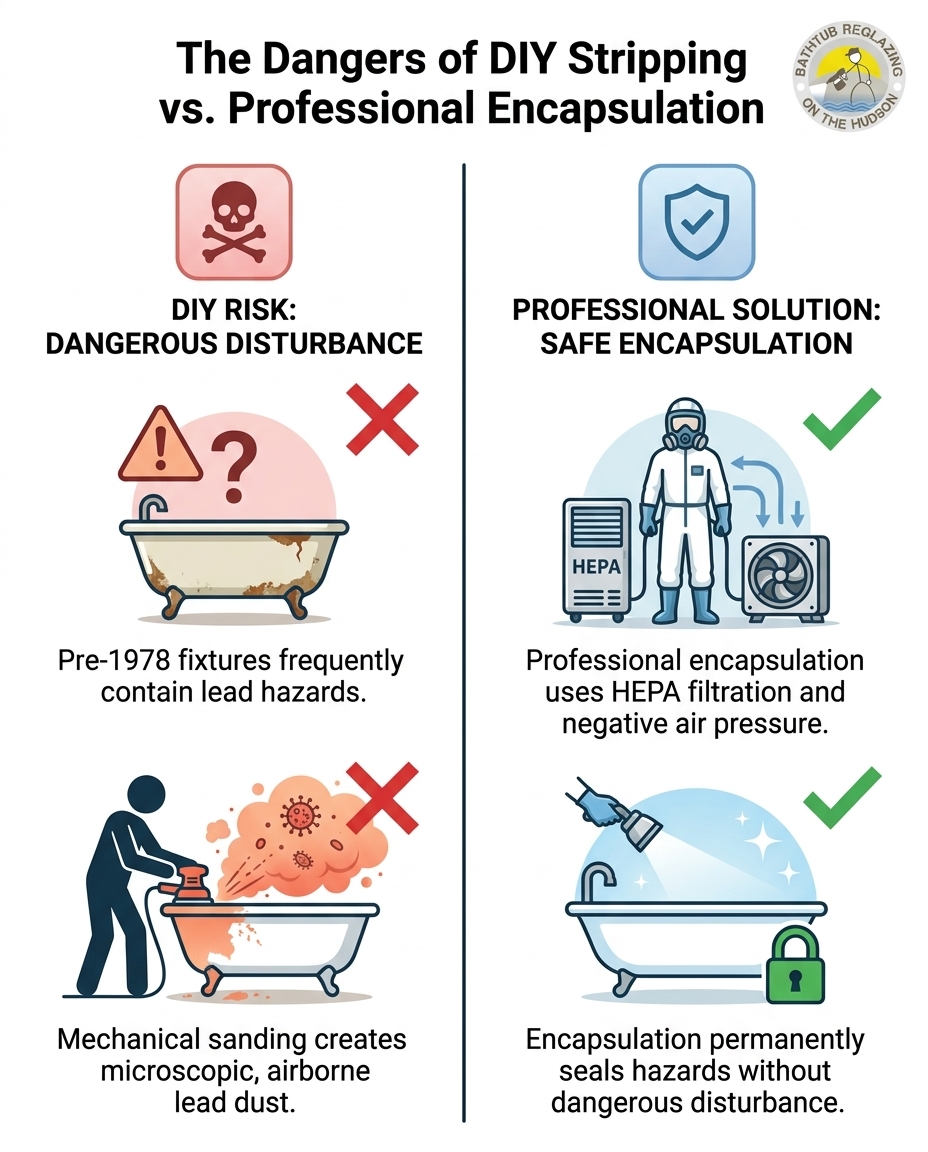
The Problem: Through our years restoring fixtures in Peekskill and the greater Hudson Valley, we've seen firsthand that the high density of historic homes means original cast-iron fixtures are incredibly common throughout the region. While these architectural details add immense character, they also make local lead awareness absolutely critical. The most severe indoor air quality risks occur when well-meaning homeowners attempt to strip these old tubs using mechanical sanders in small, poorly ventilated bathrooms.
The Cause: Using a mechanical sander on lead-painted surfaces generates a massive volume of fine, microscopic dust. Unlike heavy sawdust that falls straight to the floor, lead dust is light enough to remain airborne for hours. In a confined space like a bathroom, this toxic cloud quickly saturates the air. If the bathroom door is open, or if the central HVAC system is running, the return vents pull this contaminated air in and distribute it throughout the entire house. As mentioned earlier, closing windows for the fall heating season traps and concentrates these indoor air pollutants, turning a localized bathroom project into a whole-house contamination event.
The Solution: The only way to mitigate this danger is to completely avoid the mechanical disturbance of the original layers. DIY stripping instructions found online rarely account for these severe health hazards, focusing instead on the fastest way to remove old paint. Protecting your household requires treating the bathroom as a hazardous environment and employing specialized techniques that never allow dust to become airborne in the first place.
Professional Containment: Sealing the Bathroom Environment
Because the risks of cross-contamination are so high, our certified technicians at Bathtub Reglazing On The Hudson do not simply walk in and start working on your historic home. We implement rigorous professional containment protocols designed to isolate the work area and protect the rest of the house from any potential exposure.
One local homeowner reached out to us this past fall needing meticulous bathtub resurfacing for a severely worn, discolored fixture. The project required rigorous preparation and containment before our technician could create sharp, clean edges and apply a mirror-smooth finish. By treating the workspace as a highly controlled environment, our team restored the tub to a flawless sheen with zero imperfections, all while keeping the rest of the house completely spotless, clean, and safe for the family.
If you are scheduling bathtub reglazing in Westchester County with our team, you should expect to see the following containment measures:
• Physical barriers: Our technicians seal doors, HVAC vents, windows, and surrounding fixtures with heavy-duty, impermeable plastic sheeting and specialized tape that won't damage your walls.
• Negative air pressure: By using industrial exhaust systems, we create negative pressure inside the bathroom. This ensures that when a door is briefly opened, air flows into the bathroom rather than allowing contaminated dust to flow out into the hallway.
• HEPA filtration: Specialized air scrubbers equipped with High-Efficiency Particulate Air (HEPA) filters run continuously to capture microscopic particles before they can settle.
Creating a Safe Work Zone
Setting up this safe work zone is a meticulous process. Standard shop vacuums and basic paper dust masks are dangerously inadequate for this level of work. A regular vacuum will simply exhaust microscopic lead dust right back into the air, while standard hardware store masks do not filter out heavy metal particulates. Our professional containment relies on specialized HEPA vacuuming before, during, and after the preparation phase to ensure the environment remains entirely secure.
Encapsulation: The Safer Alternative to Mechanical Stripping
Rather than attempting to aggressively grind away decades of toxic material, the modern standard for safe restoration is encapsulation. Encapsulation means safely sealing the existing lead paint beneath a highly durable, specialized bonding agent and a resilient topcoat. This method permanently locks away hazardous materials without the dangerous disturbance caused by wet or dry sanding.
At Bathtub Reglazing On The Hudson, our core value proposition is protecting your household. We frame safety and professional encapsulation not just as a prep step, but as the primary benefit of our service, distinguishing true expert restoration from risky, cosmetic-only approaches. By choosing encapsulation, you achieve a flawless, mirror-smooth finish while ensuring your family breathes clean air.
Here is how encapsulation compares to traditional mechanical stripping for pre-1978 fixtures:
• Professional Encapsulation — Dust Generation: Zero to minimal (chemically bonded) — Impact on Original Surface: Preserves structural integrity while sealing hazards — Safety Profile: Extremely high; prevents airborne lead exposure
• Dry Mechanical Sanding — Dust Generation: Severe (microscopic airborne particles) — Impact on Original Surface: Aggressively removes material, risks gouging cast iron — Safety Profile: Dangerously low; highly illegal without strict RRP compliance
• Chemical Stripping (DIY) — Dust Generation: Low dust, but high toxic fumes — Impact on Original Surface: Often leaves a sticky, uneven residue requiring scraping — Safety Profile: Poor; introduces volatile organic compounds (VOCs) into closed homes
When weighing bathtub reglazing vs. replacement, our encapsulation method offers the longevity and durability of a brand-new tub without the demolition dust, plumbing costs, or lead exposure risks associated with tearing out a vintage fixture.
The Step-by-Step Professional Bathtub Reglaze Process
Understanding our exact workflow helps clarify why this is strictly a job for our licensed professionals and never a weekend DIY project. The bathtub reglaze process we employ is highly systematic, designed to prioritize safety at every single phase, particularly during the early fall (closing windows for heating season) when indoor air quality is most vulnerable.
1. Initial Site Assessment: Our technician evaluates the tub's current condition, checking for structural damage, deep rust, and the likelihood of lead presence based on the home's age.
2. Room Containment and Isolation: Before any work begins on the tub itself, the bathroom is completely sealed off. Vents are taped, plastic barriers are erected, and negative air machines are engaged to control airflow.
3. Chemical Cleaning and Etching: Instead of hazardous mechanical sanding, the surface is thoroughly cleaned to remove soap scum and mineral deposits. A specialized etching solution is then applied to open the pores of the old glaze, allowing the new coating to grip the surface chemically rather than relying on rough mechanical scratches.
4. Application of the Bonding Agent: A proprietary aerospace-grade bonding agent is applied. This is the crucial encapsulation step that seals the old, potentially hazardous layers permanently beneath a new, impenetrable barrier.
5. Topcoat Application and Curing: Multiple layers of a high-gloss, durable topcoat are applied to create a mirror-smooth finish. The room remains under negative pressure while the coatings cure to ensure fumes are vented safely outdoors.
6. Cleanup and Containment Removal: Once the surface is dry, our technician meticulously removes all plastic sheeting, performs a final HEPA vacuuming of the space, and leaves the bathroom spotless.
Frequently Asked Questions About Tub Restoration Safety
Is there lead paint on old bathtubs?
Yes, it is highly likely that tubs manufactured before 1978 contain lead. Manufacturers historically used lead in porcelain enamels and glazes because it provided a durable, glossy, and water-resistant finish. Over the decades, these original layers may have been painted over, meaning the toxic material is hidden just beneath the surface waiting to be disturbed by improper sanding or scraping.
Can you encapsulate lead paint on an antique bathtub?
Absolutely, and it is the recommended professional approach. Encapsulation involves applying a specialized bonding agent and durable topcoat directly over the prepared surface, permanently trapping the hazardous materials underneath. This method avoids the severe dangers of grinding or sanding the lead into an airborne dust, keeping your home safe while restoring the tub's beauty.
Is it safe to resurface a lead tub?
It is completely safe to resurface a lead tub provided the work is done by certified professionals using strict EPA lead-safe work practices. The danger arises only when the old surface is mechanically disturbed without proper HEPA filtration, negative air pressure, and room containment. Professional resurfacing seals the hazard away permanently, making the tub perfectly safe for daily use.
How do you test a cast iron tub for lead?
Our professionals use specialized, EPA-recognized chemical swab kits or X-ray fluorescence (XRF) analyzers to detect the presence of lead in old glazes. While hardware stores sell basic DIY testing swabs, these can sometimes yield false negatives if they only test the top layer of a previously reglazed tub. If your home is pre-1978, the safest protocol is to assume lead is present and proceed with professional containment.
Why is DIY sanding dangerous for old bathtubs?
DIY sanding is incredibly dangerous because it pulverizes the lead-based glaze into microscopic dust particles that float in the air for hours. This dust is easily inhaled by anyone in the house and can be sucked into your HVAC system, spreading heavy metal contamination to bedrooms and living areas. Once lead dust settles into carpets and ductwork, it is exceptionally difficult and costly to remove.
Ensuring a Safe, Beautiful Finish for Your Historic Home
A clear understanding of lead dust risks is the very first step in responsible home restoration. For those living in Historic Hudson Valley homes, preserving the charm of original architectural details should never come at the expense of your family's respiratory health. We have seen exactly why DIY stripping is dangerous, and how exact professional containment protocols—like negative air pressure and HEPA filtration—are the only way to keep a home safe during the restoration process.
By prioritizing professional encapsulation over aggressive mechanical stripping, you permanently lock away hazardous materials while achieving a stunning, mirror-smooth result. Our team at Bathtub Reglazing On The Hudson strongly encourages homeowners to prioritize their family's health by relying on certified experts who respect the strict lead paint safety protocols when stripping antique bathtubs. If you are ready to safely breathe new life into your vintage fixtures, reach out to learn more about professional, health-focused restoration options tailored to your historic property.
Schedule Service
Thank you! Your submission has been received!
Oops! Something went wrong while submitting the form.
Other Blogs
Customer Testimonials
Hear what customers are saying about our professional refinishing and outstanding results.

Can’t say enough about Maurice. From start to finish great communication his work is incredible and he stands by it very competitive pricing just all-around good guy the work was done quick and kept very clean and our brand new bathroom
Joey N.
We had a large piece of bathtub glaze chip off. Maurice came in and did a fantastic job. It now looks and works better than before. He went above and beyond the contract by cleaning up the old chipped grout between the tub and the tiles and replacing with brand new.
Bozidar J.
Maurice did a great job on my tub. It looks brand new.
Steven S.