

The Hidden Regulatory Friction of Updating Historic Bathrooms
Your antique cast iron tub is showing its age with chips, stains, and a worn finish, but the thought of physically tearing it out feels like opening a bureaucratic Pandora's box. Navigating Historic District Renovation Rules in Hudson When Updating Bathroom Fixtures can quickly turn what seems like a standard home improvement project into a months-long headache of permits, board reviews, and mandatory code upgrades. Homeowners living in the Hudson Historic District often discover that modernizing an older home comes with a steep regulatory toll.
If you want to bypass these municipal hurdles, exploring professional bathroom restoration services or scheduling bathtub reglazing is often the most strategic path forward.
The core decision point for anyone renovating an older property is whether to endure the lengthy historic commission approvals required for a full tear-out or to find a compliant, non-invasive alternative. Ripping out a heavy, built-in bathtub in a historic home rarely happens in a vacuum. It disturbs the surrounding architecture, triggers local building codes, and invites municipal oversight into your private living space. By choosing non-invasive restoration over physical replacement, you can modernize your space while gracefully sidestepping the municipal red tape that typically stalls historic renovations.
Understanding Local Architectural Reviews and Certificates of Appropriateness
Living in a designated historic area means accepting that your property is part of a broader cultural legacy. To protect this legacy, local municipalities enforce strict guidelines overseen by a Historic Preservation Commission (HPC). The overarching goal of these boards is to preserve the historic architectural integrity of the neighborhood, ensuring that modern alterations do not erase the character of the original structures.
The Role of the Historic Preservation Commission
The HPC reviews proposed changes to properties within the Hudson Historic District. Before you can begin significant work, you must often obtain a Certificate of Appropriateness (COA). This document serves as official permission from the commission, verifying that your planned updates align with local preservation guidelines. The review process involves submitting detailed architectural plans, attending public hearings, and waiting for a formal vote.
When Interior Work Becomes an Exterior Problem
A common misconception is that the HPC only cares about the exterior facade of your home. While it is true that their primary jurisdiction is what can be seen from the public right-of-way, interior bathroom updates frequently bleed into exterior concerns. Consider the logistics of removing a massive, 300-pound cast iron bathtub from a second-story bathroom with narrow, winding staircases.
• Window removal: Contractors often have to remove historic windows to hoist old tubs out and crane new units in.
• Plumbing venting: Upgrading to a modern tub often requires reconfiguring the plumbing stack, which might mean cutting a new vent through an original slate or tin roof.
• Structural reinforcement: Moving heavy fixtures can require reinforcing floor joists, potentially altering historic ceilings on the floor below.
Any of these consequential actions immediately trigger a mandatory architectural review. By keeping the original fixture in place, you prevent these cascading structural requirements and keep your project strictly within the interior boundaries of your home.
Why Physical Tub Removal Triggers Extensive Plumbing Permits
The bureaucratic friction of remodeling an older bathroom extends far beyond the preservation commission. The local building department is equally involved the moment you decide to remove a permanent fixture. Understanding the legal distinction between a cosmetic update and a structural alteration is crucial for planning your renovation timeline.
The Domino Effect of New York State Building Codes
Under the New York State Uniform Fire Prevention and Building Code, removing a built-in bathtub is classified as a structural alteration. When you pull a tub away from the wall, you expose the rough plumbing—the pipes, drains, and vents hidden behind the plaster. Local building codes mandate that once rough plumbing is exposed during an alteration, it must be brought entirely up to current modern standards.
This means you cannot simply swap one tub for another. You must pull a plumbing permit, hire a licensed plumber to reconfigure the drains, and potentially replace decades-old galvanized pipes with modern PVC or PEX. This domino effect turns a straightforward fixture swap into a major, permitted construction site. For homeowners looking for historic fixture restorations, avoiding this code-triggered cascade is a massive advantage.
Inspection Delays and Open Walls
Once a plumbing permit is pulled, your project timeline is at the mercy of municipal inspectors. The process typically follows a rigid sequence:
1. The Tear-Out: The old tub is removed and the walls are opened.
2. The Rough-In: The plumber installs the new pipes.
3. The Waiting Period: All work stops while you wait days or weeks for the city inspector to review the rough-in.
4. The Final Finish: Only after passing inspection can the walls be closed, waterproofed, and tiled.
This sequence leaves your bathroom completely unusable for an extended period, creating significant disruption to your daily life.
Navigating Lead Abatement and Structural Tear-Out Protocols
If plumbing permits and architectural reviews were not enough, homeowners in historic districts must also navigate strict environmental regulations. The age of the housing stock in the Hudson Historic District means that almost any structural tear-out will encounter hazardous materials used in early 20th-century construction.
The EPA Lead RRP Rule Explained
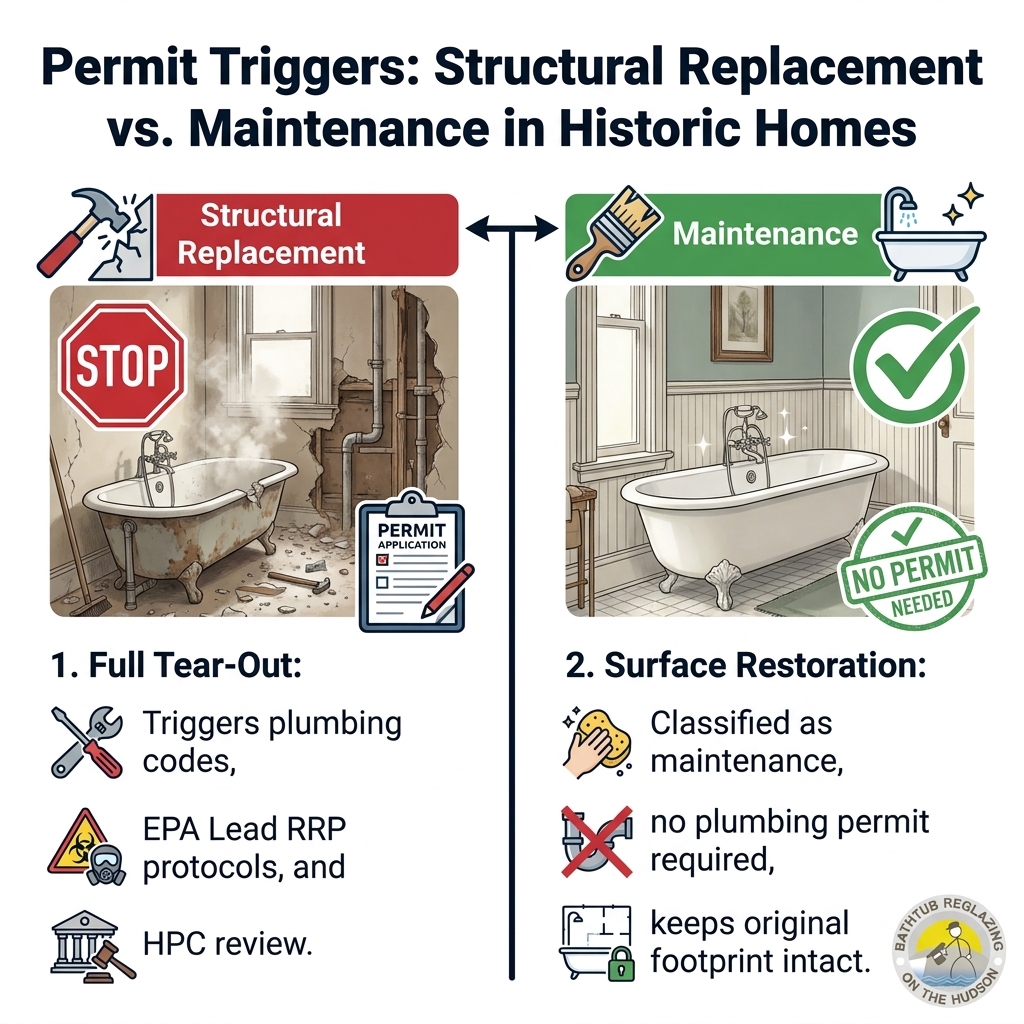
For homes built before 1978, the Environmental Protection Agency (EPA) enforces the Lead Renovation, Repair and Painting (RRP) Rule. This federal mandate requires that any renovation disturbing more than six square feet of interior painted surfaces must be performed by a certified firm using specialized lead-safe work practices. Tearing out a bathtub inevitably destroys the surrounding drywall, plaster, and floor tiles, immediately triggering these strict protocols.
The True Cost of Disturbance
Complying with the EPA RRP rule adds profound friction to a bathroom update. Contractors must seal off the room with heavy plastic sheeting, use specialized HEPA vacuums, and follow rigorous disposal procedures for the contaminated debris. The required containment measures slow the project down and severely limit access to adjacent areas of your home.
The strategic advantage: By leaving the original tub exactly where it is, you avoid disturbing the surrounding walls and floors. Keeping the original footprint intact is the most effective way to prevent triggering mandatory lead abatement protocols, allowing the update to proceed smoothly and safely.
The Compliance Loophole: Classifying Updates as Maintenance
The key to updating your historic bathroom without drowning in red tape lies in how the local building department classifies your project. Municipal codes draw a distinct line between a "structural alteration" and "routine maintenance." Understanding this distinction provides a powerful, fully compliant loophole for homeowners.
Defining Maintenance Under Local Codes
An alteration involves changing the physical footprint, moving plumbing lines, or tearing out built-in fixtures. Maintenance, on the other hand, is defined as the upkeep, repair, or surface restoration of existing elements without changing their underlying structure or connections. Because reglazing updates only the hard surface of the existing fixture, building departments universally classify it as maintenance.
This classification is incredibly powerful. As routine maintenance, surface restoration legally avoids the need for plumbing permits, rough-in inspections, and architectural review boards. You are simply repairing what is already there. For a deeper dive into how these two approaches compare, reviewing bathtub reglazing vs replacement can clarify the logistical differences.
Working with a specialized provider means you benefit from a unique approach: providing a non-invasive restoration alternative preserves historic architectural integrity while completely bypassing complex local plumbing permits and structural tear-outs. You get a brilliant, modernized finish without ever pulling a permit or opening a wall.
Thermal Benefits of Retaining Original Cast Iron and Porcelain
Beyond the regulatory advantages, keeping your original fixtures offers significant performance benefits that modern replacements simply cannot match. The original cast iron and heavy porcelain fixtures found in the Hudson Historic District were engineered for a different era, and their material properties provide distinct advantages for the local climate.
Combating Hudson Valley Winters
Drafty historic homes are a reality of living in the Hudson Valley. During the bitter cold of fall and winter, maintaining a comfortable temperature in older bathrooms with original single-pane windows or minimal wall insulation can be a challenge. This is where the thermal mass of original materials becomes a critical comfort factor.
Preserving original cast iron and porcelain helps retain heat much better than modern acrylic replacements. Cast iron has an incredibly high specific heat capacity. Once it absorbs the warmth from your hot bathwater, it holds onto that thermal energy, radiating it back and keeping the water hotter for significantly longer. If you are also considering bathroom tile reglazing, you can seal and restore the entire thermal envelope of your original wet area.
Material Comparison: Historic vs. Modern
• Heat Retention — Original Cast Iron: Excellent; absorbs and holds water temperature for extended periods. — Modern Acrylic / Fiberglass: Poor; water cools rapidly due to thin, lightweight construction.
• Durability — Original Cast Iron: Lifespan of 100+ years; highly resistant to structural cracking. — Modern Acrylic / Fiberglass: Prone to flexing, scratching, and cracking under heavy weight.
• Acoustics — Original Cast Iron: Dense material severely dampens the sound of running water. — Modern Acrylic / Fiberglass: Hollow construction amplifies the sound of water hitting the surface.
• Regulatory Impact — Original Cast Iron: Requires zero permits to maintain and reglaze in place. — Modern Acrylic / Fiberglass: Triggers full plumbing permits and tear-out protocols to install.
Replacing a dense, heat-retaining cast iron tub with a thin acrylic shell is a downgrade in comfort, especially when utilizing the October fall renovation window before winter holidays to prepare your home for the freezing months ahead.
Strategic Timing for Non-Invasive Bathroom Restorations
When you remove municipal permits and historic board reviews from your renovation equation, you regain total control over your project timeline. This predictability allows you to strategically plan your home updates around the most advantageous seasons.
The October Renovation Window
Waiting on permit approvals for a structural tear-out can easily push a late-summer project deep into the winter. Having your home open to the elements, or losing access to a primary bathroom during the holiday hosting season, is highly stressful. By choosing a non-invasive route, you can reliably schedule your project during the October fall renovation window before winter holidays.
Because the process is classified as maintenance, there are no waiting periods for inspectors. The technicians arrive, prep the area, apply the new finish, and the fixture is typically ready for use within 24 to 48 hours. This accelerated, predictable timeline means you can confidently schedule your bathtub reglazing right before Thanksgiving or severe cold weather sets in, ensuring your home is fully operational and beautifully updated when you need it most.
Frequently Asked Questions About Historic Bathroom Regulations
Does replacing a bathtub require a plumbing permit?
Yes, full removal usually triggers a plumbing permit to ensure connections meet current modern building codes. When you physically tear out a built-in tub, you expose the rough plumbing in the walls and floor. Local building departments in New York require that any exposed plumbing during an alteration be brought up to modern standards, necessitating a permit and municipal inspections.
How do you update a historic bathroom without violating preservation rules?
Opt for maintenance and restoration techniques that keep the original architectural footprint intact. Historic Preservation Commissions are primarily concerned with structural alterations and changes that impact the original character of the home. By restoring existing surfaces rather than tearing them out, you comply with preservation goals and avoid triggering mandatory architectural reviews.
Is bathtub reglazing considered maintenance or remodeling?
It is classified as maintenance or cosmetic restoration, which typically does not require a permit. Because the process only updates the hard outer surface of the fixture and does not alter the underlying plumbing, framing, or footprint, building departments view it as routine upkeep rather than a structural remodel.
What triggers a plumbing permit in New York?
Structural alterations, moving plumbing lines, or replacing major fixtures generally trigger permit requirements. The New York State Uniform Fire Prevention and Building Code dictates that if a project alters the existing structure or exposes rough plumbing, a permit must be pulled to ensure the new work complies with contemporary safety and sanitation standards.
Can I replace a bathtub without a permit in older homes?
Generally no, as older homes often require lead abatement protocols (EPA RRP Rule) and mandatory code updates during tear-outs. Beyond just the plumbing permit, disturbing the walls in a home built before 1978 triggers federal lead-safe work practices. Attempting a full replacement without the proper permits and certifications can result in severe municipal fines and environmental hazards.
Streamline Your Historic Home Update Today
You do not have to endure lengthy commission approvals, invasive plumbing tear-outs, and weeks of construction delays just to modernize your historic bathroom. By classifying your project as maintenance rather than a structural alteration, you can legally bypass the municipal red tape that complicates renovations in older neighborhoods. If you are ready to take advantage of the October fall renovation window before winter holidays, consult with a local restoration expert today to discuss how updating your original fixtures in place can save you time, preserve your home's integrity, and keep your project perfectly compliant.
Schedule Service
Thank you! Your submission has been received!
Oops! Something went wrong while submitting the form.
Other Blogs
Customer Testimonials
Hear what customers are saying about our professional refinishing and outstanding results.

Can’t say enough about Maurice. From start to finish great communication his work is incredible and he stands by it very competitive pricing just all-around good guy the work was done quick and kept very clean and our brand new bathroom
Joey N.
We had a large piece of bathtub glaze chip off. Maurice came in and did a fantastic job. It now looks and works better than before. He went above and beyond the contract by cleaning up the old chipped grout between the tub and the tiles and replacing with brand new.
Bozidar J.
Maurice did a great job on my tub. It looks brand new.
Steven S.