

Discovering Deep Scratches Under Your Bath Mat
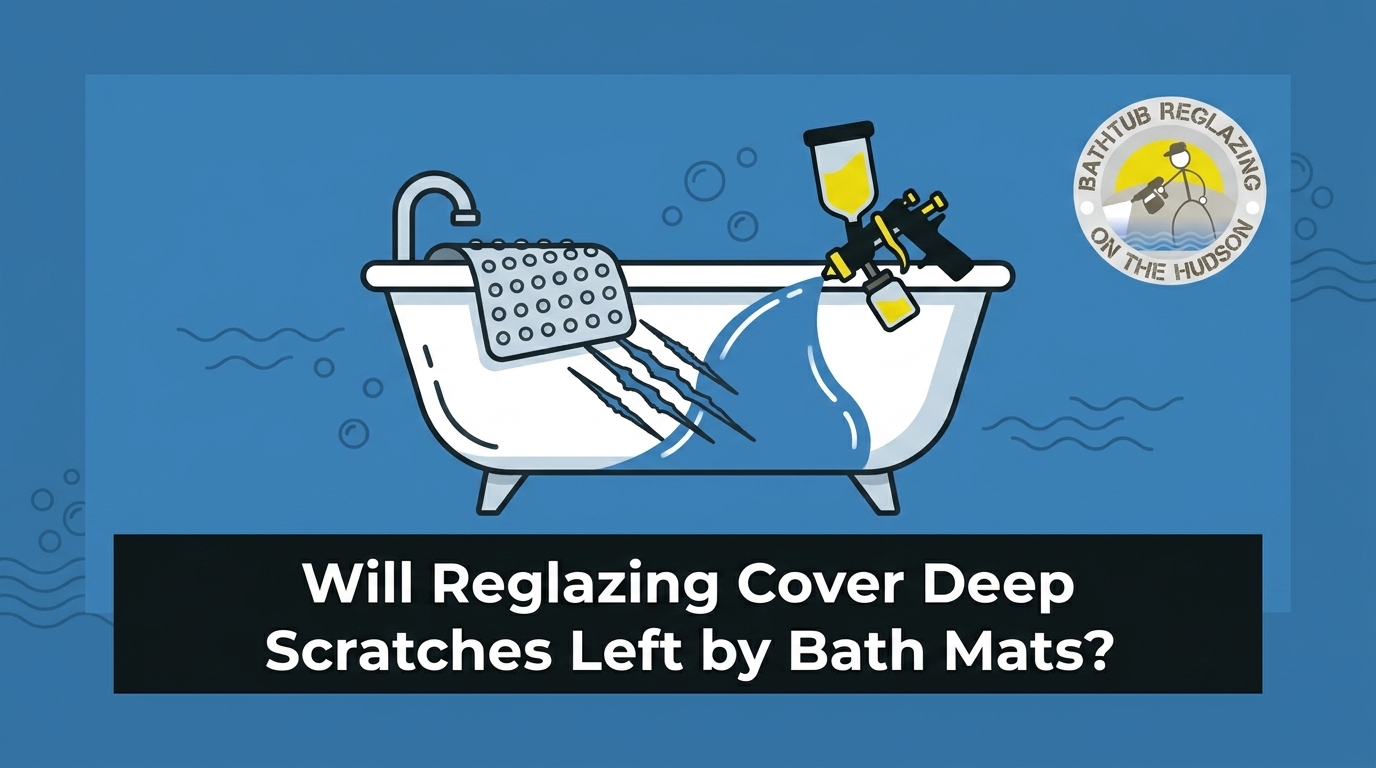
Have you ever pulled up a rubber bath mat to clean your tub, only to find deep, permanent rings etched right into the surface? If you are staring at peeled enamel and wondering, will reglazing cover deep scratches left by bath mats, the short answer is yes. Discovering this kind of damage is often a shock for homeowners who assumed the mat was protecting the tub, rather than destroying it. When you uncover these deep circular gouges or physical depressions, you immediately face a critical decision point: can the surface be repaired, or does the entire bathtub need to be torn out and replaced? Fortunately, these deep physical gouges can be entirely filled and hidden, provided the correct structural repair steps are taken to restore the surface.
For homeowners looking to resolve this damage without a costly demolition, professional bathtub reglazing and comprehensive bathtub restoration services provide the definitive solution. This is especially true for older cast iron and fiberglass tubs, which are highly susceptible to this specific type of degradation. By utilizing advanced leveling compounds and meticulous preparation, experts can completely erase the damage caused by suction cups, leaving you with a smooth, durable, and flawless finish.
The Mechanics of Suction-Cup Enamel Damage
To understand why professional repair is necessary, it helps to understand exactly how a simple rubber mat can destroy a durable bathtub surface. The damage is not merely cosmetic; it involves physical forces that actively break down the structure of the enamel over time. Many homeowners are surprised to learn that manufacturer care guidelines explicitly warn against using suction-cup mats on enameled or acrylic surfaces for this very reason.
The Vacuum Pull Effect
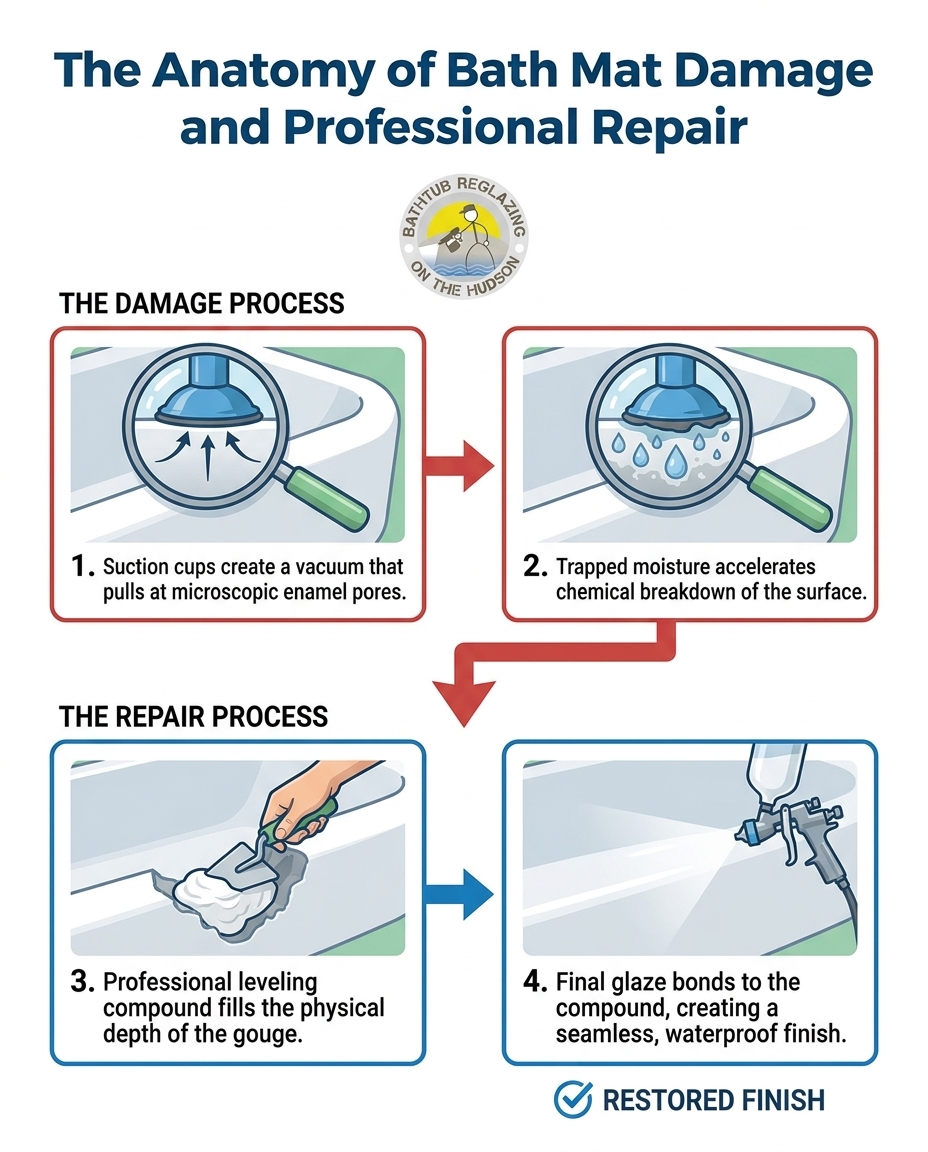
The primary culprit behind bath mat damage is continuous mechanical stress. Every time you step on a bath mat, the suction cups are pressed firmly against the tub. As the suction cups grip the surface, they create a powerful vacuum effect that physically pulls at the microscopic pores of the tub's finish. Over months and years, this continuous pulling weakens the topcoat layer. Eventually, the bond between the enamel and the underlying material fails, causing the finish to peel away in distinct, circular patterns that mirror the bottom of the mat.
Trapped Moisture and Delamination
The secondary force at play is trapped moisture. Rubber mats are designed to stay in place, meaning they often trap water stagnation under the mat for days or even weeks at a time. This constant exposure to standing water accelerates the chemical breakdown of porous, damaged enamel. As the vacuum effect creates micro-fissures in the surface, the trapped water seeps in, causing delamination—where the top layer of the tub completely separates from its base. Older cast iron and fiberglass tubs are particularly vulnerable to this moisture-driven breakdown, as their aging surfaces may already possess microscopic wear that allows water to penetrate deeply.
How Seasonal Humidity Accelerates Surface Degradation
The environment inside your bathroom plays a massive role in how quickly bath mat damage spreads. In the Hudson Valley, fluctuating indoor humidity during the transition into the fall heating season accelerates the breakdown of porous, damaged enamel. During the humid summer months, moisture trapped beneath a bath mat takes significantly longer to evaporate, creating an ideal breeding ground for mold growth within the deep scratches and compromised areas of the tub.
As the region shifts into autumn, the dynamics change. The transition into the fall heating season dries out indoor air considerably. When the air becomes dry, the moisture trapped within the microscopic cracks of the damaged enamel evaporates rapidly, causing the surrounding material to contract. This rapid shift can cause existing enamel cracks to spread rapidly across the floor of the tub, turning a few isolated suction cup rings into a massive area of peeling glaze.
Because of these severe environmental shifts, early fall (ideal time for indoor bathroom upgrades before winter) is the optimal window to repair compromised tub surfaces. Addressing the structural degradation before winter heating systems exacerbate the damage ensures that the repair will bond correctly and prevents the underlying cast iron or fiberglass from being exposed to harsh, dry winter conditions that can lead to deeper structural failure.
Structural Filling vs. Surface Painting
When faced with deep scratches and peeling enamel, many homeowners attempt to fix the problem using over-the-counter DIY tub paint kits. However, there is a massive difference between professional structural repairs and ineffective surface painting. Simply painting over a deep scratch or gouge fails completely because paint has no structural volume—it simply coats the depression, leaving the physical divot highly visible and vulnerable to future damage.
• DIY Painting — Material Used: Epoxy or acrylic surface paint — Structural Integrity: None. Does not fill physical depressions. — Long-Term Result: Fails quickly under water exposure and foot traffic.
• Professional Reglazing — Material Used: Professional-grade leveling compounds — Structural Integrity: High. Physically bridges and fills the gouge. — Long-Term Result: Permanent, seamless repair that withstands daily use.
The failure of DIY kits: Store-bought kits lack the structural integrity to withstand daily water exposure and heavy foot traffic. Because they merely paint over the damage, water quickly finds its way back into the depression, causing the new paint to bubble and peel within months.
The professional difference: Professional reglazing succeeds where DIY kits fail because of the use of professional-grade leveling compounds and meticulous surface preparation. These specialized compounds act as a necessary bridge between a damaged, gouged surface and a perfectly smooth final finish. By structurally filling the void left by the suction cup, the professional process ensures that the tub's floor is completely level before any new glaze is ever applied.
The Professional Leveling Compound Process
Understanding the technical process behind filling these deep gouges highlights why this is strictly a job for trained experts, rather than a weekend DIY project. The process of repairing bath mat damage is highly technical and requires specialized materials designed to permanently bond with the tub's original substrate.
Deep cleaning and neutralization: The process begins with an exhaustive deep cleaning and sanding phase. Technicians must remove all compromised, flaking enamel around the suction cup rings. If any loose material is left behind, the new repair will inevitably fail. This step also strips away soap scum, hard water minerals, and any mold that may have grown inside the scratches.
Applying the leveling compound: Once the area is neutralized and prepped, the technician applies a specialized, professional-grade leveling compound. Unlike standard putty or caulk, this compound is engineered to physically fill the circular gouges and chemically bond with the surrounding tub material. In one instance, a local homeowner experienced severe damage where a large piece of the bathtub glaze chipped off completely. The professional repair process involved meticulously applying this compound to the chipped area, cleaning the old grout, and replacing it to ensure absolute structural integrity. The result was a tub that functioned and looked far better than it had before the damage occurred.
Curing and smoothing: After the compound is applied, it must undergo a specific curing process. Once fully hardened, the technician sands the filled area using progressive grits until it is perfectly flush with the rest of the tub. Running a hand over the repaired area reveals no dips, divots, or rough patches—it is completely continuous with the original surface.
Restoring the Flawless Final Glaze
With the physical gouges structurally filled and sanded perfectly smooth, the bathtub is finally ready for the actual reglazing process. This final phase is what completely hides the previous bath mat damage and transforms the fixture back to its original glory.
Applying the bonding agent: Before the topcoats are sprayed, a proprietary bonding agent is applied over the newly leveled surface and the rest of the tub. This chemical agent ensures that the final glaze will adhere permanently to both the original tub material and the leveling compound used in the repair.
The final reglazing layers: Multiple layers of high-performance synthetic glaze are then expertly applied. Because the underlying surface was meticulously leveled, the new finish completely integrates with the repair. There is no trace of the deep scratches, no shadowing where the suction cups used to be, and no uneven textures. When a bathtub requires this level of resurfacing, technicians perform meticulous prep to create razor-sharp edges and apply a mirror-smooth finish. The outcome is a bathtub that looks brand new with a flawless sheen.
Maintaining the new finish: Once the tub is fully cured, maintaining that smooth, glossy, and spotless result requires a change in habits. Suction-cup bath mats can never be used on the new finish. Instead, homeowners should use mats without suction cups or rely on a permanent anti-slip texture applied during the reglazing process. Additionally, utilizing safe tub cleaning techniques—such as avoiding abrasive scouring pads and harsh acidic cleaners—will ensure the newly restored surface lasts for years to come.
Deciding Between Reglazing and Full Tub Replacement
Now that you understand the mechanics of the repair process, you can make an informed decision about how to handle your damaged bathtub. For the vast majority of homeowners, reglazing offers significant cost and time benefits over a messy, full-scale demolition and replacement.
When reglazing is the clear choice: As long as the tub is structurally sound—meaning it is not rusting completely through the metal or suffering from severe structural cracking that leaks water into the floor—leveling and reglazing is highly effective. The process takes a fraction of the time of a full replacement, spares your bathroom from being torn down to the studs, and keeps hazardous debris out of local landfills.
Evaluating the extent of the damage: If your bath mat has caused surface peeling, deep circular gouges, or discoloration, professional leveling compounds can handle the repair easily. However, if the tub flexes under your weight or has massive structural fractures, replacement might be necessary. For a deeper framework on making this final decision, exploring a detailed comparison of bathtub reglazing vs. replacement can provide additional clarity on which route is best for your specific situation.
Frequently Asked Questions About Tub Scratches and Reglazing
Can you fix deep scratches in a bathtub?
Yes, deep scratches can be permanently fixed by a professional. The process involves cleaning the gouge, applying a structural leveling compound, sanding it flush, and applying a new glaze over the entire surface. This ensures the physical depression is completely filled before the cosmetic finish is applied, resulting in a seamless repair.
Why did my bath mat ruin my tub?
Bath mats ruin tubs through a combination of vacuum pressure from suction cups and trapped moisture. This constant stress weakens the topcoat, eventually pulling the enamel away from the tub's base material. When water sits stagnant beneath the rubber, it accelerates the chemical breakdown of the porous surface.
How do you fix a peeling bathtub?
Fixing a peeling bathtub requires stripping the loose enamel, neutralizing the surface, and applying professional bonding agents before reglazing. DIY paints cannot chemically bond to a peeling surface and will quickly fail. A professional will ensure all compromised material is removed so the new finish has a solid foundation.
Will reglazing fix a cracked tub?
Reglazing can fix surface-level cracks and cosmetic crazing. However, severe structural cracks that leak water require specialized fiberglass or acrylic inlay repairs before the reglazing process can begin. Once the structural integrity is restored, the reglazing process will hide the repair completely.
Are suction cup bath mats safe for newly reglazed tubs?
No, suction cup bath mats should never be used on newly reglazed tubs. The vacuum forces will eventually damage the new finish just as they damaged the old one. Professionals recommend using mats without suction cups or opting for a permanent anti-slip texture applied directly during the reglazing process.
Resolve Deep Tub Scratches with Expert Repair
If you have uncovered deep rings and peeled enamel under your bath mat, you do not have to live with a ruined tub or pay for a massive bathroom demolition. Professional reglazing absolutely covers deep scratches because it relies on specialized, professional-grade leveling compounds to structurally fill the damage, not just surface paint that will wash away. Addressing this damage now, before seasonal changes and dry indoor heating worsen the enamel degradation, is the smartest move for the longevity of your fixture. Reach out to an expert today to discuss your specific bathtub damage and explore the restoration options that will return your tub to a flawless, mirror-smooth finish.
Schedule Service
Thank you! Your submission has been received!
Oops! Something went wrong while submitting the form.
Other Blogs
Customer Testimonials
Hear what customers are saying about our professional refinishing and outstanding results.

Can’t say enough about Maurice. From start to finish great communication his work is incredible and he stands by it very competitive pricing just all-around good guy the work was done quick and kept very clean and our brand new bathroom
Joey N.
We had a large piece of bathtub glaze chip off. Maurice came in and did a fantastic job. It now looks and works better than before. He went above and beyond the contract by cleaning up the old chipped grout between the tub and the tiles and replacing with brand new.
Bozidar J.
Maurice did a great job on my tub. It looks brand new.
Steven S.