

The Myth of the Quick Fix for Older Bathroom Fixtures
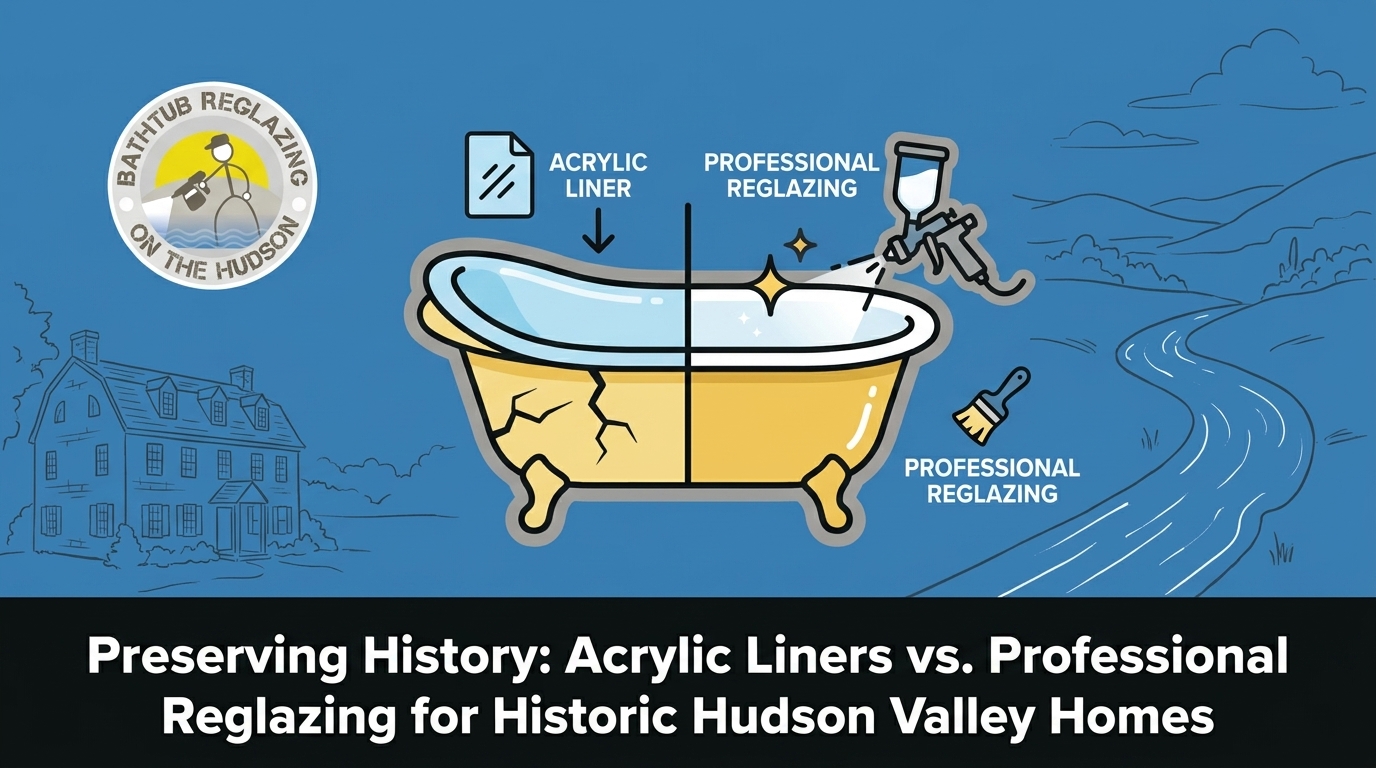
Covering up an old, stained bathtub with a molded plastic shell might seem like a fast track to a modern bathroom, but when weighing Acrylic Liners vs. Professional Reglazing for Historic Hudson Valley Homes, our team at Bathtub Reglazing On The Hudson frequently sees that the quick fix creates more problems than it solves. A common misconception we encounter among property owners is that dropping a liner over an aging fixture is the safest, most effective way to hide decades of wear. In reality, this approach frequently masks underlying issues while actively compromising the structural and aesthetic integrity of the space.
For homeowners managing renovations in Peekskill historic districts and older Hudson Valley properties, the challenge is very concrete. You want to update a worn, discolored bathtub without losing the home's period charm or introducing hidden moisture risks behind the walls. In our years of restoring local properties, the decision ultimately comes down to covering up the original craftsmanship with a bulky, one-size-fits-all acrylic liner versus choosing a specialized restoration process that honors the original architecture.
If you are deciding how to update your fixtures, understanding the difference between professional reglazing and covering them up is essential before you schedule a bathtub reglaze.
The Architectural Value of Original Cast-Iron Fixtures
Before altering the footprint of a classic bathroom, it helps to understand why the existing materials are worth saving. Original cast-iron clawfoot and heavy alcove tubs were manufactured with a level of durability and material density that is rarely replicated in modern plumbing fixtures. Tearing them out or permanently covering them up diminishes the authentic architectural footprint of older properties.
The Hidden Benefits of Original Materials
Older tubs are more than just visually appealing; they offer distinct functional advantages that modern acrylic and fiberglass simply cannot match.
• Superior heat retention: The immense thermal mass of a cast-iron tub absorbs the heat from the water, keeping bathwater warmer for significantly longer periods than thin plastic alternatives.
• Structural durability: Cast iron resists flexing, bending, and cracking under heavy weight, providing a solid, stable bathing surface that lasts for generations.
• Authentic architectural footprints: Original fixtures carry the exact curves, roll rims, and decorative feet that define the era of the home.
• Compliance with preservation standards: Local historic district guidelines often favor the preservation of original interior elements, rewarding homeowners who maintain period accuracy.
Because of these inherent benefits, historic tub restorations have become a specialized preservation technique. Rather than treating an aging tub as disposable, preservationists view it as a structural asset that simply requires a renewed surface.
How Acrylic Liners Compromise Historic Footprints
While acrylic liners are marketed as a convenient upgrade, they fundamentally alter the spatial dynamics and aesthetic appeal of historic bathrooms. The installation mechanics of a liner require a molded piece of acrylic to be glued directly over the existing tub and wall surround. Because these liners must be large enough to slide over the original fixture, they inherently add bulk to the bathroom's footprint.
The Spatial and Aesthetic Mismatch
The Problem: When a generic acrylic liner is placed over original cast-iron clawfoot and heavy alcove tubs, it creates a stark architectural mismatch. The sharp, period-specific curves and contours of the original iron are completely lost beneath a smoothed-over, modernized plastic shell.
The Cause: Liners are vacuum-formed in a factory based on general measurements. They are not custom-poured to match the exact millimeter-by-millimeter topography of your specific fixture. To ensure the liner fits over the old tub, it must be slightly smaller on the inside and larger on the outside.
The Solution: Avoiding liners entirely prevents this spatial reduction. A liner can reduce the internal bathing space by up to an inch on all sides, making an already compact historic tub feel cramped. The generic look of a plastic overlay simply cannot replicate the custom, heavyweight nature of original porcelain over cast iron.
Hidden Moisture Risks in Regional Climates
Beyond aesthetics, the most severe drawback of covering an old tub is the potential for catastrophic water damage. The Hudson Valley experiences humid summers and freezing winters. In our experience inspecting local bathrooms, these extreme seasonal temperature swings accelerate the degradation and expansion/contraction cycles of acrylic liners, creating a perfect storm for hidden moisture accumulation.
The Freeze-Thaw Threat in Older Plumbing
Different materials expand and contract at different rates when exposed to heat and cold. Cast iron is incredibly stable, but the non-breathable acrylic liner glued on top of it is highly susceptible to temperature fluctuations. As the bathroom heats up during a hot shower and cools down rapidly during a freezing Hudson Valley winter night, the acrylic expands and contracts.
Over time, this constant movement breaks the adhesive seal between the liner and the original tub. Once a tiny gap forms around the drain or the edges, water begins seeping into the void between the two layers. Because the acrylic is non-breathable, the trapped water cannot evaporate.
The resulting risks we commonly see include:
• Hidden mold growth: Trapped, stagnant water creates an ideal breeding ground for toxic mold, hidden entirely out of sight between the liner and the tub.
• Structural water damage: Water pooling around the drain can seep into the subfloor of Peekskill historic districts and older Hudson Valley properties, rotting ancient joists.
• Spongy flooring: As the adhesive fails and water fills the gap, the floor of the liner begins to feel spongy or squishy underfoot.
The EPA guidelines regarding indoor moisture control consistently warn against creating sealed, unventilated cavities where water can pool. A failed bathtub liner is exactly the type of environment that fosters severe indoor air quality issues.
The Period-Accurate Approach to Surface Restoration
For homeowners who want a pristine bathroom without the risks of a bulky overlay, professional reglazing is the superior, specialized alternative. Our team's expertise in period-accurate restoration positions this service not just as a cosmetic update, but as a vital method to preserve original cast iron or clawfoot fixtures.
In a recent Peekskill project our team completed, a homeowner with an old, worn-out tub utilized this approach. We meticulously protected the surrounding bathroom areas, and after our technicians completed the restoration and cleanup, the fixture showcased a brand new, smooth, glossy, spotless finish that honored its original design.
Our Professional Restoration Methodology
Achieving a factory-grade finish requires meticulous preparation that must be executed by trained professionals to create a seamless bond directly with the original material. When our team performs a tub refinishing, our highly technical service phases include:
1. Chemical Cleaning and Stripping Phase: Our technicians thoroughly strip the original cast-iron clawfoot and heavy alcove tubs of old glazes, soap scum, and mineral deposits to expose the bare surface safely.
2. Surface Etching Phase: We apply a specialized etching solution to open the microscopic pores of the original porcelain, ensuring the new coating has a textured surface to grip.
3. Structural Repair Phase: Any existing rust, chips, or deep scratches are professionally filled, sanded, and smoothed by our team to restore the structural integrity of the basin.
4. Primer Bonding Phase: An aerospace-grade bonding agent is applied, chemically fusing the upcoming topcoat to the original iron base.
5. Topcoat Application Phase: Multiple layers of a high-tech synthetic glaze are sprayed onto the surface using professional ventilation equipment, creating a smooth, brand-new sheen that mimics original factory porcelain.
Because the new glaze is applied directly to the existing surface, it maintains the exact dimensions, sharp edges, and architectural integrity of the fixture. More importantly, this breathable, seamless surface eliminates the gap where moisture typically accumulates under a liner.
Comparing Longevity: Seamless Bonds vs. Overlays
When making a final decision for a historic property, an objective look at the lifespan, maintenance, and long-term consequences of both methods is necessary.
Side-by-Side Comparison
• Moisture Risk — Acrylic Tub Liner: High. Prone to trapping water between layers if seals fail. — Professional Reglazing: Low. Creates a seamless, waterproof bond with the original tub.
• Architectural Fit — Acrylic Tub Liner: Bulky. Reduces interior space and hides period details. — Professional Reglazing: Exact. Maintains original footprint and architectural curves.
• Climate Resilience — Acrylic Tub Liner: Poor. Expands and contracts, breaking adhesive seals. — Professional Reglazing: Excellent. Cured glaze remains stable through temperature swings.
• Repairability — Acrylic Tub Liner: Low. If cracked or compromised, the entire liner must be removed. — Professional Reglazing: High. Chips or future wear can be easily spot-repaired.
• Historic Preservation — Acrylic Tub Liner: None. Covers up historic materials entirely. — Professional Reglazing: High. Preserves original cast iron and heavy steel.
Weighing the Pros and Cons
While an acrylic liner might seem durable on the surface, the true cost often lies in the hidden water damage it can cause over a decade. Conversely, a bonded glaze offers exceptional longevity when properly maintained. At Bathtub Reglazing On The Hudson, our team often sees situations where original cast-iron clawfoot and heavy alcove tubs have significant rust, risking a total replacement. In a recent case, we fully repaired the rust during the reglazing process, saving the historic fixture from the landfill and leaving it in excellent shape.
When evaluating bathtub reglazing vs. replacement or liners, the ability to repair rust or minor chips during the reglazing process gives it a massive advantage in sustainability and long-term value.

Planning an Advanced Bathroom Transformation in Hudson
Timing plays a crucial role in home improvement projects. Early fall is the optimal time for an advanced bathroom transformation in hudson. Completing early fall indoor renovations before the holiday hosting season ensures your home is ready for guests without the stress of last-minute construction.
As we transition into the September and October fall-prep season, tackling surface restoration offers distinct logistical benefits. In our experience, the early fall weather is still mild enough to allow for open windows, making ventilation easy during the curing process. Completing the work before freezing winter temperatures set in also ensures that the structural materials of the home are at a stable, moderate temperature, which aids in the bonding process of the new glaze.
Furthermore, professional reglazing is highly efficient. Unlike tearing out a tub or installing a cumbersome liner, a period-accurate restoration is often completed by our technicians in a single day without a messy demolition, leaving your bathroom fully functional and visually stunning just in time for seasonal gatherings.
Making the Right Choice for Your Historic Home
Preserving the architectural history of Peekskill historic districts and older Hudson Valley properties requires renovation methods that respect original materials. Choosing to restore rather than cover up ensures that your bathroom retains its authentic charm while functioning flawlessly for modern use.
Avoiding trapped moisture, bulky fits, and structural mismatches ensures a safer, more authentic bathroom environment. If you want to protect your home's heritage while achieving a pristine, updated look, seek an expert evaluation of your original fixtures from our team to see if Acrylic Liners vs. Professional Reglazing for Historic Hudson Valley Homes is the right path for your preservation goals.
Frequently Asked Questions
Do bathtub liners trap moisture?
Yes, bathtub liners are highly prone to trapping moisture. Because they are glued over the existing tub, any failure in the caulking or adhesive allows water to seep between the liner and the original surface. Once water gets trapped in that unventilated space, it cannot evaporate, leading to hidden mold growth and potential water damage to the subfloor.
Can you reglaze a historic cast-iron tub?
Absolutely. Reglazing is actually the preferred method for restoring historic cast-iron tubs. The process strips away decades of stains and wear, repairs any rust or chips, and applies a new, seamless coating directly to the iron. This preserves the original heavy-duty material and authentic architectural shape while providing a brand-new, glossy finish.
Which is safer for older homes: a tub liner or reglazing?
Reglazing is significantly safer for older homes. Liners introduce the risk of hidden water pooling, which can rot out the antique wooden floor joists commonly found in historic properties. Reglazing bonds directly to the existing tub, eliminating any gaps where water could hide, thereby protecting the home's structural integrity.
How long does tub reglazing last compared to an acrylic liner?
When properly maintained, a professionally reglazed tub can easily last 10 to 15 years or more before needing a touch-up. While acrylic liners are marketed as long-lasting, their adhesive seals frequently fail within a few years due to temperature fluctuations, requiring the entire liner to be ripped out and replaced to address trapped water.
Will an acrylic liner fit over an original clawfoot tub?
No, an acrylic liner cannot properly fit over an original clawfoot tub. Liners are designed primarily for standard alcove tubs. Attempting to fit a rigid plastic shell over the complex curves, roll rims, and exposed exterior of a freestanding clawfoot tub would completely destroy its historic aesthetic and structural appeal.
Does professional reglazing alter the original footprint of a historic bathroom?
Not at all. Professional reglazing maintains the exact original footprint of the bathroom. Because the new coating is applied directly to the surface of the existing fixture at a microscopic thickness, it does not add any bulk, reduce internal bathing space, or require modifying the surrounding walls or plumbing.
Schedule Service
Thank you! Your submission has been received!
Oops! Something went wrong while submitting the form.
Other Blogs
Customer Testimonials
Hear what customers are saying about our professional refinishing and outstanding results.

Can’t say enough about Maurice. From start to finish great communication his work is incredible and he stands by it very competitive pricing just all-around good guy the work was done quick and kept very clean and our brand new bathroom
Joey N.
We had a large piece of bathtub glaze chip off. Maurice came in and did a fantastic job. It now looks and works better than before. He went above and beyond the contract by cleaning up the old chipped grout between the tub and the tiles and replacing with brand new.
Bozidar J.
Maurice did a great job on my tub. It looks brand new.
Steven S.