
Why Bathtub Coatings Fail Under Hot Water Stress
Your bathtub coating is peeling and bubbling, making every shower feel like you are standing on a deteriorating surface. Understanding the role of silane coupling agents in porcelain tub reglazing is the key to solving this frustrating problem permanently. At Bathtub Reglazing On The Hudson, our team often sees homeowners experience premature flaking when a tub is exposed to constant hot water stress, especially if the previous coating was applied without advanced chemical bonding. If you are tired of dealing with a failing finish, investing in professional reglazing is the most reliable way to restore your fixture's durability.
The secret to a permanent, durable finish is not just the glossy topcoat paint—it lies in the invisible molecular science of the bonding layer. When a bathtub is reglazed, the new finish must withstand an incredibly harsh environment. Daily showers subject the surface to rapid temperature changes, heavy water flow, and chemical exposure from soaps and shampoos. Without a proper anchor, the topcoat simply sits on the surface, waiting for the first microscopic breach to let moisture underneath.
In our experience, this failure rate accelerates noticeably during specific seasonal transitions. For example, early fall temperature shifts create a wider gap between the cold ambient temperature of the bathroom and the sudden influx of hot shower water. As the heavy porcelain or cast iron tub rapidly expands and contracts, a weak surface coating cannot flex with it. The resulting stress causes the coating to snap, shear, and eventually bubble away from the drain or the corners.
The underlying issue: Most failing tubs we inspect were treated as a cosmetic painting project rather than a chemical engineering process. Understanding the specific chemistry of surface adhesion is the critical factor in choosing a permanent reglaze over a temporary cosmetic fix. True durability requires a microscopic bridge that locks the new finish into the old porcelain, ensuring that no amount of hot water stress can force them apart.
Mechanical vs. Chemical Bonds in Surface Adhesion
To understand why some bathtub coatings last decades while others peel in a few months, you have to look at how the coating grips the tub. There are two primary ways to make a new finish stick to an old surface: mechanical bonding and chemical bonding. Relying on the wrong method is a guaranteed recipe for failure, particularly in the Peekskill NY older homes our team services, where original fixtures are thick, heavy, and prone to significant thermal retention.
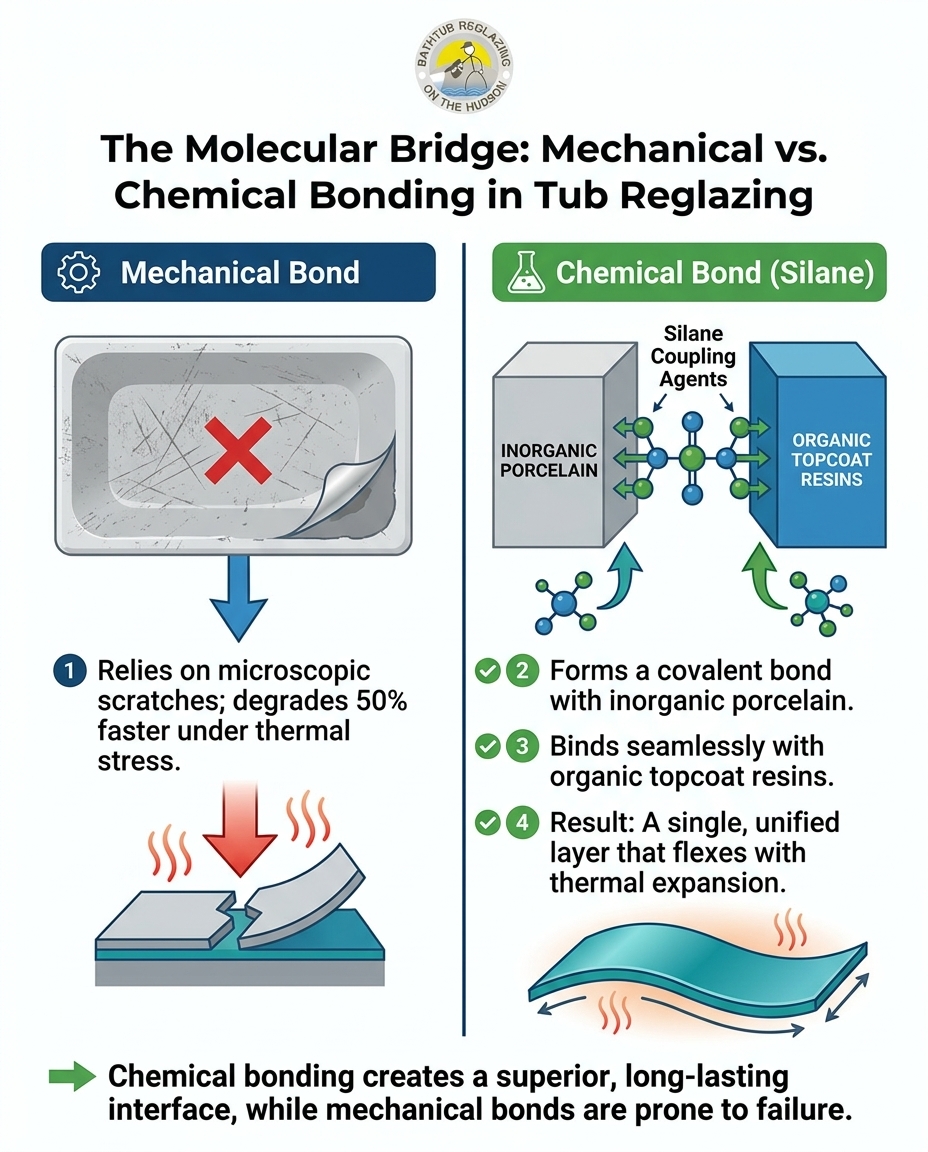
Traditional mechanical bonding relies solely on microscopic scratches and etching to give a coating something to grip. A technician will use heavy-duty sanding equipment or acid washes to rough up the smooth porcelain. The new liquid coating flows into these tiny valleys and hardens, creating a physical lock. While this is a necessary first step, it is not enough on its own. Coatings lacking chemical coupling agents degrade up to 50% faster under continuous thermal stress because the physical grip eventually loosens as the tub expands and contracts.
Heavy original cast iron and porcelain fixtures require more than just a roughened surface to hold a new finish permanently. Without a chemical bond, water and heat eventually break the mechanical grip. Once a single drop of moisture penetrates the scratched surface, it turns into steam during the next hot shower, pushing the coating up from underneath and leading to widespread flaking.
• How It Grips — Mechanical Bonding (Etching Only): Fills microscopic scratches and hardens. — Chemical Bonding (Silane Agents): Fuses at a molecular level with the tub.
• Thermal Flexibility — Mechanical Bonding (Etching Only): Rigid; prone to snapping under heat. — Chemical Bonding (Silane Agents): Flexes and moves with the substrate.
• Moisture Resistance — Mechanical Bonding (Etching Only): Vulnerable if the surface is breached. — Chemical Bonding (Silane Agents): Highly resistant to water intrusion.
• Lifespan — Mechanical Bonding (Etching Only): Often fails within 1 to 3 years. — Chemical Bonding (Silane Agents): Can last 10 to 15+ years with care.
The takeaway: Mechanical etching provides the necessary texture, but chemical bonding provides the permanence. A professional process always utilizes both, ensuring the topcoat is locked in physically and fused molecularly.
The Molecular Bridge: How Silane Coupling Agents Work
The transition from a vulnerable mechanical grip to an unbreakable permanent finish is made possible by a specific class of chemicals known as silane coupling agents. In our daily work restoring fixtures in Peekskill NY older homes, we rely on silane as the invisible workhorse that ensures the new surface survives decades of daily use. But how exactly does this complex chemistry work in a residential bathroom?
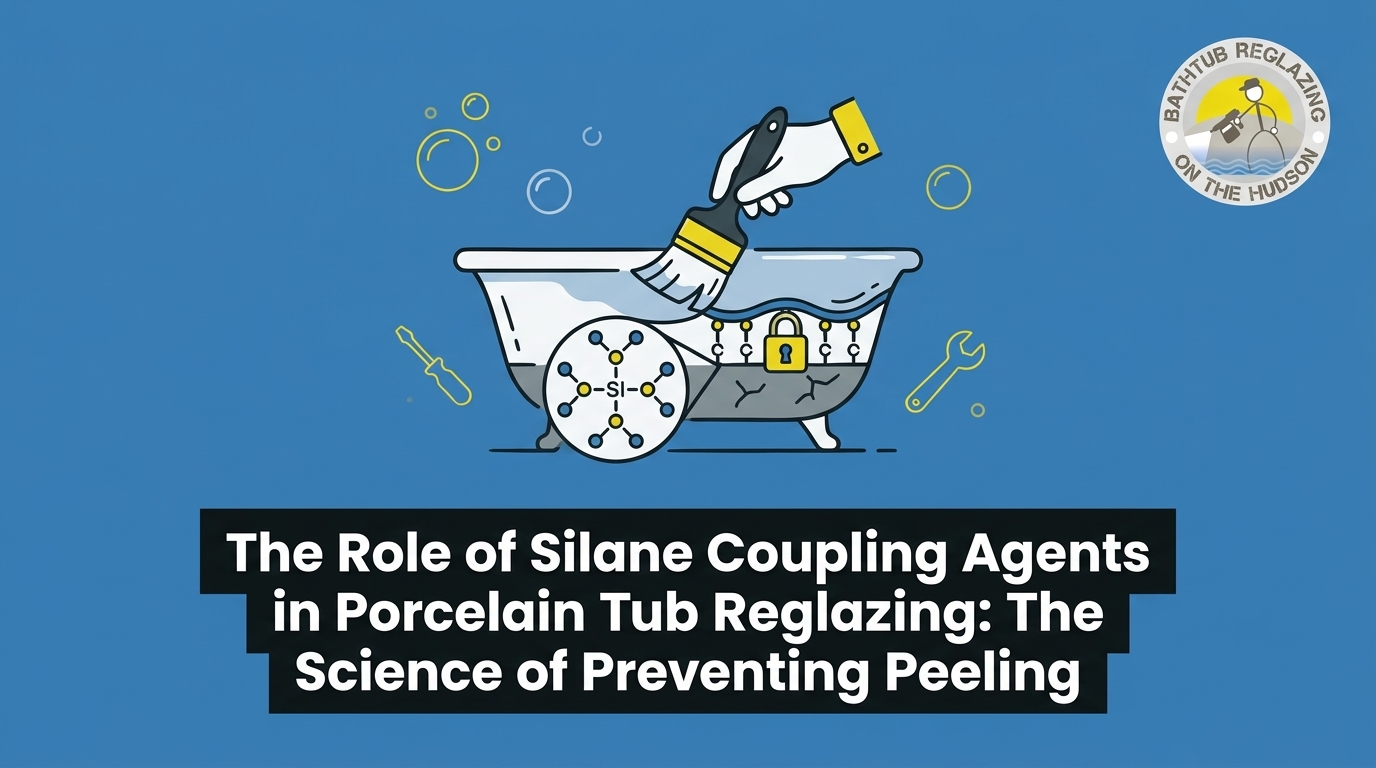
Silane coupling agents possess two highly distinct, reactive functional groups on a single molecule. This dual nature allows them to bond two completely incompatible materials together. You can think of silane as a "molecular bridge" between the original fixture and the new coating. One side of the bridge is designed to love heavy metals and glass, while the other side is designed to love liquid plastics and resins. When properly applied during our bathtub reglaze services, this bridge physically links the old surface to the new resin, making them behave as a single unified layer.
The Inorganic Connection
The foundation of this molecular bridge starts at the tub's original surface. One end of the silane molecule is formulated to react with inorganic substrates. Bathtubs are typically made of cast iron, stamped steel, or porcelain—all of which are inorganic materials rich in silica and oxygen. When the silane agent is wiped onto a properly neutralized tub, it seeks out these molecules and forms a permanent covalent bond. A covalent bond means the silane and the tub are now sharing electrons; they are chemically fused together and cannot be separated by water or heat.
The Organic Connection
Once the silane is firmly rooted in the porcelain, the other end of the molecule stands at attention, waiting for the topcoat. This exposed end is highly reactive to organic polymers found in modern acrylic or epoxy topcoats. As our technicians spray the new finish onto the tub, the liquid resin immediately chemically binds with the waiting silane molecules. This dual-action permanently locks the new finish to the old tub, ensuring that the topcoat doesn't just sit on the surface—it becomes part of the tub itself.
Combating Thermal Shock and Expansion
The problem: Every time you take a shower, your bathtub undergoes a microscopic stress test. Heavy porcelain and cast iron fixtures retain cold ambient temperatures incredibly well. As early fall temperature shifts arrive in the Hudson Valley and the mornings become brisk, the core temperature of a cast iron tub drops significantly overnight. When you turn on the faucet and 105-degree water hits that cold surface, rapid thermal expansion occurs.
The cause: Heat causes materials to expand. However, the heavy iron or porcelain expands at a slightly different rate than a thin layer of acrylic or epoxy paint. A purely mechanical bond—one relying only on scratches—will snap or shear under this repeated expansion and contraction cycle. The rigid paint cannot stretch enough to keep up with the moving metal beneath it. Over weeks and months, these microscopic fractures grow, eventually allowing water to seep under the coating and cause massive bubbling.
The solution: Silane-based chemical bonds act as a microscopic shock absorber. Because the silane molecule bridges the gap between the inorganic tub and the organic coating, it flexes and stretches with the tub. As the early fall temperature drops cause the tub to retain cold ambient temperatures, the silane ensures that the sudden thermal shock of hot shower water does not break the bond. The molecular bridge distributes the expansion stress evenly across the entire surface, preventing the coating from separating, snapping, or peeling away from the drain.
Why Standard DIY Kits Lack Permanent Adhesion
Over our years in the industry, our team has seen countless homeowners attempt to fix a peeling tub using commercial roll-on kits from home improvement stores. Unfortunately, these standard DIY kits almost always lack permanent adhesion, leading to a frustrating cycle of repeated failures. Understanding the chemistry explains exactly why these off-the-shelf options cannot match professional results, especially on the heavy fixtures common in Peekskill NY older homes.
Off-the-shelf epoxy and acrylic paints generally lack advanced chemical coupling agents. Silane is highly reactive, moisture-sensitive, and requires specific industrial safety controls, precise mixing ratios, and exact timing to apply correctly. It is not something that can be safely packaged in a consumer-friendly aerosol can or a simple two-part roller kit. Because they lack this crucial ingredient, retail products simply sit on top of the surface rather than bonding at a molecular level.
The absence of silane is why the DIY applications we are frequently called to fix often peel within months of use. Without that molecular bridge, the first time you drop a shampoo bottle or subject the tub to a sudden temperature change, the rigid retail epoxy chips. Professional methodology utilizes industrial-grade chemistry that cannot be replicated with a simple roller. When a homeowner invests in proper tub recoating, they are paying for the advanced, professional-grade bonding chemistry that molecularly prevents peeling and outlasts cheaper commercial alternatives by years.
• No chemical bridge: Retail kits rely entirely on your ability to sand the tub perfectly by hand.
• Thick, uneven application: Rollers leave an inconsistent film thickness, creating weak points that crack under hot water.
• Extended cure times: Without professional curing agents, DIY epoxies remain soft and vulnerable to water damage for days.
• Lack of neutralization: Professional silane requires a perfectly pH-balanced surface, a step completely missing from retail instructions.
Meticulous Surface Preparation for Chemical Bonding
Even the most advanced silane coupling agents are useless if they are applied to a dirty, greasy, or improperly prepped surface. Silane requires a perfectly neutralized, contaminant-free substrate to react properly. If there is even a microscopic layer of soap scum, hard water minerals, or old silicone caulk left on the porcelain, the silane will bond to the dirt instead of the tub, leading to an immediate failure.
Old, worn-out finishes must be meticulously prepped, and any existing damage or rust must be repaired before the chemistry is introduced. Our professional technicians spend the vast majority of their time on this preparation phase. The tub is washed with industrial degreasers, etched to open the pores of the porcelain, and thoroughly neutralized to ensure the pH level is perfect for the silane to activate. The early fall temperature shifts also require our technicians to carefully monitor the ambient temperature and humidity in the bathroom, as moisture in the air can interfere with the chemical curing process.
For example, during a recent early fall project our crew completed, an old, worn-out bathtub required a complete overhaul. The focus was on meticulous preparation and protecting the surrounding area. By taking the time to properly strip the failed material and prep the surface before applying advanced bonding agents, the bathtub now looks brand new with a smooth, glossy, spotless finish. Professional technicians create sharp edges and a pristine surface before the bonding agent is ever introduced. This rigorous prep ensures the final finish is mirror-smooth with zero imperfections, allowing the molecular bridge to form flawlessly across every square inch of the fixture.
What professionals check during prep:
• Complete removal of old caulking: Silicone actively repels new coatings and must be chemically stripped.
• pH neutralization: The tub must be balanced after etching so the silane can form a covalent bond.
• Moisture elimination: The surface must be bone-dry; a single drop of water from a leaky faucet will ruin the chemical reaction.
• Rust remediation: Any oxidation around the overflow plate or drain must be ground down and sealed.
Resolving Bubbling and Peeling for Good
When previous coating jobs fail and bubble, it is almost always due to moisture intrusion and poor chemical adhesion. A bubble forms because water has found a way under the topcoat—usually through a weak spot near the drain or a cracked edge—and the lack of a silane bond allows that water to push the paint upward. Correcting a bubbling issue requires far more than just sanding down the bad spot and painting over it; it requires stripping the old material entirely and re-establishing a true molecular bond.
In another situation, our technicians were called out to a difficult job that presented severe bubbling on a reglazed surface—a common aftermath we see when previous painters fail to use proper chemical bonding. Correcting this bubbling issue meant returning to completely strip the failed material, neutralizing the porcelain, re-establishing a true molecular bond, and standing by the work until the issue was permanently fixed. A neutral expert assessment from our team ensures that difficult jobs—even those ruined by inexperienced contractors—can be permanently resolved.
For homeowners in Peekskill NY older homes, deciding how to handle a failed tub can be stressful. If you are weighing your options, learning about bathtub reglazing vs replacement can clarify why a proper chemical restoration is often superior to tearing out heavy, high-quality original fixtures. When the old, failed paint is stripped away and the silane coupling agents are applied correctly, the resulting finish withstands daily use and thermal stress without separating. The molecular bridge ensures that bubbling and peeling become a thing of the past.
Common Questions About Tub Reglazing Chemistry
Why do reglazed bathtubs peel?
Reglazed bathtubs peel primarily because the new coating was applied without a chemical bonding agent. When a topcoat relies solely on a roughened surface for grip, the constant thermal expansion from hot shower water eventually breaks that physical hold. Once the bond breaks, moisture seeps underneath, causing the coating to lift, flake, and peel away from the porcelain.
What makes bathtub coating stick permanently?
A permanent hold requires a combination of mechanical etching and advanced chemical adhesion. Professionals use silane coupling agents to create a molecular bridge between the tub's original surface and the new synthetic topcoat. This dual approach ensures the new finish is fused to the tub at a microscopic level, making it virtually impossible to separate under normal use.
How does a silane coupling agent work in reglazing?
Silane molecules have two distinct ends that react with different materials. One end forms a covalent bond with inorganic surfaces like glass, cast iron, or porcelain, while the other end binds seamlessly with the organic resins in the topcoat. This acts as a chemical anchor, locking the old tub and the new finish together so they flex and move as one unified layer.
How do professionals prep porcelain for chemical bonding?
Professional technicians, like our crew, meticulously clean, degrease, and etch the porcelain to remove all contaminants and open the material's pores. The surface is then chemically neutralized to ensure the correct pH level, and completely dried to prevent moisture from interfering with the silane. This rigorous preparation is essential, as even a microscopic layer of soap scum will prevent the molecular bridge from forming.
Is chemical bonding better than etching for heavy cast iron tubs?
Chemical bonding is absolutely essential for heavy cast iron tubs, and it must be used in conjunction with etching. Cast iron retains cold temperatures and experiences severe thermal shock when hit with hot water, causing significant expansion. While etching provides a physical grip, only a chemical bond can flex and stretch enough to survive this extreme thermal movement without snapping.
Securing a Permanent Finish for Your Fixtures
Understanding the science behind surface adhesion provides peace of mind when restoring a fixture. You do not have to settle for a bathroom that looks deteriorating and neglected, nor do you have to worry that a newly restored tub will begin flaking after a few months of use. Advanced bonding chemistry ensures that your investment won't peel or bubble under daily hot water use, even in Peekskill NY older homes where heavy cast iron fixtures demand the highest level of durability.
Relying on the professional methodology we use at Bathtub Reglazing On The Hudson guarantees the molecular bridge is built correctly for lasting durability. From the meticulous neutralization of the porcelain to the precise application of silane coupling agents, the science of reglazing is designed to permanently solve the root causes of coating failure. Explore professional options to ensure your tub restoration stands the test of time, giving you a smooth, flawless finish that you can trust every time you step into the shower.
Schedule Service
Thank you! Your submission has been received!
Oops! Something went wrong while submitting the form.
Other Blogs
Customer Testimonials
Hear what customers are saying about our professional refinishing and outstanding results.

Can’t say enough about Maurice. From start to finish great communication his work is incredible and he stands by it very competitive pricing just all-around good guy the work was done quick and kept very clean and our brand new bathroom
Joey N.
We had a large piece of bathtub glaze chip off. Maurice came in and did a fantastic job. It now looks and works better than before. He went above and beyond the contract by cleaning up the old chipped grout between the tub and the tiles and replacing with brand new.
Bozidar J.
Maurice did a great job on my tub. It looks brand new.
Steven S.