
Staring Down a Chipped Sink Before the Fall Holidays
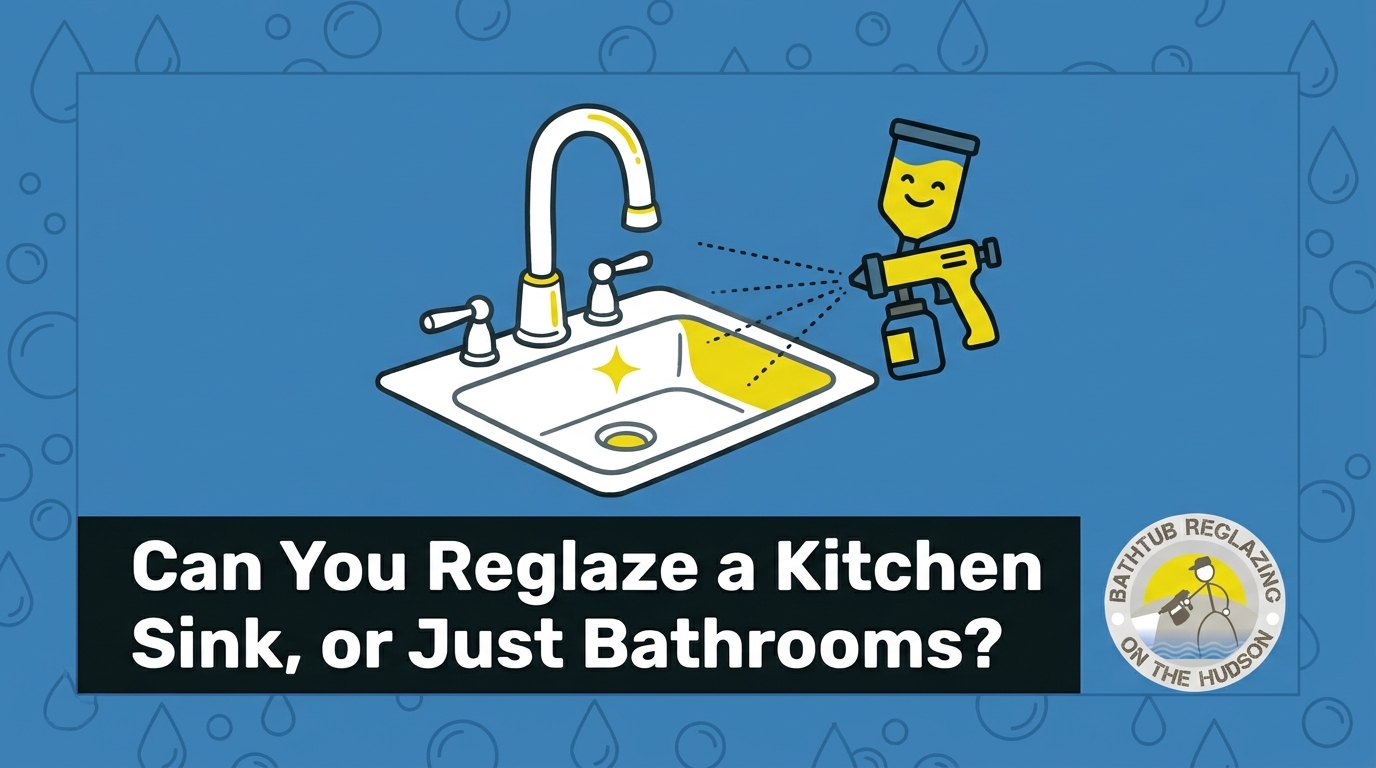
If you are wondering, "Can you reglaze a kitchen sink, or just bathrooms?" you are likely dealing with a stained, chipped, or worn-out fixture right in the middle of your busiest cooking season. Here at Bathtub Reglazing On The Hudson, our team fields dozens of calls every October from homeowners experiencing this exact panic. As you begin your pre-Thanksgiving kitchen prep, the flaws in your primary workspace become glaringly obvious. Every time you wash a dish or rinse vegetables, that dark chip in the porcelain or the dull, etched bottom of the basin stares back at you, making the entire kitchen feel unkempt just weeks before guests arrive.
It is entirely logical to assume that if our technicians can beautifully restore a bathtub in a single afternoon, the same process should work perfectly for the basin where you wash your dishes. The short answer is that while the technical application of professional reglazing is similar across different fixtures, the daily reality of how those fixtures are used could not be more different. We always warn our clients that kitchen sinks endure an entirely different level of physical abuse, chemical exposure, and temperature fluctuation than bathroom fixtures.
Before you invest time and resources into a surface coating, it is critical to understand the stark differences in wear-and-tear. A bathroom tub is treated gently; a kitchen sink is a high-impact workstation. To help you make an informed choice before the holiday hosting season begins, we want to take you on a deep dive into the physics of sink durability, what causes surface failure, and why our team finds certain environments perfectly suited for restoration while others demand a complete replacement.
The Brutal Physical Reality of Kitchen Sink Wear-and-Tear
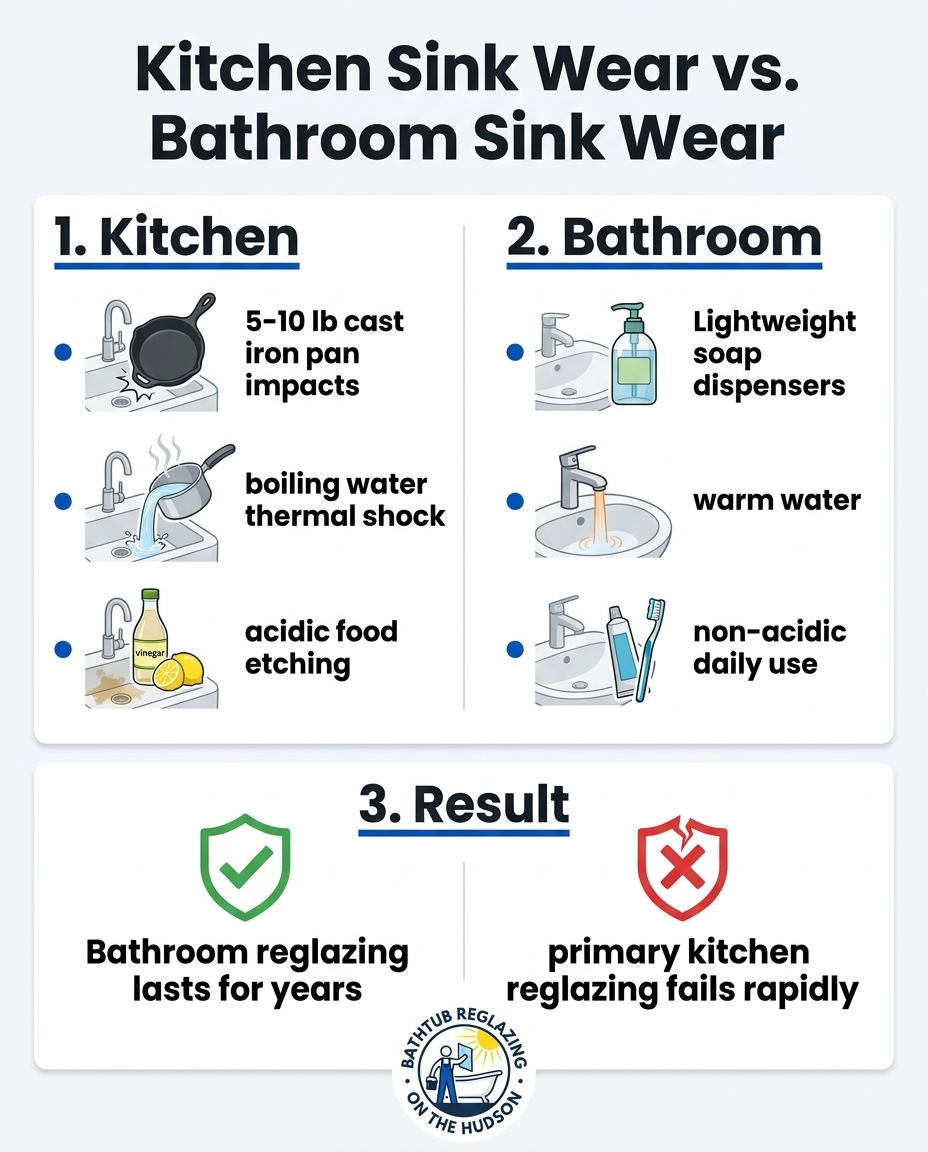
To understand why sink reglazing behaves differently depending on the room, you have to look at the extreme physical forces a primary kitchen basin endures on a daily basis. The kitchen is the workhorse of the home, and the sink is its most heavily utilized tool. When you wash dishes, you are not just running water; you are subjecting the surface to localized blunt force trauma.
Consider the impact force of a standard five-to-ten pound cast iron skillet. When you are rushing to clean up after dinner, that heavy pan is often set down forcefully or accidentally dropped an inch or two into the basin. A factory-fired enamel surface is designed to take that hit. In our professional experience, a synthetic resin or polyurethane coating, no matter how expertly applied, is not engineered to withstand that kind of concentrated, heavy impact without eventually micro-fracturing or chipping.
Furthermore, kitchens involve sharp utensils. Forks, knives, and heavy metal spatulas constantly scrape against the bottom of the basin. These create microscopic cuts in synthetic surface coatings. Once the surface integrity is breached by a knife tip or a dropped mug, water begins to seep underneath the coating, leading to inevitable peeling and bubbling. We always contrast this heavy utility with the bathroom sinks we restore, which primarily handle lightweight items like toothbrushes, plastic soap dispensers, and soft towels.
Impact Resistance vs. Surface Hardness
There is a significant difference between a coating looking hard to the touch and actually resisting heavy impacts. When our clients tap on a newly restored surface, it feels incredibly solid. However, the underlying chemistry dictates how it responds to stress.
• Original Factory Enamel: Traditional cast iron or steel sinks are coated in glass powder and baked in kilns at extreme temperatures (often exceeding 1,500°F). This fuses the coating to the metal at a molecular level, creating a surface that is exceptionally hard and highly resistant to blunt impacts.
• Applied Resins and Epoxies: Modern restoration compounds cure at room temperature. While we use them to create a stunning, glossy, and highly durable finish for gentle use, they do not possess the same structural impact resistance as kiln-fired glass. They sit on top of the original surface, making them vulnerable to the sheer force of a dropped pot.
Thermal Shock and Chemical Etching: The Invisible Threats
Physical impacts are only half the battle in a busy kitchen. The temperature and chemical challenges unique to food preparation are often the invisible threats that cause surface coatings to fail prematurely. One of the most destructive forces our team encounters is thermal shock.
Thermal shock occurs when a material experiences a rapid, extreme change in temperature, causing it to expand or contract faster than it can physically handle. When you drain a pot of boiling pasta water directly onto a cold sink surface, the temperature of the basin spikes instantly. Factory-fired porcelain can generally absorb this rapid expansion, but synthetic coatings struggle. The rapid expansion and contraction weaken the bond between the new coating and the original sink, eventually causing the finish to warp, bubble, or delaminate.
Beyond temperature, the kitchen is a highly acidic environment. Highly acidic foods and liquids like lemon juice, vinegar, wine, and tomato paste are processed in the sink daily. If these substances are left sitting on an untreated or newly applied polyurethane coating, they will begin to etch the surface. This chemical reaction dulls the glossy finish, creates stubborn stains, and slowly degrades the protective barrier.
These harsh realities are exactly why kitchen restoration often discolors or peels within months of heavy use. In our years of serving the Hudson Valley, we constantly see how extreme conditions break down surfaces over time. For example, one winter, a customer reached out about severe rust on their tub that required fixing. We repaired the rust to save the tub from replacement, which illustrates how moisture and wear attack compromised areas. But while our team can beautifully save a tub from rust, a primary kitchen sink faces boiling water and acid daily—making the decision between reglazing vs. replacement heavily weighted toward replacement for the kitchen. We believe it is always better to do a job right the first time rather than applying a doomed temporary fix.
Why Bathroom Sinks and Tubs Are Perfect Reglazing Candidates
While the kitchen presents an overly hostile environment for surface coatings, pivoting to the bathroom reveals an entirely different story. In the right environment, professional surface restoration is an incredible, durable technology that our technicians use every day to add years of life to our clients' fixtures.
Bathroom sinks and tubs endure an incredibly mild existence compared to their kitchen counterparts. They are exposed to warm water, mild soaps, shampoo, and soft human contact. There are no heavy cast iron pans, no boiling water, and no acidic food preparations. Because the extreme physical wear-and-tear is absent, the advanced resins and polyurethanes used in bathtub reglazing can fully cure and remain pristine for years.
This process is highly effective for fixtures suffering from age-related dullness or hard water damage. Last summer, our crew worked on a severely mineral-stained porcelain tub in a local home. Through meticulous preparation and expert application, we turned the stained tub into a spotless, shiny, beautiful white bathtub. Because it only sees daily showers and baths, that flawless finish will endure. Reassuringly, restoring your main or guest bathrooms is a service we highly recommend—it is a cost-effective solution that yields stunning results.
• Daily Impacts — Primary Kitchen Sink: Heavy pots, pans, and sharp utensils — Bathroom Sink & Tub: Lightweight soap dispensers, toothbrushes
• Temperature Swings — Primary Kitchen Sink: Extreme (boiling water to freezing foods) — Bathroom Sink & Tub: Moderate (warm to hot tap water)
• Chemical Exposure — Primary Kitchen Sink: High (food acids, harsh degreasers) — Bathroom Sink & Tub: Low (mild hand soaps, body wash)
• Restoration Success Rate — Primary Kitchen Sink: Poor long-term durability under heavy use — Bathroom Sink & Tub: Excellent, lasting for many years
Preserving Older Homes: Cast Iron Fixtures in Peekskill
For homeowners in older Peekskill NY homes with original cast iron sinks, the decision to replace a fixture is often emotionally difficult. Our team frequently works in these historic Hudson Valley homes, and we completely understand the appeal of preserving beautiful, oversized, double-basin cast iron fixtures that simply are not manufactured with the same weight and character today. Acknowledging the charm and architectural value of these original pieces is important to us.
Homeowners often face a frustrating dilemma: wanting to preserve the history of their home versus needing a functional, sanitary, and pristine kitchen workspace. When a vintage cast iron sink becomes heavily chipped or the enamel wears down to the porous iron, it becomes a magnet for bacteria and stains, making it incredibly difficult to keep clean during heavy cooking seasons.
While we can fully preserve and modernize vintage bathroom tiles and tubs via bathroom tile reglazing, kitchen preservation requires different strategies. Because a standard spray-on resin will fail under the weight of cast iron pans, you have a few options for historic kitchen fixtures. If you are absolutely committed to keeping the original sink, you may need to seek out a professional re-enameling facility that can remove the sink, strip it to bare metal, and fire new glass powder onto it in a kiln—a process that is highly specialized and requires the sink to leave your home for weeks. Alternatively, we see many homeowners choose to safely remove and repurpose their historic sinks in a laundry room, potting shed, or utility room where the daily impact is significantly lower, allowing them to install a durable, modern sink in the primary kitchen.
How Fall Weather and Indoor Heating Impact Curing Times
If you are considering any surface restoration work in the autumn, it is vital to understand how the climate affects the process. As local contractors, we know firsthand that October marks a distinct transition in the Hudson Valley. We move from the humid, lingering summer air to dry, indoor heated air. This seasonal shift drastically impacts the curing process of resins, epoxies, and polyurethanes used in surface restoration.
For a coating to achieve its maximum hardness and durability, it must cure under specific ambient temperature and humidity conditions. The shift to dry, indoor heated air can cause the top layer of a coating to flash-dry too quickly, trapping solvents underneath and preventing the material from fully cross-linking at a molecular level. Our technicians rely on professional climate management and advanced ventilation systems to ensure the environment remains stable enough for a hard, durable finish to form.
This is precisely why DIY kits often fail spectacularly in the fall. Homeowners simply cannot control the ambient temperature and humidity precisely enough with open windows and home HVAC systems. Even in ideal bathroom applications, professional environmental control is the key to longevity. Without it, the coating remains soft and vulnerable to immediate peeling.
The Danger of Rushing Before the Holidays
The urgency of October and pre-Thanksgiving kitchen prep often pushes homeowners to rush projects. We always warn our clients about the profound danger in applying a surface coating and immediately subjecting it to heavy Thanksgiving cooking preparation before it has fully cured. Even the best industrial coatings require adequate time to reach maximum hardness. Rushing to wash a heavy turkey roasting pan in a freshly coated basin will almost certainly gouge the finish, ruining the investment entirely.
The Honest Expert's Recommendation for High-Traffic Kitchens
When you are looking to upgrade your home, you deserve transparent advice that prioritizes your long-term satisfaction over a quick sale. As experienced professionals at Bathtub Reglazing On The Hudson, our honest truth is this: for a primary, high-traffic kitchen, replacement is almost always a better long-term investment than attempting to restore the surface.
While a company could technically spray a coating onto your kitchen sink and collect a payment, our experts will actively advise against it. We know that the extreme wear-and-tear from heavy pots, pans, boiling water, and acidic foods will inevitably cause that coating to fail. Providing durability-first guidance means protecting our Hudson Valley neighbors from wasting their hard-earned money on doomed projects. We would rather tell you the truth and lose a minor kitchen project than leave you with a peeling sink three months later.
However, it is important to reiterate that for secondary kitchens, basement wet bars, or bathrooms, the restoration process remains an excellent, highly recommended choice. Because these areas do not see the brutal physical abuse of a primary cooking space, the coatings we apply perform beautifully and last for years. Understanding the specific utility of your space is the secret to a successful renovation.
Frequently Asked Questions About Sink Reglazing
Can you epoxy a kitchen sink?
Yes, you can technically apply an epoxy coating to a kitchen sink, but our team highly discourages it for primary kitchens. Epoxy is vulnerable to thermal shock from boiling water and easily scratches under the weight of heavy pots and pans. Within a few months of heavy daily use, the epoxy will likely begin to chip, peel, or discolor, making replacement a much wiser choice for your main cooking area.
Why does sink reglazing peel in the kitchen?
In our experience, sink reglazing peels in the kitchen primarily due to blunt force impacts and microscopic cuts from utensils. When a heavy cast iron pan is dropped, or a knife scratches the synthetic surface, it creates a breach in the coating. Water and acidic food juices seep into these micro-fractures, breaking the bond between the original sink and the new coating, which leads to rapid peeling.
Can you pour boiling water in a reglazed sink?
No, we strongly advise that you never pour boiling water directly into a reglazed sink. The extreme, sudden heat causes thermal shock, forcing the synthetic coating to expand rapidly. Because the coating and the underlying sink material expand at different rates, this stress weakens the adhesive bond, causing the finish to warp, bubble, and eventually fail entirely.
How long does a bathroom sink reglaze last compared to a kitchen sink?
A professionally reglazed bathroom sink can easily last 10 to 15 years with proper care, whereas a kitchen sink coating may begin failing in less than a year. Bathroom sinks only endure warm water, mild soap, and soft items like toothbrushes, allowing the finish to remain intact. Kitchen sinks suffer daily abuse from heavy cookware and harsh chemicals, drastically reducing the lifespan of any applied coating.
Is it worth reglazing a cast iron sink?
It is absolutely worth reglazing a cast iron sink if it is located in a bathroom, but not if it is your primary kitchen workstation. Vintage cast iron bathroom fixtures take beautifully to our restoration process, preserving their historic charm. For a heavily used kitchen cast iron sink, standard spray-on coatings will not survive the daily impact, so repurposing the sink or seeking professional kiln-fired re-enameling are better options.
Can I use a DIY refinishing kit on my kitchen sink before hosting guests?
Using a DIY refinishing kit on a primary kitchen sink right before hosting guests is strongly advised against. DIY kits lack the industrial adhesion promoters and professional climate control our team uses for a durable cure, especially in the dry indoor heating of fall. Subjecting a freshly applied, improperly cured DIY coating to heavy holiday cooking prep will almost certainly result in immediate scratching and peeling.
Get Honest Answers for Your Specific Sink Restoration Needs
Understanding the physical limits of your fixtures is the key to a successful and stress-free renovation, especially as the busy fall hosting season approaches. While the heavy wear-and-tear of October and pre-Thanksgiving kitchen prep means your primary kitchen sink likely needs a full replacement, your bathrooms remain prime candidates for beautiful, long-lasting restoration.
You deserve clear, honest advice from local experts that saves you from failed projects and wasted effort. If you are tired of looking at stained, chipped fixtures and want to know exactly which ones our team can save, reach out to Bathtub Reglazing On The Hudson. Contact us today to discuss your specific situation and get the honest answers you need to prepare your home for the holidays.
Schedule Service
Thank you! Your submission has been received!
Oops! Something went wrong while submitting the form.
Other Blogs
Customer Testimonials
Hear what customers are saying about our professional refinishing and outstanding results.

Can’t say enough about Maurice. From start to finish great communication his work is incredible and he stands by it very competitive pricing just all-around good guy the work was done quick and kept very clean and our brand new bathroom
Joey N.
We had a large piece of bathtub glaze chip off. Maurice came in and did a fantastic job. It now looks and works better than before. He went above and beyond the contract by cleaning up the old chipped grout between the tub and the tiles and replacing with brand new.
Bozidar J.
Maurice did a great job on my tub. It looks brand new.
Steven S.