

Why Your Shower Base Feels Soft: The Reality of Structural Flex
If you are stepping into your bathroom and wondering, does reglazing fix a spongy or leaking fiberglass shower pan, the short answer requires looking closely at what is happening beneath the surface. Have you noticed a soft, sinking feeling when you step into your shower? Perhaps you hear a faint squeak, or you can actually feel the floor bowing downward under your weight. It is incredibly common for homeowners to hope that a simple, topical surface coating will solve the problem and seal up any resulting micro-leaks.
Here is the reality: a cosmetic coating cannot fix a structural void beneath a flexing base. When a fiberglass shower pan bends underfoot, the issue is not with the top layer of the material; the issue is an absence of physical support underneath it. Applying a new finish over a floor that moves will only result in that new finish cracking the moment someone steps on it. Understanding the difference between a surface blemish and a structural failure is the first step in diagnosing your fixture correctly.
This guide will walk you through exactly why your shower floor is flexing, how to diagnose the severity of the damage, and how to choose between cosmetic and structural interventions. If your fixture is structurally sound but merely suffering from surface wear, professional reglazing services are an excellent choice. However, if the floor is spongy, a completely different approach is required to secure the foundation.
The Direct Answer: Surface Coatings vs. Structural Integrity
The short answer is no. Reglazing does not fix a spongy, flexing, or structurally leaking fiberglass shower pan. To understand why, we have to look at the physics of how surface coatings interact with structural integrity.
The Mechanics of Reglazing Compounds
Professional reglazing compounds are designed to cure into a rigid, waterproof, and highly durable surface layer. They bond chemically to the existing fiberglass, creating a beautiful, seamless barrier against moisture, soap scum, and daily wear. However, these compounds are engineered to be applied to static, unmoving surfaces. They do not possess elasticity. They are meant to act like a hard shell, much like the original factory finish on a fiberglass shower pan.
The Physics of a Spongy Base
When a user steps onto an unsupported fiberglass shower pan, the material physically bends downward into the empty void below it. This is known as structural flex. If you apply a rigid, cured glaze over a surface that bends, the laws of physics dictate that the rigid glaze will instantly snap, crack, or spiderweb under the stress of the movement. It is impossible for a millimeter-thick coating of glaze to hold up the weight of a human body when the floor beneath it is sinking.
Therefore, true structural leaks—where water is escaping through stress fractures caused by a bending floor—require mechanical support, not a topical sealant. If you are dealing with a failing subfloor, comprehensive bathroom and shower restorations that address the underlying architecture are the only permanent solution.
What Causes a Shower Pan to Become Spongy?
To truly fix a flexing fiberglass shower pan, you have to understand what causes the void beneath it in the first place. The visible surface of your shower is just a shell; the actual strength comes from the foundation it rests upon. When that foundation fails, the pan becomes spongy. Here are the most common root causes:
1. Improper Initial Installation (Lack of a Mortar Bed): The most frequent cause of a spongy floor is a shortcut taken during the initial bathroom build. A fiberglass shower pan is not designed to bear weight across a hollow span. It must be set firmly into a bed of wet mortar or specialized structural foam during installation. If the installer skipped this crucial step and simply nailed the pan to the wall studs, leaving a gap between the fiberglass and the wooden subfloor, the pan will inevitably flex every time it is used.
2. Material Degradation and Settling: Even if a mortar bed was used, houses settle over time. Wooden subfloors can shift, and low-quality mortar can crumble or degrade after decades of minor vibrations. When the supporting material breaks down, it leaves behind physical voids. The fiberglass shower pan then sinks into those empty pockets when weight is applied.
3. Hidden Water Damage and Subfloor Rot: Sometimes, a small surface crack near the drain goes unnoticed for months or years. Water slowly seeps through this micro-leak, soaking into the wooden subfloor beneath the pan. Over time, the wood rots away entirely. The void is created not by settling, but by the physical deterioration of the structural joists and plywood, leaving the fiberglass shower pan suspended over a decaying hole.
None of these root causes can be reached, filled, or remedied from the top surface alone. A surface coating cannot replace missing mortar, nor can it rebuild rotted wood.
How to Diagnose Your Fixture: Flex vs. Cosmetic Damage
Before calling a professional, you can perform a few simple, non-destructive tests to determine if your issue is structural (requiring subfloor intervention) or purely cosmetic (where reglazing is the perfect fit). The goal is to identify if the fiberglass shower pan is actually moving, or if the damage is strictly on the surface.
The Diagnostic Tests
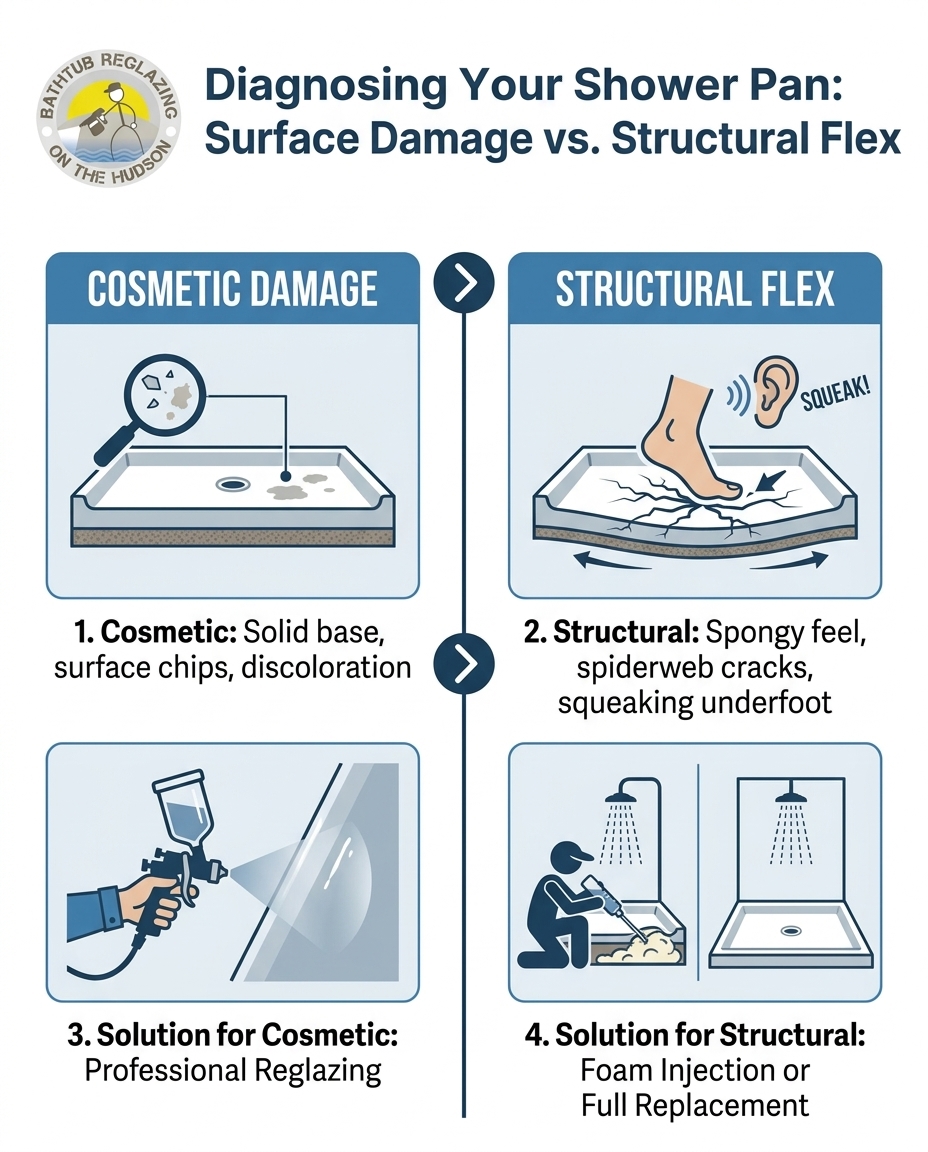
• The Weight Test: Step into the dry shower barefoot. Shift your weight from side to side, focusing on the area immediately surrounding the drain, which is often the weakest point. Do you feel a downward movement? Do you hear a creaking, squeaking, or grinding sound? Any audible noise or physical sinking indicates a structural void beneath the pan.
• The Visual Inspection: Look closely at the type of damage on the floor. A single, distinct chip caused by dropping a heavy shampoo bottle is cosmetic. However, a cluster of spiderweb cracks radiating outward from the drain, or long stress fractures running parallel to the walls, are classic signs of structural flex. The pan is bending, and the factory finish is snapping under the strain.
• The Water Test: Turn on the shower and watch how the water drains. If the water pools in specific dips or valleys on the floor rather than flowing smoothly to the drain, the pan has likely warped or sunk due to a lack of underlying support.
Comparing Symptoms and Solutions
• Single impact chip or surface scratch — Likely Root Cause: Dropped item; normal wear and tear — Appropriate Solution: Cosmetic Reglazing
• Faded, stained, or discolored finish — Likely Root Cause: Hard water, harsh chemicals, age — Appropriate Solution: Cosmetic Reglazing
• Spiderweb cracks near the drain — Likely Root Cause: Structural flex from unsupported pan — Appropriate Solution: Foam Injection or Replacement
• Squeaking or sinking feeling underfoot — Likely Root Cause: Missing mortar bed or rotted subfloor — Appropriate Solution: Foam Injection or Replacement
• Water pooling in sunken areas — Likely Root Cause: Warped pan due to subfloor settling — Appropriate Solution: Foam Injection or Replacement
Note: These tests are for preliminary diagnostic purposes only. A professional assessment is always recommended over attempting DIY structural repairs on plumbing fixtures.
When Surface Restoration is the Right Choice
While reglazing cannot fix a spongy floor, it is an incredibly powerful and cost-effective solution when the underlying structure of your fiberglass shower pan is perfectly sound. If you perform the weight test and the floor feels rock-solid with zero flex, but the fixture looks terrible, surface restoration is exactly what you need.
What reglazing excels at: When a shower base is structurally supported, bathtub reglazing and shower pan refinishing can completely transform the aesthetic of the bathroom. It easily resolves cosmetic issues like chipped factory glaze, minor surface scratches, stubborn hard water stains, and outdated colors. A proper professional reglazing restores the protective waterproof barrier and delivers a brilliant, glossy visual appeal that rivals a brand-new factory installation.
For example, one homeowner recently reached out after a large piece of their bathtub glaze chipped off. Because the underlying structure was perfectly solid and showed no signs of flex, the technician was able to repair the chipped glaze, clean out the old grout, and replace it with new material. The result was a fixture that looked and functioned better than before. This proves that when the foundation is strong, cosmetic restoration works beautifully. Contrast this successful cosmetic repair with the impossibility of fixing a spongy floor: a strong foundation guarantees the new glaze will last, while a flexing foundation guarantees it will fail.
The Hidden Dangers of Ignoring a Compromised Base
If you have determined that your fiberglass shower pan is flexing, it is critical not to ignore the problem or attempt to seal it with temporary caulk. A spongy base is not just an annoyance; it is an active threat to the structural integrity of your home.
When a fiberglass shower pan flexes, the stress fractures open slightly every time you step on them. Water escapes through these micro-cracks and travels directly to the subfloor and adjacent walls. Because this area is dark, enclosed, and poorly ventilated, the moisture becomes trapped. With Peekskill's fluctuating seasonal temperatures and humid summers, this trapped moisture creates the perfect breeding ground for rapid mold development. The humid summer air accelerates mold growth in these damp voids, degrading the indoor air quality of your home.
Furthermore, as the seasons change, the danger increases. Addressing these hidden leaks in early fall is crucial. When dropping fall and winter temperatures arrive, the wet wooden subfloors contract and expand, which worsens the structural void and accelerates the rotting process. If the water travels far enough, it can wick up into the drywall, requiring extensive tile surround refinishing and wall replacement down the line. Catching a structural leak early prevents a localized shower issue from becoming a massive bathroom reconstruction project.
Proper Solutions: Foam Injection and Structural Replacement
If your fiberglass shower pan is sinking and cannot be reglazed, what are the actual solutions? Depending on the severity of the subfloor damage, the industry relies on two primary methods to restore structural integrity.
Structural Foam Injection
The Problem: The pan is in good physical shape, but the mortar bed beneath it has settled, creating a small void that causes flexing.
The Cause: Minor settling or improper installation without severe water damage.
The Solution: Structural foam injection is a specialized industry remedy used to fill voids without requiring full bathroom demolition. Technicians drill carefully placed holes into the floor or access the pan from a lower ceiling, injecting high-density, closed-cell polyurethane foam. As the foam expands, it fills the empty pockets, hardens into a rigid support layer, and stops the pan from flexing. Once the base is rock-solid again, surface cracks can be safely repaired.
Full Pan Replacement
The Problem: The pan flexes dramatically, water pools heavily, and there is evidence of extensive leaking into the ceiling below.
The Cause: Severe subfloor rot caused by long-term water exposure.
The Solution: When the wooden joists and plywood subfloor have rotted away, foam injection is no longer safe or viable. The only correct solution is full pan replacement. The old fixture must be removed, the rotted wood must be cut out and rebuilt by a professional, and a new pan must be installed in a proper mortar bed.
A reputable professional will explicitly advise against a surface coating if structural foam injection or full replacement is required, prioritizing your long-term safety over a quick cosmetic sale. This transparent honesty is vital. It allows you to weigh the long-term benefits of a proper structural repair against the wasted money of a temporary band-aid. If you are debating the best path forward, understanding bathtub reglazing vs. replacement is essential for making an informed decision.
Frequently Asked Questions About Shower Pan Repairs
Why does my fiberglass shower floor flex?
A fiberglass shower pan flexes because it lacks proper physical support underneath. This is typically caused by a lack of a mortar bed during the initial installation, or because the wooden subfloor has degraded and rotted due to hidden water leaks, leaving a void beneath the surface.
Can you reglaze a fiberglass shower pan?
Yes, you can absolutely reglaze a fiberglass shower pan, provided the underlying structure is rock-solid and does not flex underfoot. Reglazing is an excellent, cost-effective way to fix surface chips, minor scratches, and stubborn discoloration.
How do you fix a spongy shower pan?
Fixing a spongy shower pan requires mechanical support, not a surface coating. For minor voids with no water damage, high-density structural foam injection can stabilize the base; for severe subfloor rot, full replacement of the pan and the rotted wood is the only safe option.
Can a cracked fiberglass shower pan be repaired?
Surface cracks caused by dropping a heavy object can be easily sealed and reglazed. However, stress cracks caused by structural flex will instantly return if the pan is not structurally supported first, meaning the void beneath the pan must be filled before any surface repair will hold.
How much weight can a fiberglass shower pan hold before cracking?
The weight a fiberglass shower pan can hold depends entirely on the integrity of the subfloor and mortar bed beneath it. A properly supported pan can hold hundreds of pounds easily, while an unsupported pan spanning a hollow void can crack under minimal weight.
Will water damage under a shower pan spread?
Yes, water escaping through cracks in a flexing pan will spread rapidly to the wooden floor joists, subfloor plywood, and adjacent wall cavities. This hidden moisture requires immediate structural intervention to prevent extensive mold growth and catastrophic structural rot.
Get an Honest Assessment for Your Bathroom Fixtures
Understanding the critical difference between structural flex and cosmetic surface damage is the key to securing a lasting repair for your home. A fiberglass shower pan that sinks under your weight is warning you of a deeper issue, and applying a rigid glaze over a moving surface is a guaranteed recipe for failure. By diagnosing the root cause correctly, you prevent wasting money on doomed cosmetic fixes that will crack within days.
If you are unsure whether your fixture is suffering from a failing subfloor or just years of surface wear, we encourage you to consult with a professional. An honest, transparent assessment will determine the exact state of your shower pan, ensuring you get the right solution—whether that is a beautiful surface restoration or a necessary structural intervention—to keep your bathroom safe, dry, and looking its best.
Schedule Service
Thank you! Your submission has been received!
Oops! Something went wrong while submitting the form.
Other Blogs
Customer Testimonials
Hear what customers are saying about our professional refinishing and outstanding results.

Can’t say enough about Maurice. From start to finish great communication his work is incredible and he stands by it very competitive pricing just all-around good guy the work was done quick and kept very clean and our brand new bathroom
Joey N.
We had a large piece of bathtub glaze chip off. Maurice came in and did a fantastic job. It now looks and works better than before. He went above and beyond the contract by cleaning up the old chipped grout between the tub and the tiles and replacing with brand new.
Bozidar J.
Maurice did a great job on my tub. It looks brand new.
Steven S.