Rockland County, NY
Bathroom Refinishing in Rockland County, NY
Tub and tile refinishing in Rockland County homes refreshes tubs, tile, and sinks with minimal disruption. Learn more about coatings, process, and timelines.
This page explains bathroom refinishing for Rockland County homes, detailing common issues, the evaluation process, coating options, and realistic timelines. It outlines a step-by-step method from preparation and cleaning to priming, topcoat application, and curing, emphasizing color stability and moisture resistance. The service offers a cost-effective alternative to full remodels, preserving fixtures and layouts while minimizing disruption. Maintenance tips and local considerations help homeowners care for a refinished surface in varied Rockland County conditions.
How does bathroom refinishing work in Rockland County, NY?
Bathroom refinishing in Rockland County, NY is a practical, high-impact way to restore worn tubs, tile surrounds, and sinks found in many local homes.
Whether your house is a mid-century bungalow, a Victorian in Piermont, or a townhouse near Nyack, refinishing brings a fresh surface without the time, mess, or expense of a full remodel. This page explains common problems we see in Rockland County bathrooms, the refinishing process from evaluation to finished results, coating and color options, realistic timelines, and straightforward maintenance tips to keep surfaces looking great.
Why do homeowners in Rockland County choose refinishing?
• Many homes in Rockland County have older porcelain or cast iron fixtures that resist replacement due to cost, plumbing complexity, or historic character.
• Local water quality and seasonal weather can accelerate staining, mineral deposits, and rust, making refinishing an effective restorative solution.
• Refinishing avoids demolition, drywall/tiling repairs, and lengthy construction schedules common with full replacements, which is especially valuable in compact county homes and multi-unit properties.
What are common bathroom issues in Rockland County homes?
• Chips and surface cracks from decades of use or accidental impact on porcelain and enamel.
• Rust spots on cast iron tubs or metal fixtures, often exacerbated by hard water and older plumbing.
• Faded or stained finishes from minerals, soaps, and cleaner build-up.
• Worn grout and caulk that makes surrounds look dated and allows moisture infiltration.
• Dull, yellowed surfaces from age or improper cleaning methods.
What does an initial evaluation cover?
A thorough inspection identifies material type (porcelain, ceramic, acrylic, cast iron), damage severity, and any underlying issues that need repair before refinishing. Evaluations typically include:
• Surface adhesion tests to ensure coatings will bond
• Checking for hairline cracks, chips, and rust pits
• Assessing tile grout and perimeter caulk for waterproof integrity
• Confirming ventilation and access for safe application and curing
What is the refinishing process step by step?
1. Preparation and masking
• Fixtures and surrounding areas are masked to protect walls, floors, and hardware. Proper containment minimizes dust and overspray, important in Rockland County homes where space can be tight.
1. Cleaning and decontamination
• Heavy cleaners remove soap scum, oils, and mineral deposits. Special rust removers and etchants prepare metal and enamel surfaces.
1. Surface repair
• Chips, pits, and cracks are filled with repair compounds. Rust is treated and removed; any corroded metal near drains is stabilized.
1. Etching or sanding
• The surface is abraded or chemically etched to promote adhesion of the new coating.
1. Priming
• A bonding primer is applied to create a uniform base and promote adhesion.
1. Topcoat application
• Multiple thin topcoats are sprayed or rolled for an even finish. Technicians apply controlled coats to achieve the chosen gloss and color.
1. Curing and final inspection
• Surfaces cure according to manufacturer recommendations before reusing the fixture. Final checks ensure smoothness, uniform color, and watertight seals.
In plain terms, what types of coatings are used?
• Acrylic enamel: Affordable, good gloss, commonly used for quick recoats on acrylic or fiberglass tubs.
• Epoxy-based coatings: Highly resistant to chemicals; often used for heavy-use fixtures and cast iron.
• Urethane/urethane-acrylic blends: A balance of hardness and UV/color stability with a smooth finish. Each coating type has trade-offs in wear, cure time, and finish feel; material type and intended use guide the best choice.
What are my finish and color choices?
• Standard finishes include high gloss for a showroom look, satin for lower sheen and reduced glare, and matte for a modern aesthetic.
• Most homeowners choose classic white, biscuit, or almond to match existing plumbing and tile; custom colors are available for coordinated designs.
• Color stability and gloss retention depend on the coating selected and proper maintenance.
What are the typical project timelines?
• Minor recoat or recoat service: Often completed in a day, with 24 to 48 hours of curing before use, suitable for lightly worn acrylic tubs.
• Full refinish with repairs and rust treatment: Usually 2 to 3 days to allow repairs, multiple coats, and proper curing. Timelines vary with the extent of repairs, ambient temperature, humidity, and ventilation—factors that are particularly relevant during Rockland County’s humid summers and cold winters.
What are the cost-savings and practical benefits vs replacement?
Refinishing delivers a fresh appearance and full functionality while avoiding the demolition, plumbing changes, tile work, and disposal costs associated with a full replacement.
It minimizes disruption to your home, reduces project waste, and preserves existing layouts—advantages that are especially meaningful in established Rockland County neighborhoods where preserving original bathroom footprints is often preferred.
What visual expectations are shown in the photo gallery?
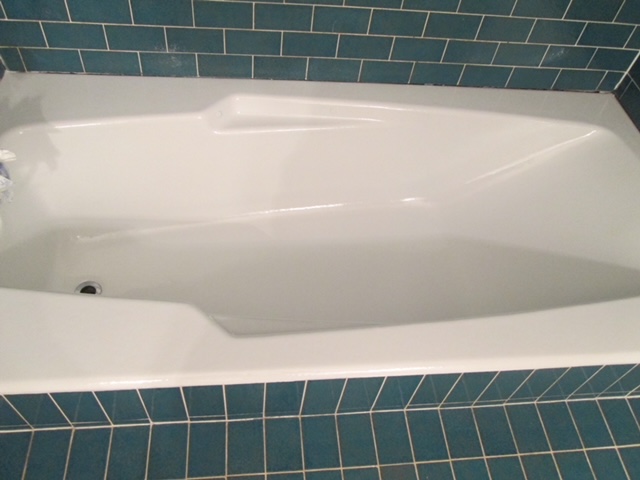
A before-and-after photo gallery helps set realistic expectations by showing examples of repaired chips, restored cast iron tubs, and smooth tile surround reglazes. Look for images that show matched finishes, repaired edges, and integrated tile work to evaluate quality.
What maintenance tips protect a refinished surface?
• Use mild, non-abrasive cleaners and a soft cloth or sponge; avoid scouring pads and harsh powders.
• Rinse surfaces after using bath oils or heavy soaps that can leave residues.
• Replace caulk when it shows wear to prevent water intrusion behind surrounds.
• Avoid dropping heavy objects onto the surface and use a bath mat to reduce impact and abrasion.
• Ventilate bathrooms during and after showers to reduce humidity and protect the finish.
What are the final notes on expectations?
When a refinishing job is done correctly—proper prep, appropriate coatings, and precision repairs—the result is a smooth surface that restores function and appearance.
Local factors such as hard water and seasonal humidity influence both the choice of coatings and maintenance routines in Rockland County, NY homes. With a clear evaluation and professional process, refinishing is an efficient alternative to replacement that preserves your bathroom’s character while delivering a refreshed, clean look.
Every service starts with a free estimate
Your tub has one more life in it. Let's bring it out.
Call or text Hudson Tubs for a free, flat-rate estimate — most tubs are reglazed in a single day and back in service within 24–48 hours.
Flat-rate pricing · Written warranty · A fraction of replacement cost