Rockland County, NY
Bathroom Tub Refinishing in Rockland County, NY
Professional bathroom tub refinishing service in Rockland County, NY. Restore a glossy finish without demolition; learn what's included.
This page outlines professional bathroom tub refinishing for Rockland County homes, including what the service covers, the step-by-step process, cure times, and maintenance tips. It explains how reglazing restores function and appearance of cast iron, porcelain, and resurfaced tubs without full demolition, helping preserve historic fixtures. Readers will learn preparation, repair, and reglaze techniques, typical timelines, pricing factors, and warranty guidance, plus practical advice for keeping a reglazed tub looking glossy and easy to clean.
Where can I find bathroom tub refinishing in Rockland County, NY?
Reviving a worn, stained, or chipped bathtub is one of the smartest, most cost-effective upgrades for Rockland County homes.
Bathroom tub refinishing restores function and appearance without the disruption and cost of full replacement—especially important in older neighborhoods around Nyack, Haverstraw, and Spring Valley where cast iron and vintage clawfoot tubs are common. This page explains what a professional tub refinishing service includes, how the process works, what to expect for cure times, and how to keep your reglazed tub looking its best.
Why does tub refinishing matter in Rockland County?
• Many Rockland homes face mineral staining from moderately hard water, leaving brown or rust-colored deposits that ordinary cleaners cannot remove.
• Older homes often have cast iron or porcelain tubs with chips, hairline cracks, or worn glaze that trap dirt and bacteria.
• Reglazing preserves historic fixtures and avoids bathroom demolition in compact or multi-unit properties common throughout the county.
What common bathtub issues are addressed in Rockland County homes?
• Mineral deposits and iron staining from hard water
• Soap scum and embedded grime that resist regular cleaning
• Surface scratches, dull or yellowed finishes
• Chips, nicks, and small cracks in porcelain, ceramic, or enameled cast iron
• Flaking or peeling of previous coatings or DIY paint jobs
• Outdated color or finish that no longer matches the bathroom aesthetic
What types of tub refinishing services are available?
• Stain and mineral deposit removal: deep-cleaning and chemical treatments to dissolve hard-water stains, rust, and mineral scale before refinishing.
• Chip and crack repair: filling and rebuilding missing glaze or enamel, then smoothing the repair to match the original surface contour.
• Professional sanding and etching: mechanical abrasion and chemical etching to prepare the surface so new coatings bond reliably.
• Reglaze application: multi-coat application of coatings such as two-part urethane or epoxy-urethane blends for a hard, glossy finish.
• Recoat/rejuvenation: single-layer recoats for tubs with minor wear and otherwise sound substrate.
• Full restoration: comprehensive repair of structural damage, drain and overflow resealing, and finish restoration for antique and cast iron tubs.
How does a professional bathroom tub refinishing process work?
1. Inspection and diagnosis
• Material identification (porcelain, cast iron, acrylic, fiberglass)
• Assessment of chips, cracks, old coatings, and underlying rust
• Evaluation of surrounding tile, grout, and plumbing interfaces
1. Deep cleaning and stain removal
• Heavy-duty degreasing and descaling to remove soap scum, mildew, and mineral stains
• Spot treatments for iron or manganese discoloration often found in Rockland County water supplies
1. Repair and rebuilding
• Rust stabilization and patching for cast iron
• Epoxy or polymer fillers for chips and hairline cracks, feathered and sanded to a smooth finish
• Replacement or resealing of damaged caulk at tub-to-tile joints if needed
1. Surface preparation
• Mechanical sanding to remove old glaze and any loose coating
• Chemical etching or primer application to ensure consistent adhesion of the new finish
1. Application of reglaze coatings
• Multiple thin coats applied in a dust-controlled environment for even coverage
• Use of two-part coatings that cure to a hard, non-porous surface resistant to cleaning chemicals
1. Curing and quality check
• Final inspection for uniformity, gloss, and adhesion
• Clean-up to leave the bathroom neat and ready for normal use after the approved cure time
How are stains and mineral deposits removed?
• Hard-water stains and iron discoloration are treated with targeted chemical cleaners and manual abrasion when necessary. Removing these deposits before refinishing is essential to prevent shadowing or bleed-through of stains after reglaze.
• For persistent rust through enamel on cast iron, the metal substrate is stabilized and isolated with a rust-inhibiting primer before finishing.
How is chip and crack repair explained?
• Small chips are rebuilt with epoxy-based fillers that bond to porcelain and enamel. The filler is sculpted to match the tub contour, sanded to a smooth finish, and primed.
• Larger cracks or deep damage may require substrate repair and reinforcement before a topcoat is applied to restore structural integrity and aesthetics.
What types of coatings are used?
• Professional bathroom tub refinishing typically uses commercial two-part urethane or epoxy-urethane hybrid coatings. These cure to a hard, glossy finish that resists scratching, staining, and household cleaners when maintained properly.
• How well a finish holds up depends on substrate, usage, and maintenance, so careful prep and gentle cleaning both matter.
What is the cure time to use the tub again?
• The surface may feel dry to the touch before it is cured, but full cure is required for safe, regular use.
• Typical guidance for professional two-part coatings:
• Light use (brief showers) — often acceptable after 24 to 48 hours.
• Full immersion (filling the tub for a bath) — usually advised after 48 to 72 hours.
• Complete chemical resistance and maximum hardness — generally achieved after 7 days.
• Exact cure recommendations vary by coating type and ambient conditions (temperature and humidity), so following the technician’s specified wait times is important to avoid damage.
What can I expect visually before and after?
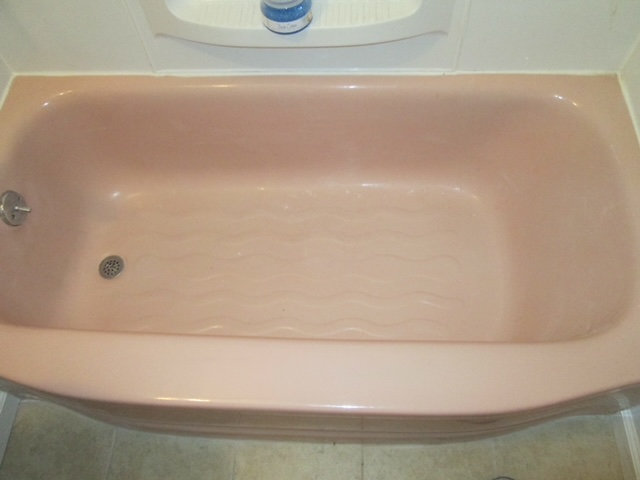
• Before: dull, stained, or chipped surfaces with visible discoloration, rough spots, or flaking coatings.
• After: a continuous, glossy surface that hides previous imperfections, unifies color, and restores a fresh look. Edges, contours, and drains are finished to blend smoothly with the tub’s profile.
• Many projects show dramatic visual improvement without the mess and expense of a tear-out and replacement.
What affects cost and the pricing structure?
• Material of the tub (acrylic and fiberglass are easier to reglaze than cast iron)
• Extent of repairs needed (number and severity of chips, rust, or cracks)
• Accessibility and condition of surrounding tile and grout
• Required prep work for heavy staining or previous coatings
• Size and complexity (standard alcove tubs vs clawfoot or freestanding tubs)
What warranty and maintenance guidance is provided?
• Every reglaze comes with a written warranty; ask about the details when you book your free estimate.
• Routine maintenance to keep the finish looking its best:
• Use non-abrasive cleaners and soft cloths or sponges
• Avoid concentrated bleach or acidic bathroom cleaners that are not coating-safe
• Wipe the tub dry after use in high-mineral areas to reduce water spot buildup
• Recaulk tub-to-tile joints if caulk shows signs of breakdown to prevent water intrusion behind the finish
For Rockland County homes with hard-water staining, historic tubs, or rental properties that need a high-impact refresh, professional bathroom tub refinishing restores function and style efficiently while preserving the existing footprint of the bathroom. When performed correctly, refinishing delivers a clean, glossy surface that keeps your bathtub looking fresh.
Every service starts with a free estimate
Your tub has one more life in it. Let's bring it out.
Call or text Hudson Tubs for a free, flat-rate estimate — most tubs are reglazed in a single day and back in service within 24–48 hours.
Flat-rate pricing · Written warranty · A fraction of replacement cost