Blog
Assessing Bathtub Slip Hazards Before Guests Arrive: Why Suction Mats Fail Elderly Relatives
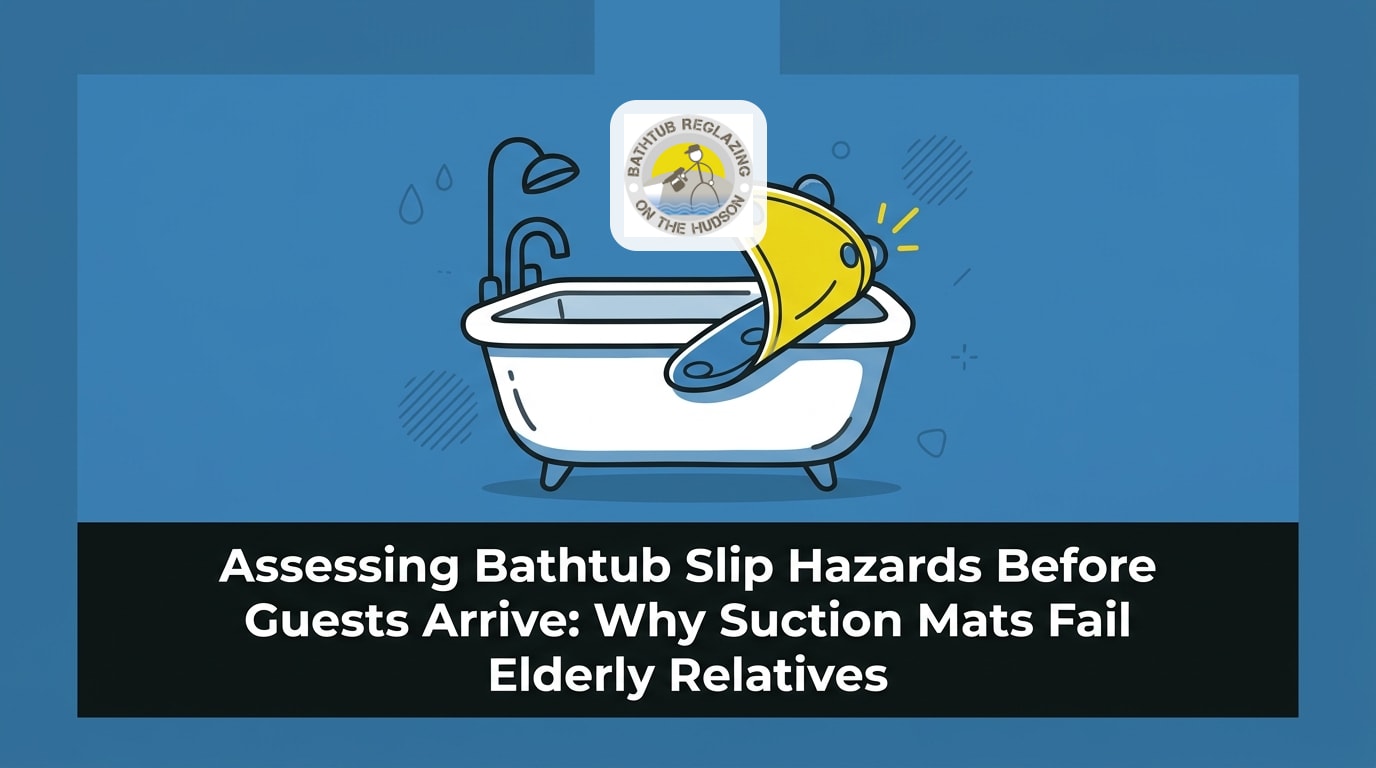
Suction mats can trip a shuffling foot, slide when the seal fails and trap mold underneath, which makes them a poor fix for older guests.
The Urgent Reality of Guest Bathroom Safety
Your guest room is ready, but assessing bathtub slip hazards before guests arrive often reveals a hidden danger right in your home. As a busy Pre-Thanksgiving November approaches, many homeowners realize that the old porcelain tub in the hall bathroom is dangerously slick, just as older relatives are scheduled to visit. The default, panic-driven decision is usually to purchase a temporary suction-cup bath mat. However, this quick fix creates a false sense of security and actually introduces new, critical hazards for seniors.
If your tub is worn and slick, bathroom restoration services such as professional bathtub reglazing are worth a look before the holidays.
Preparing a home for holiday visitors is stressful enough without worrying about a preventable accident. Guest bathrooms, in particular, often harbor safety gaps because they are not used daily by the primary residents. You might not notice how slippery the tub has become until you are scrubbing it down in preparation for your parents or grandparents. When you finally step back and look at the surface, the stark reality sets in: a wet, soapy porcelain floor is a severe risk for anyone with compromised balance or mobility issues. The instinct to quickly lay down a rubber mat is understandable, but understanding why that mat fails is critical to protecting your family.
Why Older Porcelain Tubs Become Extreme Hazards in Colder Weather
Many Hudson Valley homes still feature their original cast iron and porcelain tubs. These classic fixtures are visually stunning, but they were made without the slip-resistant floors found on many newer tubs. Decades ago, bathtubs were fired with a smooth, glass-like finish that prioritized easy cleaning over foot traction. Years of regular use, harsh abrasive cleaners, and mineral deposits slowly wear down whatever micro-texture the surface originally had, leaving it exceptionally smooth and frictionless.
This structural reality collides with environmental factors as the seasons change. Late fall in the region means colder homes and significantly heavier condensation in bathrooms. When the ambient temperature in the house drops, the dense cast iron or thick porcelain of the tub retains that chill. As soon as someone turns on a warm shower, the temperature differential causes immediate, heavy condensation to form on every surface in the room.
This condensation coats the bathroom in a micro-layer of moisture, making older porcelain tubs even slicker before the water even hits the floor. The combination of a worn, frictionless surface and winter condensation turns standard tubs into highly dangerous slip zones.
- Loss of original finish: Decades of scrubbing wear away the factory glaze, exposing a surface that offers zero resistance when wet.
- Thermal shock condensation: Cold porcelain instantly sweats when exposed to steam, creating a slick film across the entire basin.
- Pooling water: Older tubs that have slightly settled over time may not drain perfectly, leaving shallow puddles that act as hydroplaning zones for bare feet.
Understanding these environmental and structural factors is the first step in recognizing why a simple piece of rubber is not enough to counteract the physics of a worn-out bathtub during a chilly Pre-Thanksgiving November.
The Biomechanical Danger of Suction Mats for Shuffling Gaits
To understand why suction mats fail, you have to look at how older adults actually move. Older adults often walk with a shuffling gait due to arthritis, reduced joint mobility, or general balance decline. Instead of lifting their feet high and striking with the heel, they tend to slide their feet closer to the ground. This specific biomechanical reality makes them highly susceptible to tripping over raised edges.
Thick rubber suction mats create an uneven threshold right where a senior needs flat, stable footing to step into the tub. When an elderly guest lifts their leg over the tub apron, their center of gravity shifts dramatically. As they bring their leading foot down, they expect a solid, predictable floor. If their toe catches the raised lip of a thick rubber mat, their forward momentum continues while their foot is stopped, resulting in an immediate forward fall.
A fall in the bathroom is especially dangerous for an older adult, and unexpected shifts in footing make one more likely. The bathroom is full of hard edges—vanities, toilets, and the tub itself—meaning any loss of balance carries catastrophic potential, especially during a busy Pre-Thanksgiving November when the house is full of distractions.
The False Security of Suction Cups
The tripping hazard is only half the problem; the slipping hazard is equally severe. Suction cups require a perfectly flat, pristine, and non-porous surface to maintain a vacuum seal. Slightly curved tub bottoms or micro-abrasions in older tubs break this seal instantly.
Furthermore, soap scum, bath oils, and even the natural minerals in your water create a microscopic barrier between the suction cup and the tub floor. When a senior places their full body weight onto a mat that has lost its seal, the entire mat can detach and slide unexpectedly like a surfboard on a wet floor. This sudden, catastrophic loss of friction gives the user absolutely no time to react or grab a safety bar, making the mat more dangerous than the bare tub itself.
Hidden Hygiene Problems Trapped Under Temporary Mats
Beyond the immediate physical dangers, temporary mats introduce secondary, unhygienic consequences that are highly undesirable for a guest bathroom. Moisture trapped beneath hundreds of tiny suction cups creates an ideal, dark breeding ground for mold, mildew, and bacteria.
Older bathrooms often lack strong mechanical ventilation, meaning that moisture lingers long after the shower is turned off. When a wet rubber mat is left pressed against the tub floor, the water underneath never evaporates. Within just 48 hours, a slick, foul-smelling biofilm of pink bacteria (Serratia marcescens) or black mold can begin to form.
Removing, bleaching, and scrubbing these mats daily is entirely impractical during busy holiday hosting. You are already cooking, cleaning, and entertaining; the last thing you have time for is a daily deep-clean of a rubber mat. However, leaving the mat in place leads to unsanitary conditions that are unwelcoming and potentially harmful to guests with compromised immune systems or respiratory issues.
Proper maintenance requires solutions that do not harbor standing water or bacterial growth. If you are looking for ways to maintain a pristine environment without relying on mold-trapping rubber, researching safe tub cleaning methods can help you understand how to care for a tub’s surface properly. Ultimately, a clean bathroom is a safe bathroom, and any product that traps dirty water against the floor works against your hygiene goals.
Assessing Bathtub Slip Hazards Before Guests Arrive
Before your family arrives this Pre-Thanksgiving November, you need a clear methodology to evaluate your current bathroom safety setup. Do not rely on a visual inspection alone; a tub that looks clean and dry behaves very differently when it is wet and covered in soap.
Here is a step-by-step checklist to properly assess the slip hazards in your guest bathroom:
- Run a physical friction test: Wet the tub floor thoroughly and add a small amount of body wash or shampoo. Using the palm of your hand (never your foot, to avoid your own slip risk), press down firmly and try to slide your hand forward. If your hand glides with zero resistance, the tub is a severe hazard.
- Check existing lighting: Seniors require significantly more light to see contrast than younger adults. Ensure the bathroom lighting clearly illuminates the transition between the tub floor, the tub wall, and the bathroom floor. Shadows can obscure the depth of the tub, causing missteps.
- Inspect for old temporary fixes: Look closely at the tub floor for peeling adhesive strips or leftover glue residue from old appliqués. These peeling edges pose their own tripping risks and can scratch the skin.
- Evaluate the transition point: Assess exactly where guests step out of the tub onto the bathroom floor. Is the bath rug secure? Does it have a rubberized, non-slip backing, or does it slide easily across the tile? The transition out of the tub is just as dangerous as the time spent inside it.
By taking the time to perform this physical audit, you move past assumptions and gather the concrete facts about how your bathroom operates under real-world conditions. If your tub fails the friction test, it is time to look at built-in solutions rather than temporary bandages.
The Superiority of Built-In Non-Slip Textures
When temporary mats fail, a better, trip-free alternative is a texture built directly into the tub’s surface. Built-in textures remove the tripping hazard because they sit flush with the floor. There are no raised edges for a shuffling foot to catch, and no rubber lips to curl up over time.
Built-in traction has clear advantages over temporary mats. A non-slip texture can be built into the surface during professional reglazing, giving subtle, reliable grip that respects the look of the guest bathroom while prioritizing accessibility. Unlike suction mats, built-in traction cannot detach, slide, or shift under a senior’s weight, because it is part of the finish itself. If this matters to you, ask any refinisher you talk to whether they offer a built-in texture and how it is applied.
If you are considering bathtub reglazing in Westchester County, it is crucial to understand how anti-slip textures are integrated into the final glaze. The application process completely seals the surface, locking the texture beneath a waterproof barrier. This avoids the bacterial buildup associated with rubber mats and makes routine cleaning incredibly simple.
| Safety Feature | Temporary Suction Mats | Built-In Reglazed Textures |
|---|---|---|
| Tripping Hazard | High (thick raised edges easily catch shuffling feet) | None (texture is completely flush with the tub floor) |
| Slipping Risk | High (suction cups fail on curved/worn surfaces) | Low (part of the finish, so it cannot shift) |
| Hygiene & Cleaning | Poor (traps standing water, breeds mold and bacteria) | Excellent (sealed surface wipes clean easily) |
| Aesthetic Impact | Cluttered and institutional appearance | Subtle, clean appearance |
For Hudson Valley homeowners, a built-in texture means no more panic-buying a safety product before hosting. The traction is part of the tub itself.
Securing Peace of Mind for the Holidays
Hosting elderly relatives this Pre-Thanksgiving November should be about creating memories, sharing meals, and enjoying family time—not worrying about devastating bathroom falls. Moving away from temporary suction mats to built-in traction helps create a safer, more hygienic environment that respects your guests’ dignity and protects their physical well-being.
A reglazed finish needs 24 to 48 hours to cure before the tub is used, so schedule the work well before your first guest arrives with a suitcase. Explore options for professional bathtub reglazing today to get your guest bathroom prepared and beautifully restored for the holiday season.
Frequently Asked Questions
How can I make my bathtub less slippery for guests?
One of the most effective ways to make a bathtub less slippery is a non-slip texture built directly into the tub floor. While temporary mats are a common quick fix, they introduce tripping hazards and can slide unexpectedly. A built-in texture provides reliable, invisible traction that won’t shift underfoot.
Are suction bath mats safe for seniors with mobility issues?
No, suction bath mats generally introduce more risks than they solve for seniors. Older adults often walk with a shuffling gait, making the thick, raised edges of a rubber mat a severe tripping hazard. Additionally, if the suction cups fail due to soap scum or a worn tub surface, the entire mat can detach and cause a sudden fall.
What is the best non-slip solution for an older porcelain bathtub?
The best non-slip solution for an older porcelain bathtub is a professionally integrated anti-slip texture applied during a reglazing process. This method bonds the traction directly into the new finish of the tub. It eliminates the tripping risks of mats, prevents mold buildup, and restores the tub’s original beauty while maximizing safety.
How is a built-in non-slip texture applied?
A specialized aggregate or polymer texture is applied to the floor of the tub and then sealed under the topcoats. This is typically done during professional tub restoration. The result is a textured floor that won’t slide, curl, or trap bacteria the way temporary adhesive strips or rubber mats can.
Do built-in non-slip textures make the tub harder to clean?
No, professionally applied built-in textures are actually easier to maintain than temporary mats or adhesive strips. Because the texture is sealed beneath a waterproof glaze, dirt and soap scum cannot penetrate the surface. You can clean the textured floor using standard, non-abrasive bathroom cleaners and a soft brush, without worrying about trapping mold underneath.
Every service starts with a free estimate
Your tub has one more life in it. Let's bring it out.
Call or text Hudson Tubs for a free, flat-rate estimate — most tubs are reglazed in a single day and back in service within 24–48 hours.
Flat-rate pricing · Written warranty · A fraction of replacement cost