Blog
Inspecting a Yellowing Tub: Solving Well Water Iron Stains on Bathtubs
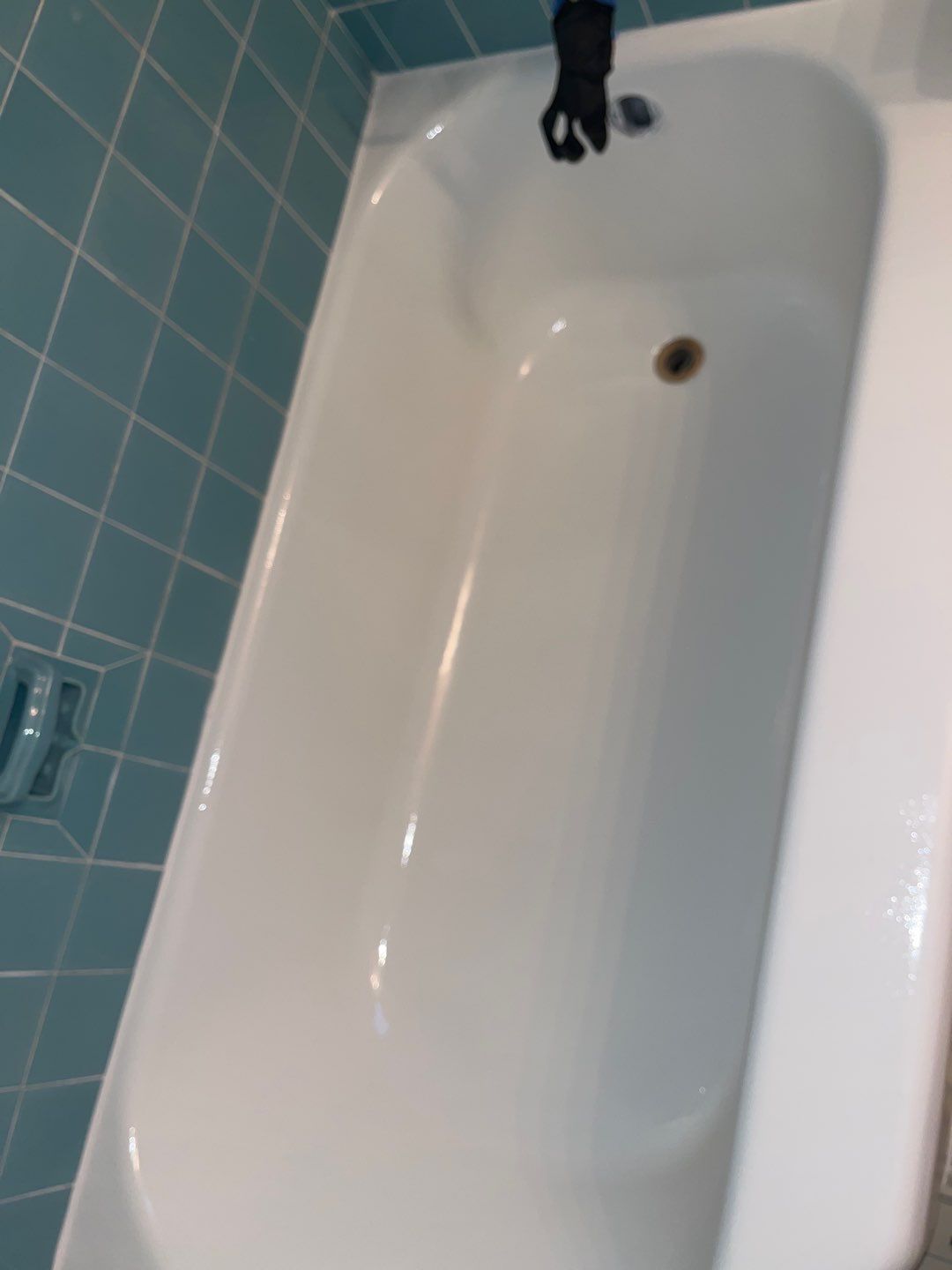
Iron in well water oxidizes in a hot bath, and a worn, porous finish traps the rust particles so the stains keep coming back.
The Persistent Problem: Tackling Well Water Iron Stains on Bathtubs
You scrub, you soak, and you upgrade your whole-home filters, but those stubborn well water iron stains on bathtub surfaces just keep coming back. It is a frustrating cycle that leaves many homeowners feeling defeated. A common pattern: a homeowner invests in a brand-new water softener or an expensive iron filtration system, only to watch the bathtub slowly turn yellow and rust-colored again within a matter of weeks. It is natural to blame the plumbing, the well pump, or the filter installation. However, the true source of the problem usually has nothing to do with the water currently flowing from the tap.
If you are tired of fighting a losing battle against rust, professional bathtub reglazing offers a way to seal out stains without the demolition of a full replacement. Standard cleaning fails because the underlying issue is not just the water—it is the bathtub surface itself. When the original enamel or acrylic finish wears down, it becomes heavily porous. At that stage, no amount of surface scrubbing will remove stains that have embedded themselves deep inside the material’s microscopic structure. The good news is that tearing out your entire bathroom is rarely the only option. By understanding how water chemistry interacts with surface wear, you can address the root cause and restore your tub to a brilliant, stain-resistant shine.
Understanding Your Water: Why Hudson Valley Groundwater Turns Tubs Yellow
To truly solve the staining issue, you have to look at what is flowing into your home. Many Hudson Valley wells draw groundwater that naturally carries dissolved minerals, including iron. The Environmental Protection Agency (EPA) lists a secondary drinking water standard for iron of 0.3 milligrams per liter (mg/L). Secondary standards are non-enforceable guidelines for public water systems that deal with taste, color and staining rather than health, and the EPA notes that iron above that level can cause reddish or orange staining. Private wells are not covered, but it is a useful benchmark when you test your well. If you are considering bathtub reglazing in Westchester County, understanding your local water chemistry is a good first step.
The Role of Local Bedrock Geology
The specific bedrock geology of the Hudson Valley plays a massive role in what ends up in your bathtub. Rainwater is naturally slightly acidic. As it percolates down through the earth and into the local aquifers, it acts as a mild solvent. It dissolves iron, manganese, and calcium from the surrounding rock, pulling these minerals directly into the water table. Because private wells draw directly from this untreated groundwater, they are highly susceptible to fluctuating mineral levels. Following heavy rainfalls or seasonal shifts, the concentration of dissolved iron in your well can spike, sending a heavy load of minerals directly into your home’s plumbing system.
Ferrous vs. Ferric Iron Binding
Not all iron behaves the same way when it enters your home. The transition from invisible mineral to stubborn stain happens exactly when you turn on the bathtub faucet. Understanding this chemical change is crucial to stopping the stains.
| Iron Type | Appearance in Water | Behavior in the Bathtub |
|---|---|---|
| Ferrous Iron (Clear Water Iron) | Completely clear when drawn from the tap. | Remains dissolved under pressure in your pipes. It is invisible until it hits the open air. |
| Ferric Iron (Red Water Iron) | Cloudy, yellow, orange, or rusty brown. | Oxidizes instantly when exposed to oxygen and hot water. Turns into solid rust particles that cling to surfaces. |
| Bacterial Iron | Slimy, reddish-brown sludge. | Binds with organic matter in the plumbing, creating a sticky residue that is highly difficult to wash away. |
When you fill a hot bath, the dissolved ferrous iron in your well water is suddenly exposed to oxygen and heat. This triggers a rapid oxidation process. The iron literally rusts as it fills the tub, converting into solid ferric iron particles. These microscopic rust flakes then settle onto the bottom and sides of the bathtub, creating the perfect storm for permanent discoloration.
Beyond Water Chemistry: How Porous Enamel Traps Iron Particles
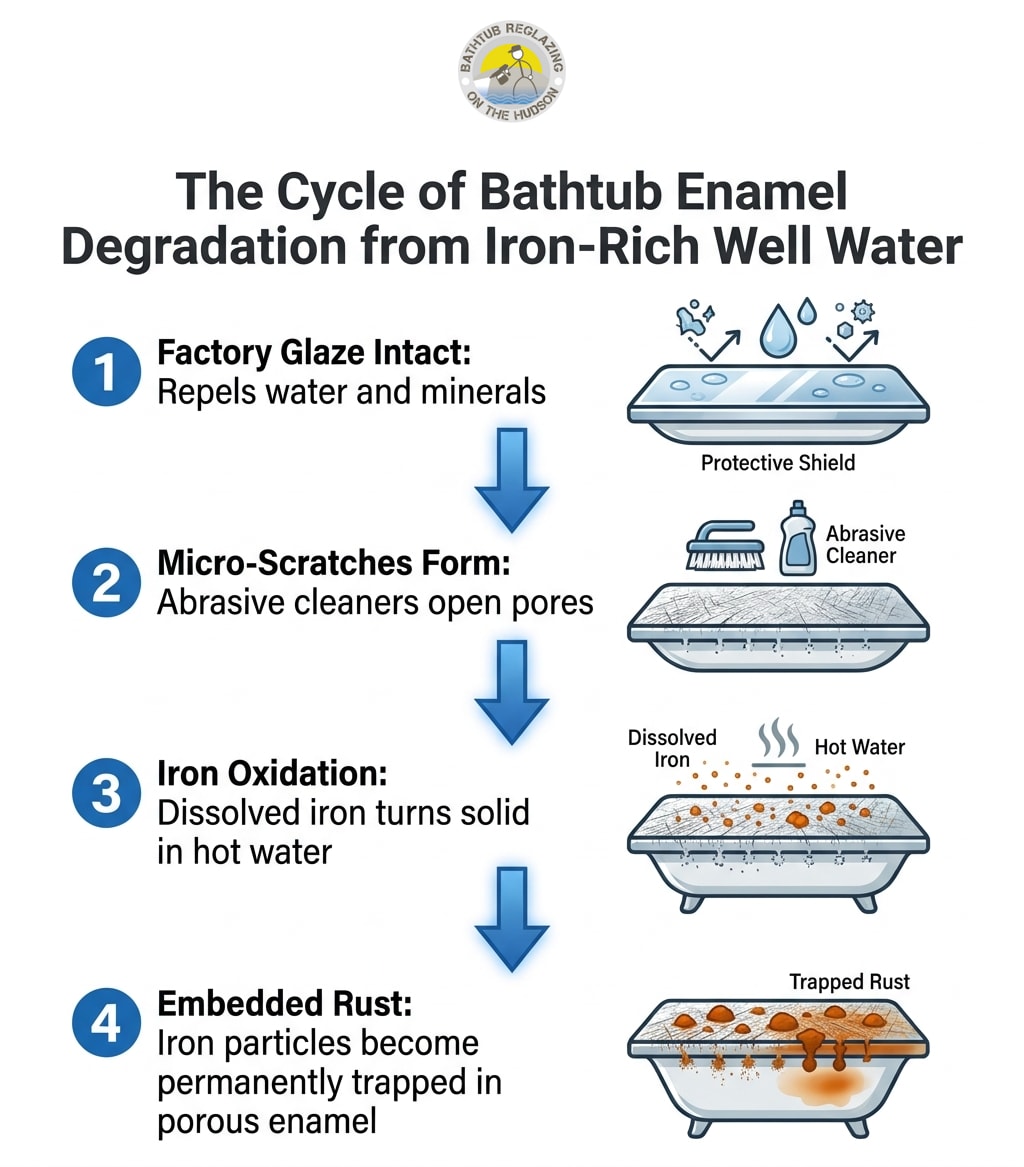
Here is the primary reason why your stains keep returning: the protective factory finish on your bathtub is gone. When a bathtub is brand new, the factory glaze is completely non-porous. It acts like a sheet of glass, repelling water, soap, and dissolved minerals. If ferric iron settles on a brand-new tub, it simply wipes away with a soft cloth. But original porcelain, fiberglass, and acrylic finishes wear down over years of daily use, exposing a highly vulnerable surface underneath.
The Lifecycle of Bathtub Finishes
The Factory Glaze Phase: During the first few years of a bathtub’s life, the surface is smooth and highly reflective. Water beads up and rolls right down the drain. Minerals have nothing to grab onto.
The Micro-Wear Phase: Over time, daily friction from standing, setting down shampoo bottles, and using mild cleaners begins to dull the finish. Microscopic scratches form across the floor of the tub. It loses its shine and starts to hold onto soap scum a little longer.
The Porous Sponge Phase: Eventually, the protective glaze completely wears away, exposing the porous substrate beneath. At this stage, the bathtub acts exactly like a hard sponge. When oxidized ferric iron settles onto this compromised surface, it does not just sit on top—it sinks deeply into the microscopic pores.
This is why you can scrub the tub until your arms ache, and the yellow tint remains. You are only cleaning the very top layer of the surface. The iron particles are physically trapped inside the material itself. As long as the surface remains porous, the stains will always return, regardless of how many water filtration upgrades you install. The solution requires shifting the focus from simply trying to clean the stains to professionally restoring and sealing the surface.
Why Harsh Cleaners and Scrubbing Make Rust Stains Worse Over Time
When faced with a yellowing tub, most homeowners head straight for the cleaning aisle or look up DIY home remedies. Many homeowners look for hard water stain removal techniques, but popular methods often do more harm than good. In fact, the very products you use to remove rust stains are usually the exact reason the stains keep coming back faster and darker each time.
The Acid Trap: Chemical Rust Removers
Products designed to dissolve rust—like CLR, Iron Out, and even natural solutions like heavy white vinegar—rely on high acidity to break down the mineral bonds. While acid is highly effective at dissolving ferric iron, it is also highly effective at eating away bathtub enamel.
- Chemical Etching: Highly acidic cleaners chemically burn the surface of porcelain and acrylic. They strip away any remaining protective glaze.
- Dullness and Chalking: An acid-etched bathtub will look extremely dull, feel chalky to the touch, and lose all its natural reflectivity.
- Accelerated Staining: Because the acid has opened up thousands of new microscopic pores, the next time you run the bath, the iron will settle deeper and faster than before.
Micro-Scratches and Embedded Rust
Physical scrubbing is just as damaging as chemical etching. When you use scouring pads, pumice stones, or abrasive powders like baking soda and heavy-duty cleansers, you are physically gouging the bathtub’s surface. These micro-scratches act as tiny trenches. The next time oxidized iron falls out of your well water, it rolls right into those trenches and gets stuck. You are trapped in a vicious cycle: you scrub harder to remove the rust, which creates deeper scratches, which traps more rust, requiring even harder scrubbing next time. Aggressive cleaning is merely a temporary cosmetic fix that causes permanent structural harm to your fixture.
Assessing Surface Damage Before Treatment
Because permanent iron stains are a structural surface problem rather than just a dirt problem, a simple wipe-down or a cheap DIY paint kit will never solve the issue. A heavily stained tub on a private well system calls for a careful assessment. A new coating should never simply be sprayed over the stains; the enamel damage has to be inspected and the surface properly cleaned and prepared first. Here is what a sound assessment and preparation generally involve:
- Visual and Tactile Assessment: The tub is examined for dullness, chalking, and micro-scratches. The texture of the stained areas shows how porous the substrate has become and how deeply the iron has penetrated.
- Deep Cleaning and Rust Removal: Rust cannot simply be covered up. If iron particles are left inside the pores, they can continue to oxidize and eventually bleed right through a new coating, so the embedded rust has to be cleaned out and treated first.
- Structural Integrity Check: The tub is checked for hairline cracks, chips, and areas where the repeated use of acidic cleaners has dangerously thinned the fiberglass or porcelain. These structural weak points must be repaired before any sealing takes place.
- Etching and Priming: The entire tub is etched and coated with a bonding primer so it reaches a uniform, stable baseline the new glaze can bond to.
This rigorous preparation is exactly why DIY epoxy kits fail on iron-compromised tubs. If the embedded rust is not properly removed and treated, DIY paint is likely to peel, flake, and discolor.
Creating a New Barrier Against Iron Oxidation
Once the bathtub has been properly diagnosed and prepped, the restoration itself can begin. Professional surface refinishing helps keep future iron stains out by covering the worn, porous substrate with a new, impermeable barrier. Especially during pre-winter and November holiday guest preparation, homeowners want a solution that does not involve tearing their home apart.
Cleaning Out the Contaminated Layer
The first major step in creating this barrier is a deep clean that removes soap scum buildup, mineral deposits and loose, iron-soaked material, followed by repairs to chips, cracks and rust. This step is non-negotiable: any rust left behind can bleed through the new finish.
Applying a Non-Porous Seal
After the surface is cleaned, repaired, etched and primed, the finish is sprayed on in multiple thin layers. This is not standard paint; it is a coating designed to bond with the bathtub’s substrate. As it cures, it forms a non-porous, glass-like seal.
This new surface actively repels water. When the hot well water hits the open air and the dissolved ferrous iron oxidizes into solid ferric iron, the rust particles have nowhere to hide. They cannot sink into the material. They simply rest on top of the slick new glaze, where they can be easily rinsed down the drain or wiped away with a soft, non-abrasive sponge. Compared to the massive disruption, mess, and extended timeline of a full bathtub replacement, which can leave a bathroom unusable for weeks, most reglazing jobs are finished in as little as one day. The finish then needs 24 to 48 hours to cure before the tub is used, so you can prepare your home for winter guests without the stress of a major renovation.
Frequently Asked Questions About Iron-Stained Bathtubs
Why is my well water turning my tub yellow?
Your well water turns your tub yellow because dissolved iron in the groundwater oxidizes when it hits the air. This chemical reaction turns invisible iron into solid rust particles. If your bathtub has an older, worn finish, these rust particles sink into the microscopic pores of the enamel, creating a stubborn yellow or brown stain that standard cleaning cannot remove.
How do you remove stubborn iron stains from a bathtub?
To remove stubborn iron stains safely, you must draw the minerals out without scratching the surface. Mild, non-abrasive solutions formulated specifically for rust can help lift surface-level iron, but they will not fix the underlying porosity of the tub. If the stains are deeply embedded in a worn finish, the real fix is professional surface preparation and reglazing.
Can you stop iron stains from coming back in a bathtub?
You can keep iron stains from soaking back in, but it requires addressing the tub’s surface rather than just the water. Having the bathtub professionally cleaned, repaired, and reglazed creates a new, non-porous barrier, so future iron in your water tends to rinse away instead of soaking into the material.
Will bleach remove iron stains?
No, bleach will not remove iron stains and will actually make the problem significantly worse. Bleach is an oxidizer, meaning it accelerates the rusting process of the iron particles trapped in your tub. Applying bleach to well water stains will often turn a light yellow discoloration into a dark, permanent rust brown.
Does CLR remove well water stains?
CLR (Calcium, Lime, and Rust remover) can temporarily dissolve well water stains, but it comes with a major hidden cost. CLR is highly acidic and can chemically etch the protective glaze right off your porcelain or acrylic tub. Repeated use will leave the bathtub dull, chalky, and even more porous, causing it to stain much faster the next time you run the water.
Why do rust stains return immediately after cleaning my tub?
Rust stains return immediately because the protective finish on your bathtub has worn away, leaving the material underneath highly porous like a sponge. When you clean, you are only scrubbing the top layer of rust away, leaving iron particles trapped deep inside the microscopic holes. The moment new water hits the tub, the stains instantly reappear.
Is it better to replace or reglaze a bathtub damaged by hard water?
It is almost always better to reglaze a bathtub damaged by hard water if the underlying structure is still sound. Reglazing provides a new non-porous, stain-resistant surface, and it avoids the demolition, plumbing work, mess, and weeks of bathroom downtime of a full replacement.
Secure a Clean, Fresh Guest Bathroom Before Winter Arrives
Dealing with recurring well water iron stains on bathtub surfaces is an exhausting chore, but it does not have to be a permanent reality. Stains that keep coming back require a surface-level solution, not just more aggressive scrubbing with damaging chemicals. As the winter season approaches and you prepare to welcome family and friends into your home, you deserve a pristine, welcoming guest bathroom that you do not have to apologize for. Stop fighting the symptoms and address the root cause of the porosity. Start with a look at the true condition of your tub’s enamel. Call or text (845) 402-0121 for a free estimate on professional tub restoration, and get a fresh, sealed bathtub ready for the season.
Every service starts with a free estimate
Your tub has one more life in it. Let's bring it out.
Call or text Hudson Tubs for a free, flat-rate estimate — most tubs are reglazed in a single day and back in service within 24–48 hours.
Flat-rate pricing · Written warranty · A fraction of replacement cost