Blog
The Slow Erosion: How Hard Water Damages Bathtub Enamel on Well Systems
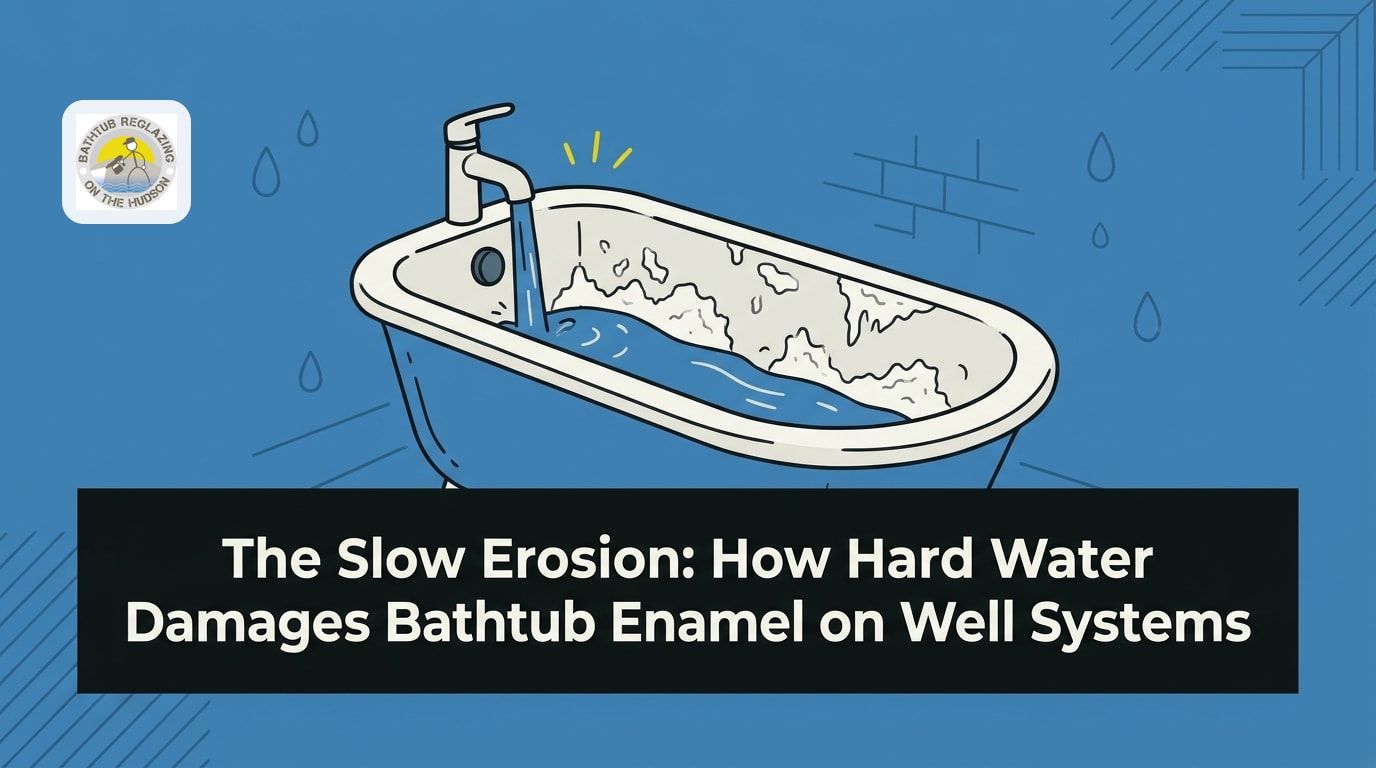
A rough, chalky tub floor that will not come clean is often a sign that minerals have etched the enamel, not just soap scum.
The Hidden Toll of Well Water on Your Bathroom Fixtures
Many homeowners step into the shower, only to find the floor of the tub feels rough under their feet. You scrubbed it just yesterday, but the surface still looks chalky and dull. If you are wondering how hard water damages bathtub enamel, the answer lies in the invisible minerals flowing through your pipes. As we head into November and the pre-winter hot bath season begins, that chalky residue becomes much more noticeable. The drop in temperature outside means longer, hotter baths inside, which puts your plumbing fixtures under increased stress.
For homeowners relying on well water, this creates a frustrating daily cycle. Your bathtub constantly feels rough and looks dirty despite your best cleaning efforts. This brings you to a critical decision point: Is your tub just covered in a stubborn layer of soap scum, or has the factory enamel actually eroded away? Untreated well water fundamentally alters the surface of factory enamel over time, turning a once-smooth finish into a porous, damaged surface. If you are tired of fighting a losing battle against mineral buildup, exploring bathtub reglazing services can help you restore a smooth surface and seal out future damage.
Understanding How Hard Water Damages Bathtub Enamel
To understand the root of the problem, we have to look at what makes your water “hard” in the first place. Hard water contains high concentrations of dissolved minerals, primarily calcium and magnesium. When this mineral-heavy water flows out of your faucet and sits on the surface of your bathtub, the water eventually evaporates, leaving the microscopic mineral deposits behind.
Factory enamel is incredibly smooth, but at a microscopic level, it still has tiny pores. When calcium and magnesium are left behind, they seek out these tiny pores and physically bond to the surface. This bonding process accelerates significantly when you introduce hot water. Thermal expansion causes the enamel to expand slightly, opening up those microscopic pores even further and allowing the hard water minerals to embed themselves deeply into the finish. As the tub cools down, the pores contract, trapping the minerals inside. Over months and years, this constant cycle creates micro-abrasions and physical etching that permanently alter the tub’s surface.
The Chemistry of Mineral Etching
The damage goes far beyond a simple surface stain. Calcium and magnesium do not just sit passively on top of the enamel; they chemically interact with it. The alkaline nature of heavy mineral deposits gradually breaks down the protective factory glaze.
Over time, this constant chemical exposure causes the enamel to lose its shine and become inherently porous. Once the glaze is compromised, the structural integrity of the enamel is gone. The tub is no longer a smooth, water-repellent surface. Instead, it becomes a rough, sponge-like material that actively traps dirt, bath oils, and bacteria, making it nearly impossible to keep clean. This is exactly how hard water damages bathtub enamel on a structural level, turning a vibrant fixture into a dull, chalky liability.
Diagnosing the Damage: Superficial Stains vs. Structural Erosion
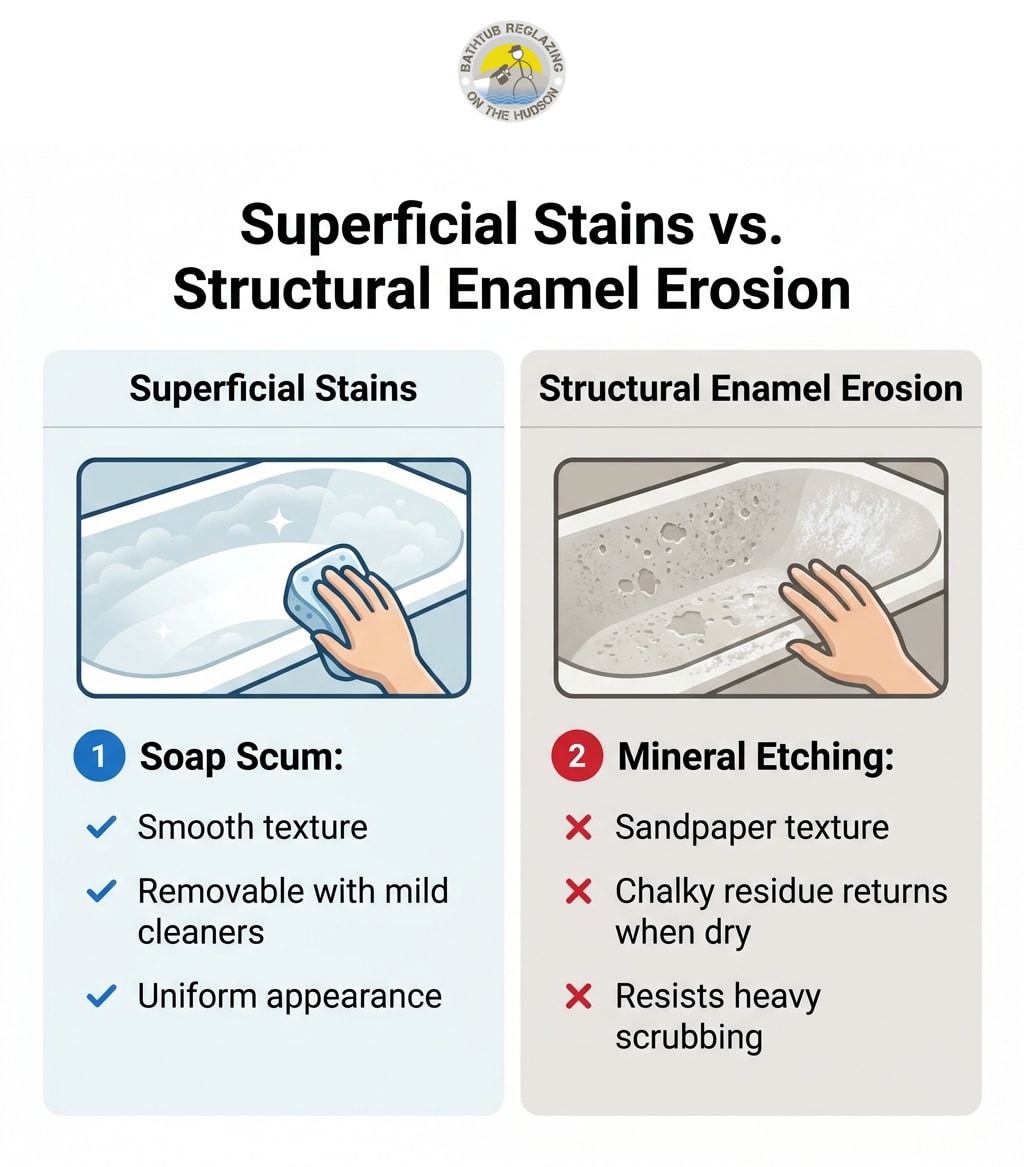
Because soap scum and mineral etching can look similar at a quick glance, many homeowners struggle to figure out exactly what is wrong with their tub. Soap scum is a superficial layer of buildup caused by fatty acids in bar soap reacting with the minerals in your water. It sits on top of the enamel and can be dissolved and washed away. Mineral etching, on the other hand, means the enamel itself is physically missing or pitted.
The easiest way to tell the difference is the “sandpaper test.” After giving your tub a thorough, deep clean and letting it dry completely, run your bare hand across the bottom of the basin. If the tub feels perfectly smooth, you were likely just dealing with heavy soap scum. If the tub feels rough to the touch—like fine-grit sandpaper—the enamel is eroded. Another major red flag is a chalky appearance that vanishes when the tub is wet but returns immediately the moment the surface dries. This indicates structural damage rather than a surface stain. Once the protective glaze is gone, that porous surface will trap dirt and bacteria much faster than before. Understanding proper tub cleaning techniques is helpful for maintaining a healthy finish, but no amount of cleaning can restore a surface that has been physically etched away.
| Characteristic | Soap Scum (Superficial) | Mineral Etching (Structural) |
|---|---|---|
| Texture | Slightly sticky or waxy when wet. | Rough, gritty, and feels like fine sandpaper. |
| Appearance | Dull, cloudy film that looks consistent whether wet or dry. | Looks clear when wet, but turns chalky white as soon as it dries. |
| Reaction to Cleaning | Dissolves and washes away with mild bathroom cleaners. | Resists heavy scrubbing; roughness remains after cleaning. |
| Core Issue | Residue sitting on top of the factory glaze. | The factory glaze is physically pitted and missing. |
| Long-Term Fix | Regular cleaning and switching to liquid body wash. | Professional reglazing to create a new non-porous barrier. |
When Standard Cleaning Fails
Standard bathroom cleaners are formulated to break down surface organic matter, oils, and mild soap scum. They are completely ineffective on a structurally compromised tub. When you spray a standard cleaner onto etched enamel, the liquid just sinks into the microscopic pits. You can scrub for hours, but you cannot clean away missing enamel. The rough texture you feel is the actual physical damage to the tub’s structure.
Why Aggressive Winter Cleaning Accelerates Enamel Wear
When a homeowner notices a chalky, stubborn film on their bathtub, the natural instinct is to scrub harder. As November rolls around and holiday guests prepare to visit, that instinct kicks into overdrive. Unfortunately, this aggressive approach usually worsens the physical pitting of the tub.
When you use harsh chemical powders and stiff-bristled brushes on a tub with hard water deposits, you are essentially creating liquid sandpaper. The stiff bristles grab onto the crystallized calcium and magnesium deposits and grind them directly into the remaining enamel. While you might successfully scrape off the top layer of the mineral buildup, you are simultaneously scratching the factory glaze underneath. If you are researching hard water stain removal techniques, it is critical to understand how the cycle of aggressive scrubbing destroys your fixtures.
- The Initial Buildup: Hard water leaves microscopic calcium deposits in the pores of the enamel.
- The Abrasive Scrub: Homeowners apply powdered bleach cleaners or scouring pads to remove the rough spots.
- The Grinding Effect: The scrubbing action drags the sharp calcium crystals across the surface, creating thousands of micro-scratches.
- The Acidic Attack: Frustrated homeowners often turn to highly acidic DIY solutions (like soaking the tub in pure vinegar). While vinegar dissolves calcium, leaving strong acids on the surface for hours also weakens and eats away at the already compromised factory glaze.
- The Final Breakdown: The tub is now completely stripped of its protective layer, meaning the next time you take a hot bath, the new hard water minerals will bond even faster and deeper than before.
This vicious cycle strips away the remaining protective layers of the tub, leaving you with a surface that feels like concrete and stains instantly.
The Unique Challenge for Hudson Valley Well Systems
The severity of mineral damage varies wildly depending on where you live. Local geology plays a big part. Groundwater that passes through mineral-rich rock before it reaches a well pump picks up calcium carbonate and magnesium along the way, and hardness can vary from one Hudson Valley well to the next.
Properties relying on these well systems experience accelerated wear on all plumbing fixtures, but bathtubs take the hardest hit. The combination of heavy well-water minerals and frequent winter usage creates a perfect storm for tub degradation. With summer temperatures gone and the cold weather settling in, the drop in outdoor temperatures increases indoor hot water usage. This frequent use of high-heat water accelerates the thermal expansion of the enamel, allowing the minerals to bond faster.
Even if you live on a local municipal water supply in the area, you are not entirely immune. Municipal water treatments may filter out certain contaminants and delay the buildup, but they do not entirely prevent mineral scaling depending on the specific local source. The bedrock of the region dictates the hardness of the water, and over years of daily use, that hard water will eventually take its toll on factory enamel.
Restoring the Surface: Dealing With Mineral Etching
Once you understand how hard water damages bathtub enamel, the next logical step is figuring out how to fix it. The hard truth is that etched enamel cannot be polished, buffed, or cleaned back to its original state. The glaze is physically gone, and no amount of elbow grease can replace missing material.
This is where professional reglazing helps. After a deep clean, the pitted areas are repaired, the surface is etched and primed with a bonding primer, and the new finish is sprayed on in multiple thin layers, creating a new, non-porous barrier. A free estimate is a good time to find out whether you are dealing with a superficial stain or worn-away enamel, so you get the right fix rather than something that only masks the problem. If your well water has eaten away your tub’s finish, professional tub restoration can break the cycle of damage.
The Advantages of a Non-Porous Seal
A professionally applied glaze does more than just make the tub look shiny and fresh. It fundamentally changes how the surface interacts with your well water.
- Repels Heavy Minerals: The new, non-porous surface gives calcium and magnesium nowhere to hide. Without microscopic pits to anchor into, the minerals rinse away much more easily.
- Eliminates the Need for Scrubbing: Because the surface is completely sealed, you no longer need abrasive powders or harsh chemicals. A simple wipe-down with a mild, non-abrasive liquid cleaner is all it takes.
- An End to Harsh Scrubbing: Reglazing breaks the cycle of harsh scrubbing and enamel degradation, and gentle care helps the new finish stay glossy.
Frequently Asked Questions About Hard Water and Tub Enamel
Does hard water ruin bathtubs?
Yes, hard water can permanently ruin the factory finish of a bathtub over time. The high concentrations of calcium and magnesium chemically interact with the enamel, breaking down its protective glaze. Repeated exposure, especially combined with hot water, causes the minerals to etch into the surface, leaving it permanently rough, porous, and susceptible to deep staining.
How can you tell if bathtub enamel is ruined?
The most reliable indicator is the sandpaper test. If you thoroughly clean and dry the bathtub, and the surface still feels rough, gritty, or chalky to the bare touch, the enamel is ruined. Additionally, if the tub looks clean when wet but immediately turns a dull, chalky white as soon as the water evaporates, the structural glaze has eroded away.
Does hard water eat away enamel?
Hard water does eat away at enamel, though it is a slow, gradual process. The alkaline minerals in the water bond to the microscopic pores of the tub. When homeowners use abrasive cleaners to scrub those minerals away, they end up grinding the sharp calcium crystals directly into the finish, which physically scrapes and eats away the protective factory glaze.
How do you fix a tub damaged by hard water?
A tub that has sustained structural hard water damage cannot be fixed with cleaning products. The only way to fix an etched, porous tub is through professional reglazing. This process involves neutralizing the surface, filling in the micro-abrasions, and applying a new, non-porous coating that seals the tub and resists future mineral bonding.
Can a water softener reverse existing enamel damage?
No, a water softener cannot reverse existing damage. While installing a water softener is an excellent way to prevent future mineral buildup by removing calcium and magnesium from your water supply, it will not replace the enamel that has already been etched away. You will still need to reglaze the tub to restore the smooth, protective finish.
Protect Your Fixtures Before the Cold Sets In
Dealing with well water in the Hudson Valley requires a proactive approach to home maintenance. If your bathtub feels rough, chalky, and impossible to clean, it is highly likely that you are dealing with structural erosion, not just poor cleaning habits. Understanding how hard water damages bathtub enamel is the first step toward breaking the cycle of aggressive scrubbing and surface degradation.
As we move deeper into November and the pre-winter hot bath season begins, now is the time to address porous enamel before heavy winter usage causes further degradation. You do not have to live with a tub that always looks dirty. Call or text Bathtub Reglazing On The Hudson at (845) 402-0121 for a free estimate and a look at the true condition of your fixtures. Professional restoration gives you a smooth, non-porous surface that resists hard water minerals.
Every service starts with a free estimate
Your tub has one more life in it. Let's bring it out.
Call or text Hudson Tubs for a free, flat-rate estimate — most tubs are reglazed in a single day and back in service within 24–48 hours.
Flat-rate pricing · Written warranty · A fraction of replacement cost